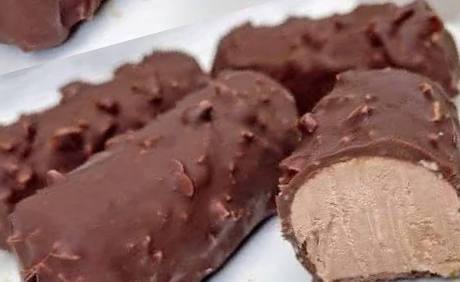
Instructions
- Prepare the Ganache: Place the finely chopped dark chocolate for the ganache in a heatproof bowl. In a small saucepan, heat the heavy cream over medium heat until it just begins to simmer around the edges, but do not bring it to a rolling boil.
- Combine Cream and Chocolate: Pour the hot cream directly over the chopped chocolate in the bowl. Let it sit undisturbed for 5 minutes to allow the chocolate to melt.
- Stir and Emulsify: After 5 minutes, gently whisk the mixture from the center outwards until completely smooth and glossy. Stir in the softened unsalted butter, vanilla extract (if using), and sea salt (if using) until fully incorporated. The ganache should be beautifully smooth and shiny.
- Chill the Ganache: Cover the bowl with plastic wrap, pressing the wrap directly onto the surface of the ganache to prevent a skin from forming. Refrigerate for at least 2-3 hours, or until the ganache is firm enough to scoop and roll. For faster chilling, you can place it in the freezer for about 45-60 minutes, checking frequently.
- Shape the Truffles: Once the ganache is firm, use a small cookie scoop (about 1 teaspoon or 2 teaspoons in size) or two spoons to scoop out portions of the ganache. Roll each portion quickly between your palms to form a smooth ball. Work quickly to prevent the ganache from melting from the heat of your hands.
- Freeze the Truffle Centers: Place the rolled ganache balls on a parchment-lined baking sheet. Transfer the baking sheet to the freezer and freeze for at least 30-45 minutes, or until the truffles are very firm. This step is crucial for easy dipping.
- Prepare the Coatings: While the truffles are freezing, prepare your coatings. If using chopped nuts, spread them out on a shallow plate. If using cocoa powder or confectioners’ sugar, place them in separate shallow bowls.
- Melt the Coating Chocolate: Place the finely chopped chocolate for the coating in a dry, heatproof bowl. You can melt it using a double boiler method (set the bowl over a saucepan of simmering water, ensuring the bottom of the bowl does not touch the water) or in a microwave. If using a microwave, heat in 30-second intervals, stirring well after each interval, until mostly melted. Remove from heat and stir until completely smooth and melted. Be careful not to overheat the chocolate, as this can make it seize.
- Dip the Truffles: Remove the frozen truffle centers from the freezer. Working with a few at a time to keep the others cold, drop one truffle into the melted coating chocolate. Use a fork or a dipping tool to roll the truffle around, ensuring it’s fully coated. Lift the truffle out, tapping the fork gently against the side of the bowl to allow excess chocolate to drip off.
- Coat with Toppings: Immediately transfer the chocolate-coated truffle to your desired topping (chopped nuts, cocoa powder, etc.) or place it directly back onto the parchment-lined baking sheet if leaving plain. Roll it gently in the topping or sprinkle the topping over it to adhere.
- Set the Truffles: Return the coated truffles to the parchment-lined baking sheet. Allow them to set completely at room temperature or in the refrigerator for about 15-20 minutes until the chocolate coating is firm.
- Serve and Enjoy: Once set, your homemade chocolate truffles are ready to be served.
Cooking Tips and Variations
For the Smoothest Ganache: Always use high-quality chocolate for both the ganache and the coating. Compound chocolates (often labeled as “baking chips” or “melting wafers” without cocoa butter) may not yield the same silky texture. When pouring hot cream over chocolate, let it sit undisturbed for a few minutes before stirring; this allows the residual heat to thoroughly melt the chocolate for a smoother emulsion.
Temperature Control for Dipping: The key to beautifully coated truffles is to keep both the truffle centers very cold and the coating chocolate at the right temperature. If your melted coating chocolate starts to thicken too much, gently rewarm it for a few seconds. If it’s too hot, it will be too thin and won’t coat properly, and it might melt your truffle centers too quickly. Work quickly when dipping, and if your truffle centers start to soften, pop them back into the freezer for a few minutes.
Tempering Chocolate (Optional, for a Professional Finish): For a truly professional, glossy, and snap-to-the-bite finish that resists fingerprints and blooming, you can temper your coating chocolate. This involves heating and cooling the chocolate to specific temperatures to stabilize the cocoa butter crystals. While not strictly necessary for delicious truffles, it elevates their appearance and shelf stability significantly. If you’re new to tempering, look up specific instructions for your type of chocolate (dark, milk, white).
Flavor Variations for the Ganache: The possibilities are endless!
- Liqueur Infusion: Add 1-2 tablespoons of your favorite liqueur (e.g., Grand Marnier, Kahlúa, rum, whiskey, raspberry liqueur) to the ganache along with the vanilla extract.
- Coffee Boost: Stir in 1 teaspoon of instant espresso powder or strong brewed coffee.
- Spicy Kick: Infuse the cream with a pinch of cayenne pepper or chili powder before heating, then strain out the solids before pouring over the chocolate.
- Minty Fresh: Add ½ teaspoon of pure peppermint extract.
- Citrus Zest: Grate in the zest of an orange or lemon into the hot cream.
- Nut Butter Swirl: Swirl in 1-2 tablespoons of smooth peanut butter or almond butter after the ganache is made and slightly cooled, but before chilling.
Coating Variations:
- Classic Cocoa: Roll in unsweetened cocoa powder for a traditional look.
- Powdered Sugar: A dusting of confectioners’ sugar adds a delicate sweetness.
- Shredded Coconut: Toasted or untoasted shredded coconut provides texture and flavor.
- Sprinkles: Festive and fun for any occasion.
- Crushed Cookies: Oreos, graham crackers, or shortbread cookies add a delicious crunch.
- Drizzles: After the main coating sets, drizzle with a contrasting melted chocolate (e.g., white chocolate over dark truffles).
Shaping Without Rolling: If you prefer a more rustic look or want to avoid rolling, you can pipe the ganache. Once chilled, transfer the ganache to a piping bag fitted with a round tip. Pipe small mounds onto a parchment-lined baking sheet, then freeze and dip as usual. This also works well for creating more irregular, “natural” truffle shapes.
Storage and Reheating
Storage: Chocolate truffles are best stored in an airtight container in the refrigerator. They will maintain their quality and freshness for up to 2 weeks. If you’ve used a tempered chocolate coating, they can sometimes be stored at cool room temperature (below 70°F or 21°C) for several days, but refrigeration is always the safest bet, especially with a ganache center.
Freezing for Long-Term Storage: For longer storage, place the set truffles in a single layer on a parchment-lined baking sheet and freeze for about an hour until solid. Then, transfer them to a freezer-safe airtight container or freezer bag. They can be frozen for up to 1-2 months. Layer parchment paper between truffle layers to prevent sticking.
Serving: While they are stored in the refrigerator, truffles are best enjoyed at room temperature. Remove them from the refrigerator about 15-30 minutes before serving to allow the ganache to soften slightly and become wonderfully creamy and melt-in-your-mouth. If serving from frozen, transfer them to the refrigerator a few hours before or let them sit at room temperature for about an hour.
Reheating: Chocolate truffles are not typically “reheated” in the traditional sense. The goal is to bring them to a pleasant serving temperature where their texture is ideal. If they are too hard from being too cold, simply allow them to sit out at room temperature as described above. Do not microwave or heat them directly, as this will melt the chocolate and ruin their form.
Frequently Asked Questions
What kind of chocolate is best for truffles?
For the ganache, a high-quality dark chocolate (60-70% cacao) is generally recommended as it provides a rich, deep chocolate flavor that isn’t overly sweet. For the coating, you can use dark, milk, or even white chocolate, depending on your preference. Always choose chocolate bars or feves over chocolate chips, as chips often contain stabilizers that prevent smooth melting.
Why did my ganache separate or look greasy?
Ganache can separate if the cream is too hot, if the chocolate isn’t finely chopped enough, or if it’s over-whisked once the butter is added. If it separates, try adding a tablespoon of lukewarm water or milk, a teaspoon at a time, and whisking vigorously until it comes back together. A greasy appearance often indicates too much butter or chocolate that was overheated.
Can I make these truffles ahead of time?
Absolutely! Truffles are an excellent make-ahead dessert. You can prepare the ganache up to a week in advance and store it in the refrigerator. Once rolled and coated, the finished truffles can be stored in the refrigerator for up to 2 weeks or frozen for 1-2 months, making them perfect for entertaining or gifting.
My coating chocolate seized. What happened?
Chocolate seizes when even a tiny amount of water or steam comes into contact with it while melting, or if it’s overheated. Ensure your bowl and utensils are completely dry, and if using a double boiler, make sure the bottom of the bowl doesn’t touch the simmering water and no steam escapes into the chocolate. If it seizes, it becomes a thick, lumpy mess and is difficult to salvage for coating, though it can sometimes be used in baked goods.