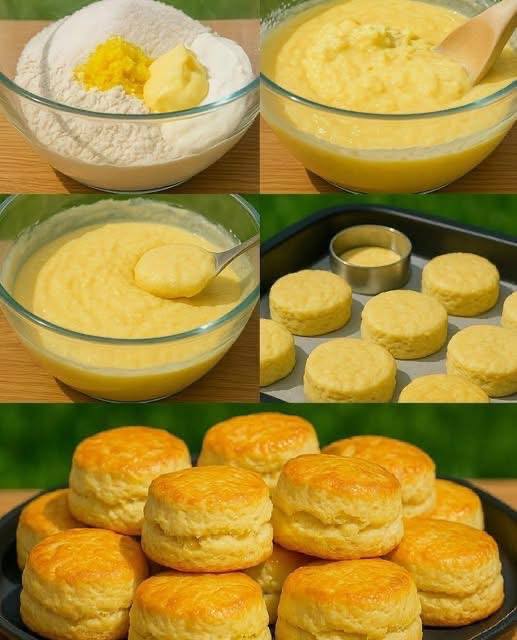
Instructions
- Preheat your oven to 425°F (220°C). Line a baking sheet with parchment paper or a silicone baking mat.
- In a large bowl, whisk together the flour, baking powder, sugar (if using), and salt. Ensure all dry ingredients are well combined.
- Add the very cold, cubed butter to the dry ingredients. Using a pastry blender, two knives, or your fingertips, cut the butter into the flour mixture until it resembles coarse crumbs with some pea-sized pieces of butter remaining. This step is crucial for flaky biscuits, so avoid overworking the butter and keep it as cold as possible.
- Make a well in the center of the flour and butter mixture. Pour in the cold buttermilk. Stir gently with a fork or rubber spatula until just combined. The dough should still look shaggy and a little dry in places; avoid overmixing, as this can lead to tough biscuits.
- Turn the dough out onto a lightly floured surface. Gently bring the dough together into a cohesive mass. Do not knead vigorously.
- To create layers, gently pat the dough into a rectangle, about 1-inch thick. Fold one-third of the dough over the middle, then fold the other third over that (like folding a letter). Rotate the dough 90 degrees and repeat the patting and folding process 2-3 more times. This gentle folding helps build those beautiful, flaky layers without developing too much gluten.
- Pat the dough out to about 3/4-inch to 1-inch thickness. Using a 2-inch or 2.5-inch biscuit cutter, cut straight down into the dough. Do not twist the cutter, as twisting can seal the edges and prevent the biscuits from rising properly.
- Place the cut biscuits onto the prepared baking sheet, spacing them about 1 inch apart for crispier edges, or closer together for softer sides. Gather any dough scraps, gently press them together (again, avoid overworking), and cut out any remaining biscuits.
- If using an egg wash, whisk the egg with 1 tablespoon of water in a small bowl. Gently brush the tops of the biscuits with the egg wash for a golden-brown finish.
- Bake for 12-15 minutes, or until the tops are golden brown and the biscuits are cooked through. The exact baking time may vary depending on your oven.
- Remove from the oven and let cool slightly on the baking sheet before serving warm.
Cooking Tips and Variations
Achieving the perfect biscuit is all about precision and a few key techniques. Firstly, the importance of cold ingredients cannot be overstated. Using very cold butter and buttermilk (or milk) prevents the butter from melting into the dough too quickly. As the cold butter melts in the hot oven, it creates steam, which is what gives biscuits their incredible flaky layers. You can even chill your flour and mixing bowl for 10-15 minutes before starting. When cutting in the butter, work quickly to minimize heat transfer from your hands. If your kitchen is warm, you can even pop the bowl of dry ingredients and butter into the freezer for 5-10 minutes if the butter starts to soften too much.
Gentle handling of the dough is another critical factor. Overmixing or overworking the dough develops gluten, which leads to tough, dense biscuits instead of light and tender ones. Once the wet ingredients are added, mix only until just combined. The dough should still look a bit shaggy. The folding technique described in the instructions is vital for creating layers. Each fold adds more distinct layers of butter and dough, which then puff up in the oven. Remember to pat the dough out gently and avoid using a rolling pin if possible, as it can compress the layers you’ve worked to create. When cutting the biscuits, press straight down with your cutter. Twisting seals the edges, preventing the biscuit from rising fully and achieving that beautiful, airy texture.
Don’t be afraid to experiment with variations to customize your biscuits. For a savory twist, try adding 1/2 cup of shredded sharp cheddar cheese and 1 tablespoon of chopped fresh chives or dill to the dry ingredients. A pinch of garlic powder or onion powder can also enhance the savory profile. For a slightly sweeter option, increase the sugar to 2 tablespoons and add 1/2 teaspoon of cinnamon to the dry ingredients, perfect for serving with coffee. You can also incorporate dried herbs like rosemary or thyme for an aromatic biscuit that pairs wonderfully with roasted meats or soups. Just remember to keep the added ingredients cold if they are solid, like cheese, to maintain the desired texture.
Finally, ensure your oven is preheated to the correct temperature before baking. A hot oven helps the biscuits rise quickly and creates a beautiful golden-brown crust. If your oven temperature is too low, the butter will melt out of the biscuits before they have a chance to set, resulting in flat, greasy biscuits. Baking them closer together on the baking sheet will result in softer sides, while spacing them further apart will yield crispier edges all around. Experiment to find your preferred texture!
Storage and Reheating
Proper storage is key to enjoying your classic buttery biscuits for as long as possible. Once baked and cooled, biscuits are best enjoyed fresh, but they can be stored for later. To store, place cooled biscuits in an airtight container at room temperature for up to 2-3 days. If you need to store them for longer, you can refrigerate them for up to a week. For optimal freshness, avoid storing them in the refrigerator unless absolutely necessary, as the cold air can dry them out slightly.
Biscuits also freeze beautifully. Once completely cooled, place them in a freezer-safe bag or airtight container, separating layers with parchment paper to prevent sticking. They can be frozen for up to 2-3 months. When you’re ready to enjoy them, you can reheat them directly from frozen.
Reheating biscuits properly ensures they regain their tender texture and warmth. The best method for reheating is in the oven. Preheat your oven to 300-325°F (150-160°C). Place the biscuits on a baking sheet and heat for 5-10 minutes if they are thawed, or 15-20 minutes if frozen, until they are warmed through and softened. You can also wrap them loosely in foil to prevent them from drying out. Avoid microwaving biscuits if possible, as this can make them chewy and tough, though it is a quick option if you’re in a pinch. If you must use a microwave, heat them for only 15-30 seconds at a time until just warm.
Frequently Asked Questions
Why are my biscuits tough or hard?
Tough biscuits are almost always a result of overworking the dough. When you mix or knead the dough too much, you develop the gluten in the flour, which creates a chewy, bread-like texture instead of a tender, flaky one. To avoid this, mix the dough only until the ingredients are just combined and handle it gently when patting and folding.
Can I use regular milk instead of buttermilk?
Yes, you can! Buttermilk provides a slightly tangy flavor and reacts with the baking powder to create a lighter, more tender biscuit. If you don’t have buttermilk, you can easily make a substitute: add 1 tablespoon of lemon juice or white vinegar to a liquid measuring cup, then fill the rest of the cup with regular milk (dairy or non-dairy) until it reaches the 3/4-cup mark. Let it sit for 5 minutes until it slightly curdles, then use as directed.
How do I get flaky layers in my biscuits?
Flaky layers come from two main factors: very cold butter and proper dough handling. The cold butter creates pockets of steam as it melts in the hot oven, pushing the layers apart. Make sure your butter is cut into small pieces and remains cold throughout the mixing process. The folding technique (patting the dough into a rectangle and folding it over itself multiple times) also helps to build these distinct layers. Remember to press straight down with your biscuit cutter and avoid twisting, as twisting can seal the edges and prevent the layers from separating.
Can I make the biscuit dough ahead of time?
Yes, you can prepare biscuit dough in advance. After cutting the biscuits, place them on a parchment-lined baking sheet and cover them loosely with plastic wrap. You can refrigerate them for up to 12-24 hours. When ready to bake, remove them from the refrigerator while your oven preheats, and then bake as directed, possibly adding a minute or two to the baking time. You can also freeze cut biscuits on a baking sheet until solid, then transfer them to a freezer-safe bag for up to 2-3 months. Bake from frozen, adding an extra 5-10 minutes to the baking time.