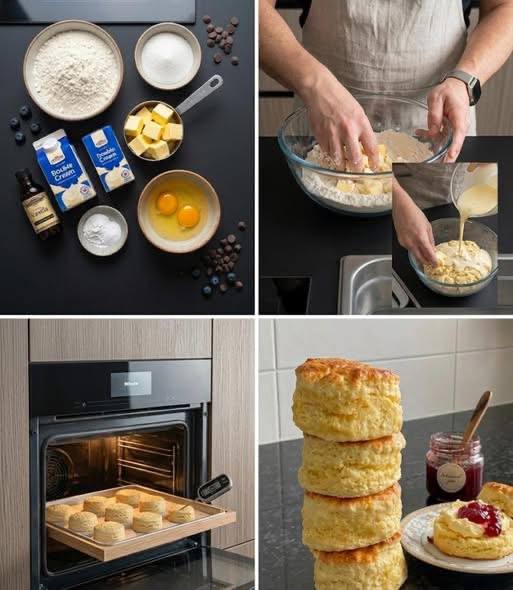
Instructions
- Prepare Your Workspace and Preheat Oven: Preheat your oven to 425°F (220°C). Line a baking sheet with parchment paper or lightly grease it. Gather all your ingredients, ensuring your butter and buttermilk are thoroughly chilled.
- Combine Dry Ingredients: In a large bowl, whisk together the flour, baking powder, baking soda, salt, and granulated sugar (if using). Make sure there are no lumps and the ingredients are evenly distributed.
- Cut in the Cold Butter: Add the cold, cubed butter to the dry ingredients. Using a pastry blender, two knives, or your fingertips, quickly cut the butter into the flour mixture until it resembles coarse crumbs with some pea-sized pieces of butter remaining. This is crucial for flaky biscuits, as the butter creates steam pockets during baking.
- Add Wet Ingredients: Make a well in the center of the flour mixture. Pour in the cold buttermilk. Stir gently with a spoon or your hands until the dough just comes together. Be careful not to overmix; the dough should still look a bit shaggy and sticky. Overmixing develops gluten, leading to tough biscuits.
- Turn Out and Gently Knead (Optional): Lightly flour a clean surface. Turn the dough out onto the floured surface. Gently pat the dough into a rough rectangle. You can fold the dough over on itself 2-3 times (like folding a letter) to create more layers, but handle it as little as possible. Pat it down to about ¾ to 1 inch thickness.
- Cut the Biscuits: Using a 2-inch or 2 ½-inch biscuit cutter, press straight down into the dough to cut out biscuits. Do not twist the cutter, as this seals the edges and prevents the biscuits from rising properly. Rework the scraps gently, patting them together once or twice to cut out additional biscuits.
- Arrange on Baking Sheet: Place the cut biscuits on your prepared baking sheet. For higher-rising biscuits, place them relatively close together (touching or almost touching). For crispier edges, space them further apart.
- Bake: Bake in the preheated oven for 12-15 minutes, or until the tops are golden brown and the biscuits are cooked through. The exact baking time will depend on your oven and the size of your biscuits.
- Brush with Melted Butter (Optional): Once out of the oven, for an extra touch of richness and shine, immediately brush the tops of the hot biscuits with melted butter.
- Serve Warm: Serve your Classic Southern Biscuits warm, split open, and ready for your favorite toppings.
Cooking Tips and Variations
Tips for Flaky Biscuits:
- Keep Everything Cold: This is the golden rule! Cold butter creates steam pockets as it melts in the oven, leading to those signature flaky layers. Cold buttermilk also helps keep the butter from melting prematurely.
- Don’t Overmix: Overworking the dough develops gluten, which results in tough, dense biscuits. Mix just until the ingredients are combined and the dough is shaggy.
- Handle Gently: Whether you’re cutting in the butter or patting out the dough, a light hand is key. Excessive handling warms the butter and compacts the dough.
- Press Straight Down, Don’t Twist: When using a biscuit cutter, press straight down firmly and lift straight up. Twisting the cutter seals the edges of the biscuit, preventing it from rising to its full potential.
- Bake Hot: A high oven temperature (425°F/220°C) helps the biscuits rise quickly and creates a beautiful golden-brown crust.
- Biscuits Touch: For taller, softer-sided biscuits, arrange them close together on the baking sheet so they are touching. This helps them push each other up as they rise. If you prefer crispier edges, space them further apart.
Variations:
- Cheddar Biscuits: Fold in 1 cup of shredded sharp cheddar cheese with the dry ingredients for a savory twist.
- Herb Biscuits: Add 1-2 tablespoons of finely chopped fresh herbs like chives, rosemary, or thyme to the dry ingredients.
- Sweet Biscuits: Increase the sugar to 2-3 tablespoons and add ½ teaspoon of cinnamon for a sweeter biscuit, perfect for serving with fruit. A pinch of nutmeg can also be lovely.
- Cream Biscuits: If you don’t have buttermilk, you can substitute heavy cream for the liquid. This will result in a very rich and tender biscuit, though slightly less tangy.
- Drop Biscuits: For an even quicker method, instead of cutting, simply drop spoonfuls of the dough onto the baking sheet. They won’t be as uniform in shape but will be just as delicious and tender.
Storage and Reheating
Storage:
- Room Temperature: Freshly baked biscuits are best enjoyed the day they are made. However, you can store them in an airtight container at room temperature for up to 2 days. Make sure they are completely cooled before storing to prevent condensation, which can make them soggy.
- Refrigerator: For longer storage, place cooled biscuits in an airtight container or a resealable bag and refrigerate for up to 5 days.
- Freezer: Biscuits freeze beautifully! Once completely cooled, wrap individual biscuits tightly in plastic wrap, then place them in a freezer-safe bag or container. They can be frozen for up to 2-3 months.
Reheating:
- From Room Temperature or Refrigerator: For best results, reheat biscuits in a preheated oven at 300-325°F (150-160°C) for 5-10 minutes, or until warmed through. You can also slice them in half and toast them lightly in a toaster oven.
- From Frozen: Do not thaw frozen biscuits. Place them directly on a baking sheet in a preheated oven at 300-325°F (150-160°C) for 15-20 minutes, or until heated through and lightly crisped.
- Microwave (Use with Caution): While convenient, microwaving biscuits can make them tough or chewy. If you must use a microwave, heat for short bursts (10-20 seconds) until just warm.
Frequently Asked Questions
Why are my biscuits tough and not flaky?
The most common reasons for tough biscuits are overmixing the dough and using butter that isn’t cold enough. Overmixing develops gluten, making the biscuits chewy, while warm butter melts into the flour too soon, preventing those desirable flaky layers from forming. Ensure your butter is ice-cold and handle the dough as little and as gently as possible.
Can I make biscuits ahead of time?
Yes, you can! You can prepare the dough, cut out the biscuits, and then place them on a parchment-lined baking sheet. Cover the baking sheet loosely with plastic wrap and refrigerate for up to 12-24 hours before baking. You can also freeze unbaked biscuits; place them on a baking sheet until solid, then transfer to a freezer-safe bag. Bake from frozen, adding a few extra minutes to the baking time.
What if I don’t have buttermilk?
No problem! You can easily make a buttermilk substitute at home. For 1 cup of buttermilk, pour 1 tablespoon of lemon juice or white vinegar into a liquid measuring cup, then fill the rest of the cup with regular milk (whole milk works best) until it reaches the 1-cup mark. Stir gently and let it sit for 5-10 minutes until it slightly curdles. This acidity is important for activating the baking soda and contributing to the biscuit’s tenderness and flavor.
What’s the secret to a high rise?
Several factors contribute to a good rise. First, ensure your baking powder and baking soda are fresh and active. Second, use very cold butter and don’t overmix. Third, when cutting, press straight down with your biscuit cutter and never twist it, as twisting seals the edges. Finally, placing biscuits close together on the baking sheet encourages them to push each other up, resulting in taller biscuits.