Introduction
There are few treats as universally beloved and simply satisfying as the humble Coconut Macaroon. These delightful little mounds of shredded coconut, bound together with a sweet, chewy embrace, offer an irresistible combination of textures and flavors. From their crispy, golden-brown edges to their moist and tender interior, each bite is a journey to a tropical paradise. They’re not just cookies; they’re a celebration of simplicity, a testament to how a few basic ingredients can create something truly extraordinary. Whether you’re a seasoned baker or just starting your culinary adventures, the coconut macaroon is an approachable and rewarding recipe that promises delicious results every time.
What makes coconut macaroons so special? It’s their unique charm and versatility. Unlike their more delicate and temperamental French cousins (the meringue-based macarons), these macaroons are wonderfully forgiving and incredibly easy to make. They require no special equipment, no intricate techniques, and very little fuss. Their traditional appeal lies in their straightforward nature, making them a perfect choice for last-minute gatherings, thoughtful homemade gifts, or simply a well-deserved afternoon treat with a cup of coffee or tea. The magic truly happens in the oven, as the coconut toasts to perfection, developing deep, caramelized notes that complement its natural sweetness.
This recipe for Coconut Macaroons is designed to be your go-to guide for achieving bakery-quality results right in your own kitchen. We’ll walk through each step with clarity, ensuring that even beginners can confidently create a batch of these golden, chewy delights. We’ll focus on the specific ingredients and techniques that yield that ideal balance of crisp exterior and moist, tender interior, with those coveted toasted coconut peaks. Get ready to fill your home with the intoxicating aroma of toasted coconut and enjoy the pure pleasure of a perfectly crafted homemade macaroon.
Nutritional Information
Per serving (approximate values):
- Calories: 180
- Protein: 2g
- Carbohydrates: 22g
- Fat: 11g
- Fiber: 2g
- Sodium: 60mg
Ingredients
- 14 ounces (about 4 cups) sweetened shredded coconut
- 14 ounces (1 standard can) sweetened condensed milk
- 1 teaspoon pure vanilla extract
- 1/4 teaspoon salt
Instructions
- Preheat your oven to 325°F (160°C). Line a large baking sheet with parchment paper. This is crucial for preventing sticking and ensuring easy removal of your macaroons.
- In a large mixing bowl, combine the sweetened shredded coconut, sweetened condensed milk, vanilla extract, and salt.
- Using a sturdy spoon or your hands, mix all the ingredients together thoroughly until the coconut is completely moistened and evenly coated with the condensed milk. It’s important to ensure there are no dry pockets of coconut, as this will affect the texture and binding of your macaroons.
- Once the mixture is well combined, begin shaping your macaroons. You can use a small cookie scoop (about 1.5 to 2 tablespoons in size) to portion out the mixture, or simply use your hands to form rounded, domed, or pyramid-like shapes. Gently press the mixture together to ensure it holds its shape, but avoid compacting it too tightly.
- Place the shaped macaroons onto the prepared baking sheet, leaving about 1 inch of space between each one to allow for even baking and air circulation.
- Bake in the preheated oven for 20-25 minutes, or until the macaroons are beautifully golden brown on the edges and the tips of the coconut are nicely toasted. Keep a close eye on them during the last 5-10 minutes of baking, as coconut can go from perfectly golden to burnt very quickly due to its natural sugars. The degree of browning will determine the level of toasted flavor.
- Once baked to your desired golden hue, remove the baking sheet from the oven.
- Allow the macaroons to cool completely on the baking sheet. This step is essential! While warm, the macaroons are delicate and prone to falling apart. As they cool, they will firm up and become perfectly chewy and easier to handle. Attempting to move them while warm will likely result in breakage.
- Once completely cooled, carefully transfer the macaroons from the parchment paper to an airtight container. A small metal spatula can be helpful for gently lifting them without damaging their delicate structure.
- Serve and enjoy your homemade Coconut Macaroons!
Cooking Tips and Variations
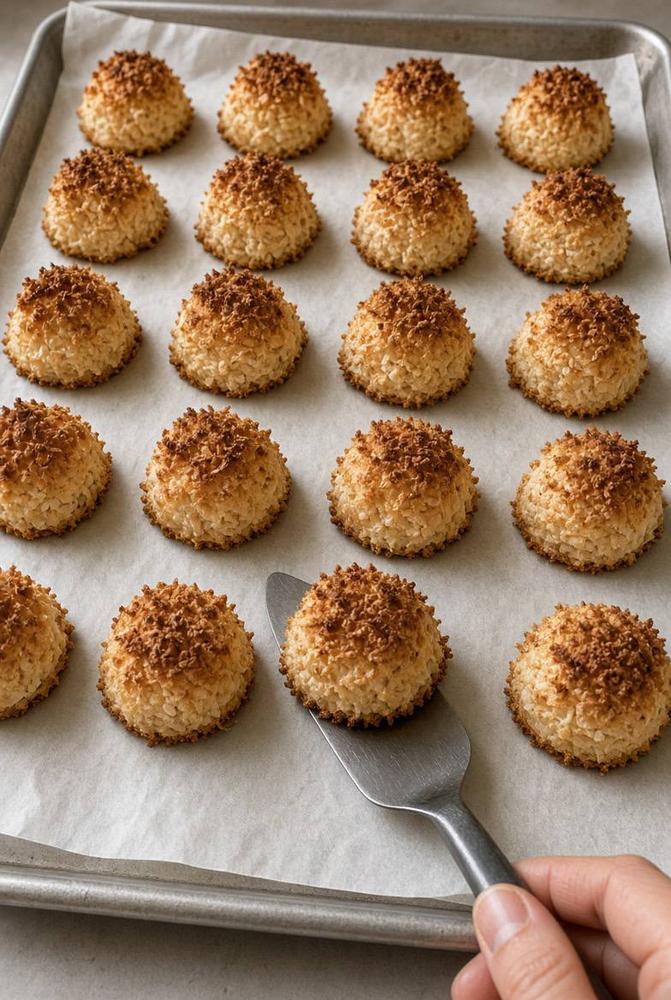
Achieving the perfect texture in your coconut macaroons is all about balance. Firstly, ensure your coconut mixture is thoroughly combined but don’t over-mix it to the point of breaking down the coconut strands. The goal is even coating, not a paste. Proper baking time is also key; the beautiful golden-brown tips seen in the image are a result of controlled toasting, which brings out the deep, rich flavor of the coconut. Keep an eye on your oven, as baking times can vary slightly. For consistent results, consider rotating your baking sheet halfway through the baking process.
To prevent sticking, using parchment paper is absolutely essential. As seen in the image, it provides a non-stick surface that allows for easy removal of the macaroons once they’ve cooled and firmed up. Without it, you risk leaving half your delicious macaroon stuck to the pan. If you don’t have parchment paper, a well-greased and floured baking sheet might work, but parchment is highly recommended for the best experience.
For flavor variations, the possibilities are endless! One of the most popular is dipping the cooled macaroons in melted chocolate. Dark, milk, or white chocolate all work beautifully. Simply melt your favorite chocolate chips or chopped chocolate in a microwave-safe bowl or over a double boiler, then dip the bases of the macaroons and let them set on parchment paper. You can also drizzle chocolate over the tops for a decorative touch. Another delightful variation is adding different extracts to the mixture; almond extract pairs wonderfully with coconut, or a touch of rum extract can give them a tropical twist. For a brighter flavor, incorporate a teaspoon of citrus zest, such as orange or lime, into the coconut mixture before baking. You can also press a whole almond or a candied cherry into the center of each macaroon before baking for an extra surprise.
Troubleshooting common issues can save your batch. If your macaroons spread too much, it might be due to a mixture that’s too wet. Ensure you’re using sweetened condensed milk, not evaporated milk, as condensed milk is thicker and provides the necessary binding. If they are too dry and crumbly, it’s likely the opposite – not enough binder. Make sure your coconut is fully saturated. If you find your macaroons are burning on the bottom before the tops are golden, try moving your baking sheet to a higher rack in the oven or placing another empty baking sheet on the rack below to act as a heat shield.
Finally, for uniform shaping and baking, a small cookie scoop (about 1.5 to 2 tablespoons) is your best friend. It helps create consistently sized macaroons, which means they will bake evenly and look professionally made. If you don’t have a scoop, use two spoons or your hands to form compact, domed shapes. The key is to gently press the mixture together so it holds its form during baking, but not so tightly that it becomes a dense, hard ball.
Storage and Reheating
Proper storage is key to maintaining the fresh taste and chewy texture of your homemade coconut macaroons. Once completely cooled, store them in an airtight container at room temperature. They will stay fresh and delicious for up to 5-7 days. Placing a piece of parchment paper between layers of macaroons can prevent them from sticking together, especially if you’ve added a chocolate coating. For longer storage, you can refrigerate them, which can extend their freshness for up to two weeks, though the texture might become slightly firmer. Simply let them come to room temperature before serving for the best experience.
Coconut macaroons also freeze exceptionally well, making them perfect for meal prepping or having a sweet treat on hand whenever a craving strikes. To freeze, arrange the cooled macaroons in a single layer on a baking sheet and place them in the freezer for about an hour, or until solid. This “flash freezing” prevents them from sticking together. Once frozen, transfer them to a freezer-safe airtight container or a heavy-duty freezer bag. They can be stored in the freezer for up to 2-3 months. When you’re ready to enjoy them, simply remove the desired number of macaroons from the freezer and let them thaw at room temperature for about 30-60 minutes. There’s no need to reheat them; they are best enjoyed at room temperature, allowing their chewy texture and rich coconut flavor to shine through.
Frequently Asked Questions
What’s the difference between a coconut macaroon and a French macaron?
This is a common point of confusion! Coconut macaroons are dense, chewy, and rustic cookies made primarily from shredded coconut, sweetened condensed milk, and sometimes egg whites. They are simple to make and have a distinctly tropical, toasted coconut flavor. French macarons, on the other hand, are delicate, airy sandwich cookies made from almond flour, egg whites, and sugar, typically filled with ganache or buttercream. They have a smooth, crisp shell and a soft, chewy interior, and are known for their vibrant colors and intricate technique. While both are delicious, they are entirely different in ingredients, texture, and preparation.
Can I use unsweetened shredded coconut instead of sweetened?
While you can use unsweetened shredded coconut, you will need to adjust the recipe significantly to compensate for the lack of sugar and moisture. If you opt for unsweetened coconut, you’ll need to add extra granulated sugar (approximately 1/2 to 3/4 cup, to taste) and potentially a bit more sweetened condensed milk or an additional egg white to achieve the desired sweetness and binding consistency. The final product might have a slightly different texture and flavor profile, so for classic, chewy macaroons, sweetened shredded coconut is highly recommended as it provides both the necessary sweetness and moisture.
Why are my macaroons falling apart or too crumbly?
If your macaroons are falling apart, it’s usually an issue with the binder or the mixing. Ensure you’ve used sweetened condensed milk and not evaporated milk, as condensed milk is much thicker and stickier. Also, make sure you’ve mixed the ingredients thoroughly until all the coconut is evenly coated and moist. If the mixture feels too dry before baking, you can try adding an extra tablespoon or two of sweetened condensed milk to help bind it. Additionally, remember to let the macaroons cool completely on the baking sheet after baking; they are very fragile when warm and will firm up as they cool.