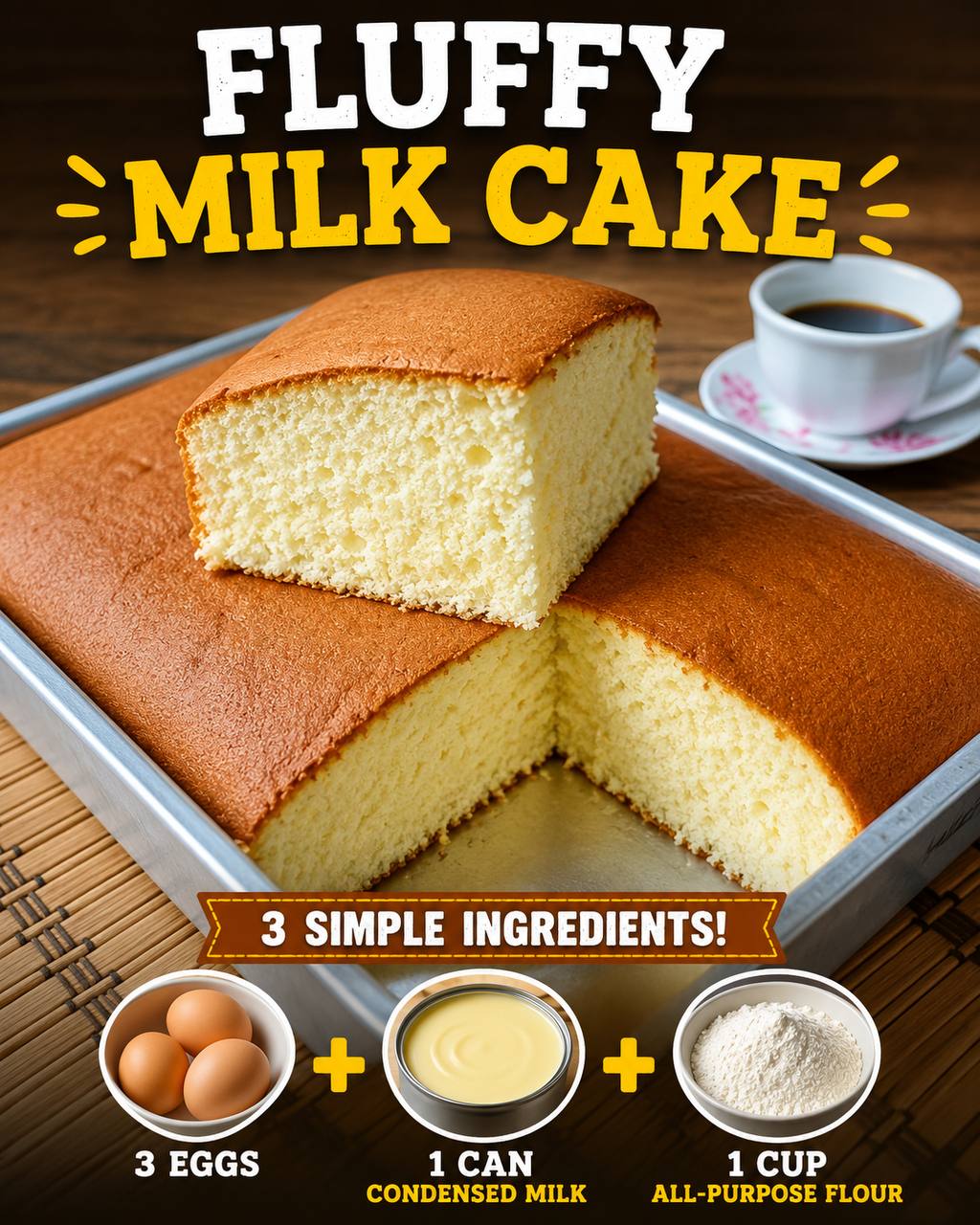
Instructions
- Preheat your oven to 325°F (160°C). Grease and flour a 9×13 inch baking pan, or line it with parchment paper, leaving an overhang on the sides for easy lifting.
- Separate the eggs. Place the egg whites in a very clean, dry large mixing bowl, and the egg yolks in a separate medium-sized bowl. Ensure there is absolutely no trace of yolk in the whites, as this will prevent them from whipping properly.
- To the bowl with the egg yolks, add the sweetened condensed milk, vanilla extract, and salt. Whisk vigorously until the mixture is smooth, well combined, and slightly pale in color, about 2-3 minutes.
- Gradually sift the all-purpose flour into the egg yolk mixture, mixing gently with a whisk or spatula until just combined. If using, add the baking powder at this stage along with the flour. Be careful not to overmix the batter; overmixing can lead to a tough cake. The mixture will be quite thick at this point.
- Now, turn your attention to the egg whites. Using an electric mixer (handheld or stand mixer with a whisk attachment), beat the egg whites on medium-high speed until stiff peaks form. This means when you lift the whisk, the whites will hold their shape firmly and not droop. This step is crucial for the cake’s fluffy, cotton-like texture.
- Gently fold about one-third of the whipped egg whites into the thick egg yolk and flour mixture. Use a spatula and a gentle, upward motion, being careful not to deflate the whites. This will lighten the batter and make it easier to incorporate the rest of the whites.
- Add the remaining whipped egg whites to the batter in two additions, continuing to fold gently until no streaks of white remain. The goal is to incorporate the whites fully while retaining as much air as possible. The batter should be light and airy.
- Pour the finished batter into your prepared baking pan and spread it evenly with a spatula. Gently tap the pan on the counter a few times to release any large air bubbles.
- Bake for 30-35 minutes, or until the cake is golden brown on top, springs back when lightly touched in the center, and a wooden skewer or toothpick inserted into the center comes out clean.
- Once baked, remove the pan from the oven and let the cake cool in the pan for about 10-15 minutes. This allows the cake to set and prevents it from breaking.
- After cooling slightly in the pan, carefully invert the cake onto a wire rack, then flip it right side up to cool completely. If you used parchment paper, you can lift the cake out using the overhang.
- Once completely cooled, slice the cotton cake into squares or rectangles and serve. Enjoy this delightful family recipe!
Cooking Tips and Variations
For the fluffiest, most perfect Cotton Cake, paying attention to a few key details makes all the difference. Firstly, ensure your eggs are at room temperature. This isn’t just a suggestion; room temperature eggs, especially the whites, whip up to a much greater volume than cold ones, which is essential for achieving that signature airy texture. When separating your eggs, be meticulously careful not to get any yolk into the whites. Even a tiny speck of fat can prevent the egg whites from reaching stiff peaks, and without those stiff peaks, your cake won’t be nearly as light and fluffy.
The mixing technique for this cake is also paramount. When combining the flour with the egg yolk mixture, mix just until no dry streaks remain. Overmixing develops the gluten in the flour, leading to a tougher, denser cake, which is the opposite of what we’re aiming for with a “cotton” cake. Similarly, when folding in the whipped egg whites, be gentle and patient. Use a spatula to scoop from the bottom of the bowl and fold over the top, rotating the bowl as you go. The goal is to incorporate the whites without deflating all the air you’ve worked so hard to create. A light hand here is truly rewarded.
While the base recipe is wonderfully simple, a few optional additions can elevate the flavor profile. Vanilla extract is highly recommended; it adds warmth and depth that complements the sweetness of the condensed milk beautifully. A small pinch of salt, often overlooked in sweet recipes, actually enhances all the other flavors, making the cake taste even more delicious. If you’re concerned about lift, especially if you’re new to whipping egg whites, a teaspoon of baking powder added with the flour can provide a little extra insurance, though it’s often not strictly necessary if the whites are whipped correctly.
Regarding variations, this cake is a fantastic canvas. For a citrusy twist, add the zest of one lemon or orange to the egg yolk mixture. The bright notes will cut through the sweetness and add a lovely freshness. A touch of almond extract can also provide a sophisticated flavor change. For serving, while delicious plain, a light dusting of powdered sugar makes it look elegant, or you can serve it with fresh berries and a dollop of whipped cream for a more decadent treat. The pan size can also influence the outcome; a 9×13 inch pan will yield a thinner cake, while an 8×8 or 9×9 inch pan will produce a thicker one, which may require a slightly longer baking time. Always rely on the toothpick test for doneness, regardless of the suggested baking time.
Storage and Reheating
Proper storage is key to keeping your Cotton Cake fresh and delicious. Once the cake has completely cooled to room temperature, it’s best stored in an airtight container. This prevents it from drying out and absorbing other odors in your kitchen or refrigerator. You can keep it at room temperature for up to 2-3 days, especially if your kitchen isn’t too warm or humid. For longer storage, or if you live in a warmer climate, refrigerating the cake is a good option. In the refrigerator, it will stay fresh for up to 5-7 days. Just be aware that refrigeration can sometimes alter the texture slightly, making it a little firmer. To enjoy the cake at its best, allow refrigerated slices to come back to room temperature for about 15-20 minutes before serving.
If you’ve baked a large batch or want to save some for later, this Cotton Cake freezes surprisingly well. To freeze, wrap individual slices or larger portions tightly in plastic wrap, then place them in a freezer-safe bag or airtight container. This double layer of protection helps prevent freezer burn. The cake can be stored in the freezer for up to 1-2 months. When you’re ready to enjoy a slice, simply remove it from the freezer and let it thaw at room temperature for an hour or two. There’s generally no need to reheat this cake, as its charm lies in its soft, airy texture at room temperature. Reheating in a microwave might make it a bit rubbery, and in an oven, it could dry out. However, if you prefer a slightly warm slice, a brief 10-15 second zap in the microwave can gently warm it without overcooking, but be cautious not to overheat.
Frequently Asked Questions
Can I make this cake without separating the eggs?
While it technically might be possible, separating the eggs and whipping the whites to stiff peaks is crucial for achieving the signature “cotton-like” fluffy texture of this cake. The whipped egg whites act as the primary leavening agent, creating the airiness. Without this step, the cake will likely be much denser and not have the desired light crumb.
What if I don’t have an electric mixer for whipping egg whites?
While an electric mixer makes the task much easier and quicker, you can whip egg whites by hand with a whisk. It will require more effort and time (around 10-15 minutes of continuous whisking), but it is absolutely doable. Just ensure your bowl and whisk are impeccably clean and dry.
Can I substitute other types of milk for condensed milk?
No, sweetened condensed milk is a very specific ingredient in this recipe and cannot be directly substituted with regular milk, evaporated milk, or milk alternatives. Condensed milk provides both the primary sweetness and a unique richness and moisture that is integral to the cake’s texture and flavor. Its high sugar content also contributes to the golden-brown crust.
My cake didn’t rise much, what went wrong?
The most common reasons for a cake not rising are usually related to the egg whites. Ensure your egg whites were whipped to stiff peaks and that there was no yolk contamination. Also, be very gentle when folding the whipped whites into the batter; overmixing can deflate all the air, leading to a flat cake. Lastly, check your oven temperature to ensure it’s accurate.