Instructions
A. Preparing the White Cake Layers:
- Preheat your oven to 350°F (175°C). Grease and flour two 8-inch round cake pans, or line with parchment paper circles.
- In a large bowl, whisk together the sifted all-purpose flour, granulated sugar, baking powder, and salt. Make sure there are no lumps.
- In a separate medium bowl, cream together the softened unsalted butter until light and fluffy, about 2-3 minutes using an electric mixer.
- Gradually add the dry ingredients to the creamed butter, alternating with the coconut milk and water, beginning and ending with the dry ingredients. Mix on low speed until just combined, being careful not to overmix.
- Stir in the vanilla extract.
- In a clean, separate bowl, beat the egg whites with an electric mixer until stiff peaks form. Gently fold the beaten egg whites into the cake batter in two additions, until just combined. Be careful not to deflate the batter.
- Divide the batter evenly between the two prepared cake pans.
- Bake for 25-30 minutes, or until a wooden skewer inserted into the center of the cakes comes out clean.
- Remove the cakes from the oven and let them cool in the pans for 10-15 minutes before inverting them onto a wire rack to cool completely. Ensure cakes are entirely cool before frosting, as warm cakes will melt the frosting.
B. Making the Creamy Coconut Frosting:
- In a large bowl, beat the softened unsalted butter with an electric mixer on medium speed until creamy and pale, about 3-4 minutes.
- Gradually add the sifted powdered sugar, one cup at a time, mixing on low speed until incorporated, then increasing to medium-high until fluffy.
- Pour in the chilled full-fat coconut milk, vanilla extract, coconut extract (if using), and a pinch of salt. Beat on medium-high speed for another 3-5 minutes, until the frosting is light, fluffy, and smooth. If the frosting seems too thick, add a tiny bit more coconut milk (1 teaspoon at a time) until desired consistency is reached. If too thin, add more sifted powdered sugar.
C. Assembling and Decorating the Cake:
- Once the cake layers are completely cool, use a serrated knife to level the tops of the cakes if necessary, creating flat surfaces for easy stacking.
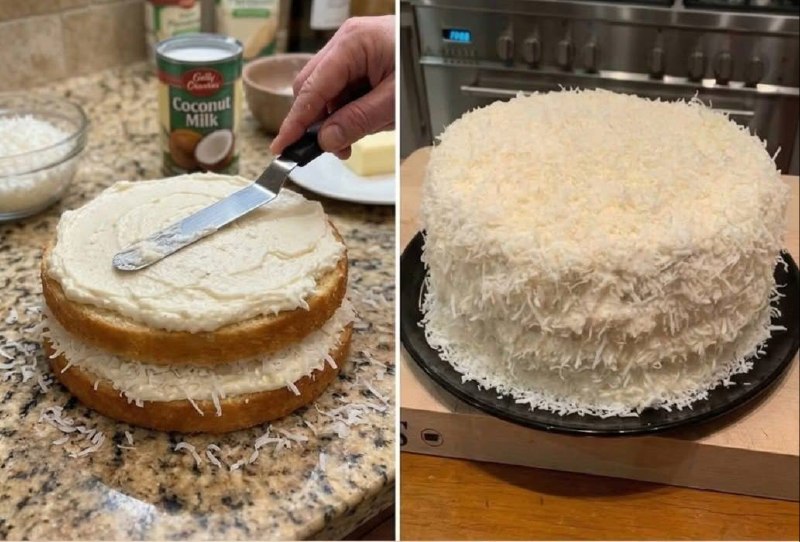
- Place one cake layer on your serving plate or cake stand. Spread about 1 cup of creamy coconut frosting evenly over the top of the first layer.
- Carefully place the second cake layer on top, aligning it evenly.
- Apply a thin layer of frosting all over the top and sides of the cake. This is called a “crumb coat” and helps to trap any loose crumbs, ensuring a smooth final finish. Chill the cake in the refrigerator for 15-20 minutes to set the crumb coat.
- Once the crumb coat is set, apply the remaining creamy coconut frosting generously over the entire cake, smoothing it with an offset spatula or butter knife.
- Gently press the sweetened shredded coconut onto the frosted sides and top of the cake until it is fully coated. You can do this by holding handfuls of coconut and pressing them against the sides, or by cupping coconut in your hands and letting it fall onto the sides and top while rotating the cake.
- Refrigerate the cake for at least 30 minutes before serving to allow the frosting to set and the flavors to meld.
Cooking Tips and Variations
Achieving the perfect Creamy Coconut Cake involves a few key techniques and considerations. Firstly, ensure all your cold ingredients, especially the butter and egg whites for the cake, and the butter for the frosting, are at room temperature. This is crucial for emulsion and achieving the right texture in both the cake batter and the frosting. Room temperature butter creams beautifully, incorporating air for a lighter cake and a fluffier frosting. Cold ingredients, on the other hand, can lead to a dense cake and a lumpy, separated frosting. For the coconut milk in the frosting, chilling it slightly can help achieve a firmer consistency, which is beneficial for stability, especially in warmer environments.
When mixing the cake batter, remember the golden rule of baking: do not overmix. Overmixing develops the gluten in the flour too much, resulting in a tough, dry cake. Mix just until the ingredients are combined, with no streaks of dry flour visible. The final folding in of the egg whites should be gentle to maintain their airy volume, which contributes to the white cake’s light texture. Similarly, for the frosting, beat the butter until it’s light and fluffy before adding the powdered sugar. This aeration is what gives buttercream its signature creamy texture.
Cooling the cake layers completely before frosting is non-negotiable. Attempting to frost warm cakes will cause the frosting to melt, slide off, and create a crumbly mess. Patience here pays off. If you’re short on time, you can wrap cooled cake layers tightly in plastic wrap and freeze them for 30 minutes; they’ll firm up quickly and be easier to handle and level. Speaking of leveling, using a serrated knife or a specialized cake leveler ensures your cake layers are flat and even, leading to a much more professional-looking finished product. An offset spatula is your best friend for applying frosting smoothly; its angled blade makes spreading a breeze.
Don’t be shy with the shredded coconut for the final coating. The more generous you are, the more visual appeal and intense coconut flavor your cake will have. Press it gently but firmly onto the sides and top. For an extra layer of flavor and texture, consider toasting a portion of the shredded coconut before decorating. Simply spread it on a baking sheet and bake at 300°F (150°C) for 5-10 minutes, stirring occasionally, until golden brown. This adds a nutty, caramelized depth that beautifully complements the sweetness of the cake.
For variations, you can introduce other tropical flavors. A sprinkle of fresh lime zest into the cake batter or frosting can add a bright, zesty counterpoint to the rich coconut. You could also create a tangy filling by finely dicing fresh pineapple and simmering it with a little sugar until thickened, then spreading a thin layer between the cake layers before adding the frosting. For an adult-friendly version, a splash of coconut rum or Malibu in the frosting can elevate the tropical experience. Garnishing with fresh fruit like pineapple wedges, kiwi slices, or even edible flowers can further enhance its visual appeal, making it even more festive and inviting. Remember, presentation is key, so arrange your garnishes thoughtfully to create a stunning centerpiece.
Storage and Reheating
Proper storage is essential to keep your Creamy Coconut Cake fresh and delicious. Because this cake contains dairy in both the cake and the frosting, it’s best stored in the refrigerator. Once assembled and frosted, place the cake in an airtight cake carrier or cover it loosely with plastic wrap. This prevents it from drying out and absorbing any refrigerator odors. Stored this way, the cake will remain fresh for up to 3-4 days.
For optimal flavor and texture, especially with butter-based frostings, it’s recommended to bring the cake to room temperature before serving. Remove it from the refrigerator about 30-60 minutes before you plan to slice and serve. This allows the cake layers to soften and the frosting to reach its creamy, melt-in-your-mouth consistency. Serving a cold cake can result in a firmer texture and slightly muted flavors.
If you have leftover slices, store them individually in airtight containers or wrap them tightly in plastic wrap. This helps maintain their moisture and prevents them from drying out. Reheating is generally not recommended for this type of cake, as it can alter the texture of both the cake and the frosting. This is a dessert best enjoyed at room temperature or slightly chilled. Freezing is an option if you want to extend its shelf life significantly. To freeze, place the entire frosted cake (or individual slices) on a baking sheet and freeze until firm. Once firm, wrap it tightly in several layers of plastic wrap, then a layer of aluminum foil. This will protect it from freezer burn. Frozen, the cake can last for up to 1-2 months. To thaw, transfer the wrapped cake to the refrigerator overnight, then bring it to room temperature before serving.
Frequently Asked Questions
What kind of coconut milk should I use for this recipe?
For both the cake and especially the frosting, it is highly recommended to use full-fat canned coconut milk. The full-fat version provides the richness, creaminess, and intense coconut flavor that is crucial for the texture and taste of this cake. Lite coconut milk or coconut beverage from a carton will not yield the same luxurious results.
Can I make this cake ahead of time?
Yes, absolutely! The cake layers can be baked a day or two in advance. Once completely cooled, wrap each layer tightly in plastic wrap and store at room temperature or in the refrigerator. The frosting can also be made a day in advance and stored in an airtight container in the refrigerator. Before using, let the frosting come to room temperature and re-whip it for a few minutes until fluffy again. Assembled, the cake is best enjoyed within 3-4 days, making it perfect for preparing for an event.
Why did my frosting become too thin or too thick?
The consistency of your frosting can be affected by several factors, including the temperature of your butter and the amount of liquid added. If your frosting is too thin, it likely needs more powdered sugar. Add sifted powdered sugar, one tablespoon at a time, beating well after each addition until the desired consistency is reached. If your frosting is too thick, you can thin it out by adding a tiny bit more chilled full-fat coconut milk, about one teaspoon at a time, mixing thoroughly between additions until it’s smooth and spreadable. Always ensure your butter is softened but not melted for the best results.
Can I use fresh coconut instead of shredded coconut?
While fresh coconut can be absolutely delicious, for coating the cake, sweetened shredded coconut is generally preferred. It has a softer texture and adheres better to the frosting. If you wish to use fresh coconut, you would need to grate it very finely and possibly dry it out a bit to prevent excess moisture from affecting the frosting. You could also incorporate finely grated fresh coconut into the cake batter or frosting for an added burst of natural coconut flavor, but for the exterior coating, sweetened shredded coconut provides the best visual and textural outcome.