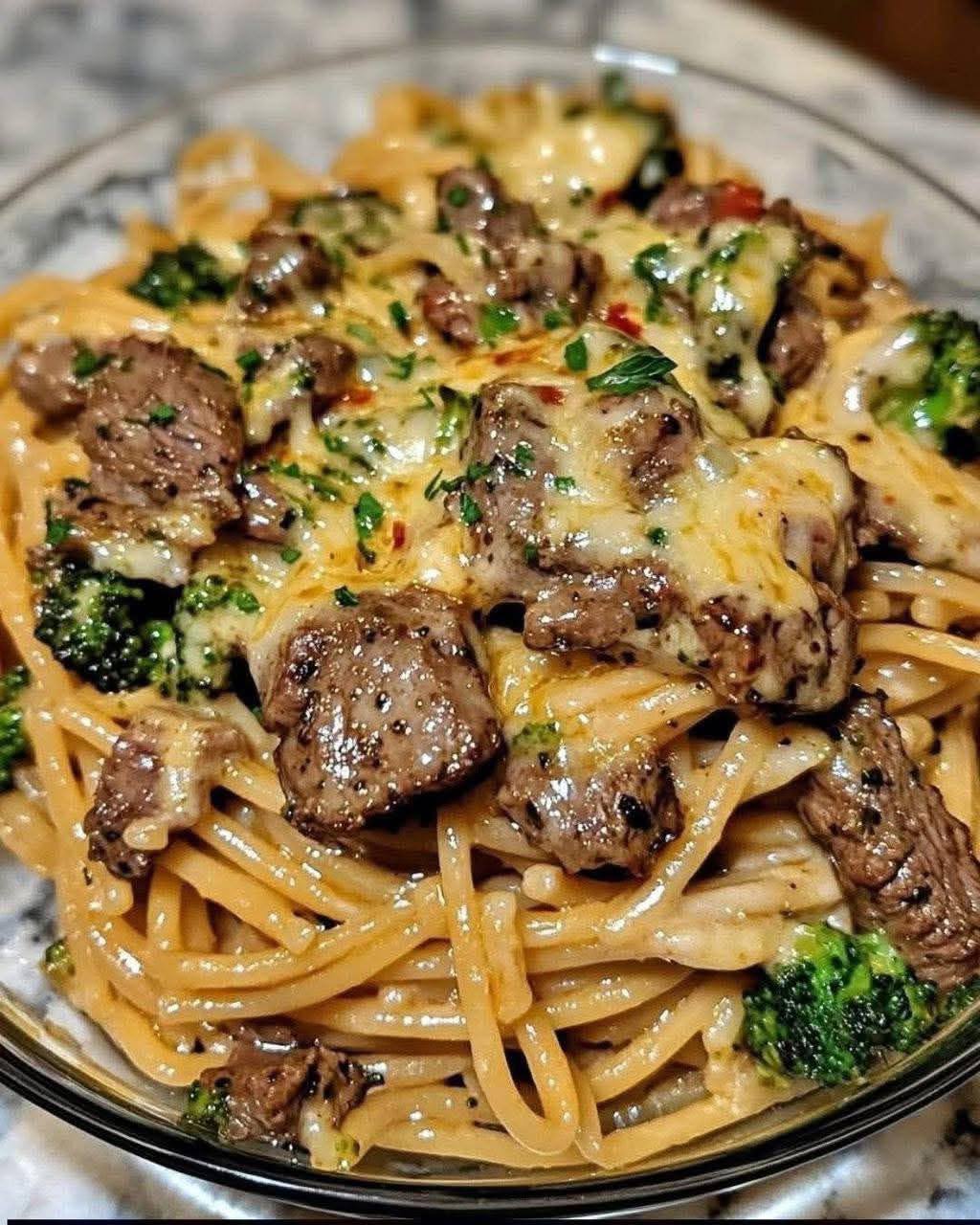
Instructions
- Bring a large pot of salted water to a rolling boil. Add the spaghetti and cook according to package directions until al dente. Before draining, reserve 1/2 cup of the pasta water. Drain the spaghetti and set aside.
- While the pasta cooks, prepare the steak. Pat the steak cubes dry with paper towels. Season evenly with 1/2 teaspoon salt and 1/4 teaspoon black pepper.
- Heat 1 tablespoon olive oil in a large skillet or cast-iron pan over medium-high heat until shimmering. Add the steak in a single layer, being careful not to overcrowd the pan (cook in batches if necessary). Sear for 2-3 minutes per side for medium-rare, or until desired doneness is reached and a nice crust forms. Remove steak from the pan and set aside on a plate.
- In the same skillet, melt the butter over medium heat. Add the baby broccoli and sauté for 3-5 minutes, stirring occasionally, until tender-crisp and bright green. You can add a tablespoon or two of water and cover the pan for a minute or two to steam it if you prefer it softer. Remove the broccoli from the pan and set aside with the steak.
- Add a splash more olive oil to the skillet if needed, then add the minced garlic. Sauté for 30 seconds until fragrant, being careful not to burn it.
- Pour in the heavy cream and bring it to a gentle simmer, stirring frequently. Reduce the heat to low and let it simmer for 3-5 minutes, allowing it to slightly thicken.
- Gradually whisk in the 1/2 cup grated Parmesan cheese until fully melted and smooth. Season the sauce with the remaining 1/2 teaspoon salt and 1/4 teaspoon black pepper. Taste and adjust seasoning as needed. If the sauce is too thick, add a tablespoon or two of the reserved pasta water until desired consistency is reached.
- Add the cooked spaghetti, seared steak, and sautéed baby broccoli back into the skillet with the Alfredo sauce. Toss gently to combine, ensuring all ingredients are evenly coated in the creamy sauce.
- Serve immediately, garnished with fresh chopped parsley and optional red pepper flakes, and extra grated Parmesan cheese on the side.
Cooking Tips and Variations
To achieve the best results with your Creamy Steak & Baby Broccoli Alfredo Spaghetti, a few key tips can make all the difference. For perfectly seared steak, always ensure your meat is patted completely dry before seasoning and placing it in a very hot pan. This allows for a beautiful, flavorful crust to form without steaming the meat. Don’t overcrowd the pan; if you have too much steak, cook it in batches to maintain high heat. For the Alfredo sauce, the key is low and slow heat when adding the cream and cheese. High heat can cause the cream to separate or the cheese to clump, resulting in a grainy sauce. Whisk continuously and gently, allowing the cheese to melt smoothly into the warm cream. If your sauce becomes too thick, a splash of the reserved pasta water is your best friend, as its starch content helps emulsify the sauce and thin it without diluting the flavor. Conversely, if your sauce is a bit too thin, let it simmer gently on low heat for a few more minutes to reduce and thicken naturally.
This recipe is also incredibly versatile and can be adapted to your preferences. If you’re not a fan of steak, consider using chicken breast or shrimp. Simply sear cubed chicken or shrimp until cooked through and add them back to the pasta with the broccoli. For chicken, ensure it’s cooked to an internal temperature of 165°F (74°C). For shrimp, cook until pink and opaque, about 2-3 minutes per side depending on size. The baby broccoli can be swapped for regular broccoli florets, asparagus, or even sautéed mushrooms or spinach for different vegetable combinations. If you like a spicier kick, increase the amount of red pepper flakes in the sauce or serve extra on the side. For an even richer flavor, consider adding a pinch of freshly grated nutmeg to your Alfredo sauce – it’s a classic Italian secret that complements cream sauces beautifully. You can also experiment with different types of pasta; fettuccine, linguine, or even penne would work wonderfully in this dish, offering a different mouthfeel and sauce-holding capability. Finally, always use freshly grated Parmesan cheese for the best flavor and melting consistency in your sauce; pre-grated cheeses often contain anti-caking agents that can make your sauce less smooth.
Storage and Reheating
Storing your Creamy Steak & Baby Broccoli Alfredo Spaghetti properly is essential for maintaining its quality and ensuring it remains delicious for future meals. Once the dish has cooled to room temperature, transfer any leftovers to an airtight container. It can be safely stored in the refrigerator for up to 3 days. While freezing is generally not recommended for cream-based pasta dishes, as the sauce can separate and become grainy upon thawing, if you must, ensure it’s in a freezer-safe container and consume within 1-2 months for best quality. Be aware that the texture of the sauce and broccoli may change after freezing and thawing.
When it comes to reheating, the key is to do so gently to prevent the sauce from breaking or the steak from becoming tough. The best method is to reheat individual portions in a skillet on the stovetop over low to medium-low heat. Add a splash of milk, cream, or even a little water to the pan with the pasta – about 1-2 tablespoons per serving – to help rehydrate the sauce and bring it back to its creamy consistency. Stir frequently and gently until heated through. Avoid high heat, which can cause the sauce to separate and the pasta to become mushy. Alternatively, you can microwave individual servings on a medium power setting, stirring every minute or so, until warmed through. Again, adding a small amount of liquid before microwaving can help revive the sauce. Remember that the steak may become slightly more well-done during reheating, but the overall flavors will still be enjoyable.
Frequently Asked Questions
How can I prevent my Alfredo sauce from curdling?
To prevent your Alfredo sauce from curdling, the most important step is to use low heat. When adding the heavy cream and especially the Parmesan cheese, keep the heat on low and stir constantly. High heat can cause the milk proteins in the cream and cheese to separate. Also, ensure your cream is at room temperature before adding it to the pan, as a sudden temperature change can sometimes shock the sauce. Using freshly grated Parmesan cheese also helps, as pre-grated cheeses often contain anti-caking agents that can affect the sauce’s texture.
Can I use a different cut of steak for this recipe?
Absolutely! While sirloin, ribeye, or flat iron steak are recommended for their tenderness and quick cooking time, you can certainly use other cuts. Flank steak or skirt steak would also work well, but you might want to slice them against the grain after searing to ensure maximum tenderness. If using a tougher cut, consider marinating it for at least 30 minutes before cooking to tenderize it and add extra flavor. Adjust cooking times based on the thickness and type of steak you choose.
What if I don’t have baby broccoli?
No problem at all! You can easily substitute regular broccoli florets for baby broccoli. Just make sure to cut the florets into bite-sized pieces so they cook evenly and integrate well with the pasta. The cooking time for regular broccoli might be slightly longer than for baby broccoli, so cook until it reaches your desired tender-crisp texture. You could also use other green vegetables like asparagus spears (cut into 1-inch pieces) or even spinach, adding the spinach in the last minute of cooking until it wilts.
Can I make this dish ahead of time?
While this dish is best served immediately for optimal texture and flavor, you can certainly prepare some components in advance. You can cook the steak and broccoli, and even make the Alfredo sauce, up to a day ahead and store them separately in airtight containers in the refrigerator. When ready to serve, cook the pasta fresh, then gently reheat the sauce on the stovetop with a splash of milk or cream, add the steak and broccoli to warm through, and finally toss with the hot pasta. This will help maintain the best quality of each component.