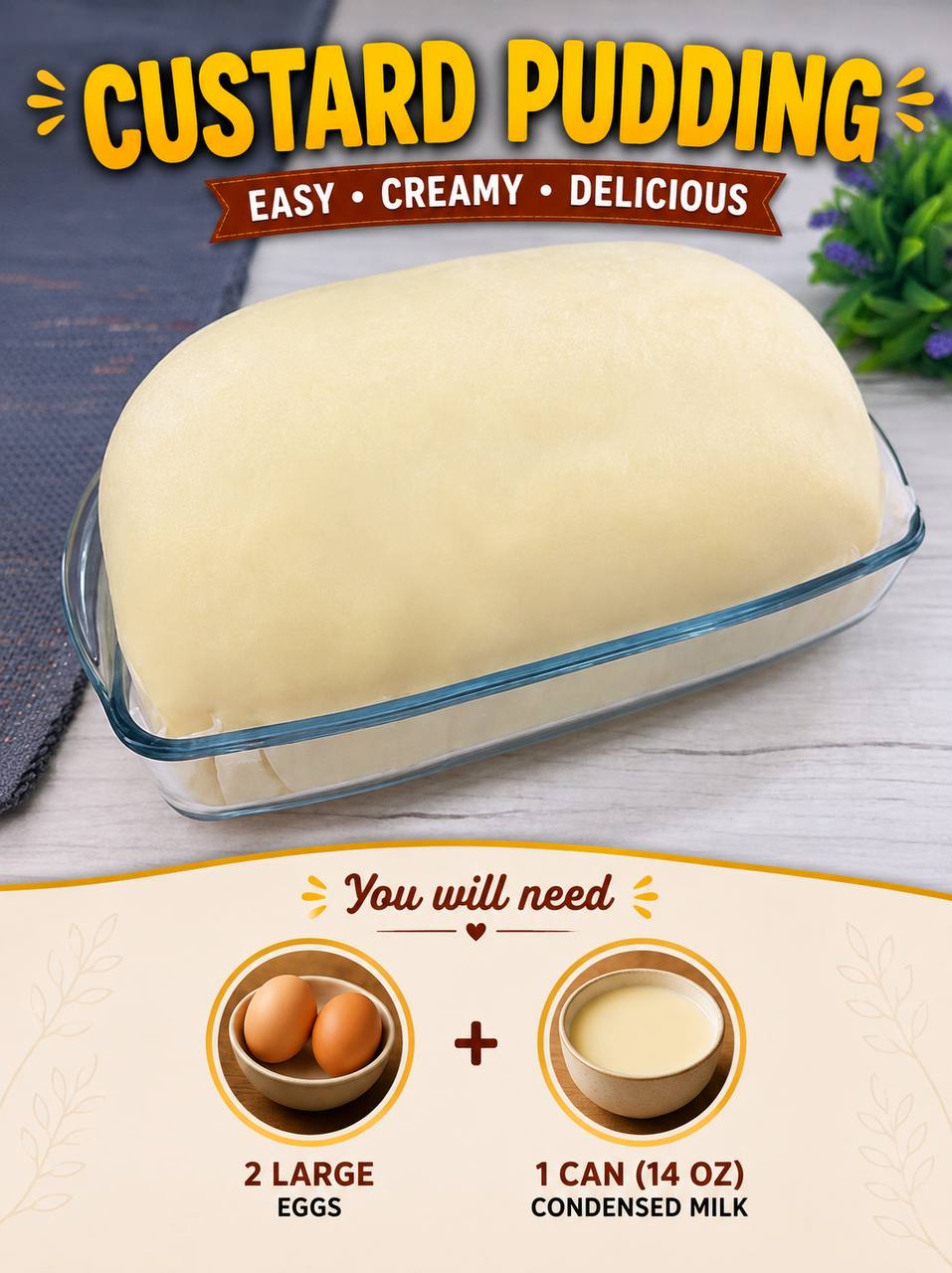
Instructions
- Prepare Your Mold (Optional Caramel Layer): If you desire a classic flan-style custard with a caramel top, begin by making the caramel. In a small, heavy-bottomed saucepan, combine 1/2 cup granulated sugar and 2 tablespoons water. Cook over medium heat without stirring, gently swirling the pan occasionally, until the sugar dissolves and turns into a rich amber caramel. This usually takes about 5-8 minutes. Be careful not to burn it. Immediately pour the hot caramel into your chosen baking dish(es) or ramekins, tilting them to coat the bottom evenly. Set aside to cool and harden.
- Preheat Oven and Prepare Water Bath: Preheat your oven to 325°F (160°C). If you are baking the custard (recommended for the smoothest texture), place your baking dish(es) or ramekins (with or without caramel) inside a larger roasting pan. Set a kettle of water to boil.
- Whisk the Eggs: In a medium-sized mixing bowl, gently whisk the 2 large eggs until they are just combined and slightly frothy. Avoid over-whisking, as this can incorporate too much air, leading to a less smooth custard.
- Combine Condensed Milk and Water: In a separate bowl or directly into the whisked eggs, pour in the entire can of sweetened condensed milk. Then, fill the empty condensed milk can with water and add that to the mixture. This acts as a convenient measure and dilutes the concentrated milk to the perfect consistency for custard.
- Add Flavorings (Optional): Stir in the 1 teaspoon of vanilla extract and a pinch of salt, if using. These enhance the flavor of the custard beautifully.
- Mix Until Smooth: Whisk the egg, condensed milk, water, and flavorings together until thoroughly combined and smooth. Ensure there are no streaks of egg white or undissolved condensed milk.
- Strain the Mixture (For Extra Smoothness): For an exceptionally silky-smooth custard, pour the mixture through a fine-mesh sieve into a clean bowl or directly into your prepared baking dish(es). This step removes any bits of chalazae (the white strings in egg whites) or unincorporated egg, ensuring a perfectly smooth texture.
- Pour into Dish(es): Carefully pour the strained custard mixture into your prepared baking dish(es) or ramekins, over the hardened caramel layer if you made one. Fill them almost to the top, leaving a little room for expansion.
- Create the Water Bath (Bain-Marie): Carefully place the roasting pan with your custard dish(es) into the preheated oven. Then, pour the hot water from your kettle into the roasting pan, around the custard dish(es), until the water comes about halfway up the sides of the custard containers. This water bath creates a moist, even cooking environment, preventing the custard from cracking and ensuring a delicate, creamy texture.
- Bake the Custard: Bake for 45-60 minutes, or until the custard is just set. The exact baking time will depend on the size and depth of your dish(es). To test for doneness, gently jiggle the pan; the edges should be set, but the center should still have a slight, delicate wobble. A knife inserted near the edge should come out clean.
- Cool at Room Temperature: Once baked, carefully remove the roasting pan from the oven. Using oven mitts, remove the custard dish(es) from the water bath. Let them cool at room temperature on a wire rack for at least 30 minutes to an hour.
- Chill Thoroughly: Cover the cooled custard dish(es) with plastic wrap and refrigerate for at least 4 hours, or preferably overnight. Chilling is crucial for the custard to fully set, firm up, and develop its optimal flavor and texture.
- Serve (Optional Inverting): If you made the caramel layer and want to serve it flan-style, run a thin knife around the edge of the chilled custard. Place a serving plate upside down over the top of the dish, then quickly and confidently invert the dish onto the plate. The caramel will flow over the custard, creating a beautiful glaze. Serve chilled and enjoy!
Cooking Tips and Variations
For the ultimate Custard Pudding experience, remember that gentle heat is your best friend. Overcooking can lead to a rubbery or porous texture, while a slow, even bake in a water bath ensures that delicate, creamy consistency we’re aiming for. Always keep an eye on the custard during baking; a slight jiggle in the center is the perfect sign of doneness. When it comes to ingredients, using good quality large eggs will make a noticeable difference in richness and color. Don’t skip the straining step if you desire that truly silken mouthfeel – it removes any tiny lumps or chalazae from the eggs.
Serving this delightful pudding offers a canvas for creativity. Enjoy it plain to truly savor its simple elegance, or elevate it with a dollop of freshly whipped cream and a sprinkle of cinnamon or nutmeg. Fresh berries like raspberries or blueberries add a lovely tart contrast, while a drizzle of homemade caramel sauce (if you didn’t make a caramel base) or chocolate sauce can take it to a decadent level. For a touch of sophistication, consider serving individual portions in elegant ramekins. This recipe is also fantastic with a side of toasted coconut flakes or a sprinkle of finely chopped toasted nuts for added texture.
Beyond serving, this basic custard recipe is incredibly versatile for flavor variations. To make a coffee-flavored custard, dissolve 1-2 teaspoons of instant coffee or espresso powder in a tablespoon of hot water before adding it to the custard mixture. For a citrusy twist, add 1-2 teaspoons of finely grated orange or lemon zest. A hint of cardamom or cinnamon can introduce a warm, spiced note, especially delightful during cooler months. You could also infuse the water with herbs like lavender or mint before mixing it with the condensed milk and eggs for a more adventurous flavor profile. The possibilities are endless, allowing you to customize this simple dessert to suit any palate or occasion.
Storage and Reheating
Custard pudding is best enjoyed chilled and within a few days of preparation. To store, ensure the pudding is completely cooled to room temperature first. Then, cover the baking dish or individual ramekins tightly with plastic wrap or transfer individual servings to airtight containers. Refrigerate for up to 3-4 days. While it’s safe to eat beyond this, the texture and freshness will gradually diminish. Freezing is not recommended for custard pudding, as the delicate texture tends to become grainy and watery upon thawing.
Reheating custard pudding is generally not advised for the best experience, as it is designed to be served chilled. Warming it can alter its delicate structure, potentially making it rubbery or causing it to weep. However, if you prefer a slightly warmer dessert, you can gently warm individual servings in a microwave on a low setting for a very short period (10-20 seconds), just until it loses its chill, being very careful not to overheat. Alternatively, you can place a serving in a warm water bath for a few minutes. Always aim for just warm, not hot, to preserve the creamy texture. For optimal enjoyment, it’s truly best served cold, straight from the refrigerator.
Frequently Asked Questions
Why did my custard turn out rubbery or with holes?
A rubbery texture or the presence of small holes (like a sponge) in your custard is usually a sign of overcooking or cooking at too high a temperature. The proteins in the eggs coagulate too quickly and tightly, squeezing out moisture. To prevent this, always use a water bath (bain-marie) when baking, ensure your oven temperature is accurate, and remove the custard from the oven when it still has a slight jiggle in the center.
Can I make this custard pudding without a water bath?
While a water bath (bain-marie) is highly recommended for the smoothest, creamiest custard, you can steam the custard instead. Pour the mixture into heatproof molds, cover them loosely with foil, and place them in a steamer basket over simmering water. Steam for about 20-30 minutes, or until set. Baking without a water bath is generally not advised as it results in a less even cook, a higher risk of cracking, and a coarser texture.
How do I know when the custard is perfectly set?
The perfect custard will be set around the edges but still have a slight, delicate wobble in the very center when gently jiggled. If you insert a thin knife near the edge, it should come out clean. Avoid baking until the entire surface is completely firm and still, as this indicates overcooking. Remember, it will continue to set as it cools and chills in the refrigerator.
Can I substitute other milks for condensed milk?
This particular recipe relies heavily on the unique properties of sweetened condensed milk for its sweetness, creaminess, and thick consistency. Substituting it with regular milk or even evaporated milk would drastically alter the recipe’s balance, requiring additional sugar and potentially a different ratio of eggs to achieve a similar texture and sweetness. For this specific “2-ingredient” style custard, sweetened condensed milk is key.