Instructions
- Preparation: Begin by preheating your oven to 325°F (160°C). If you plan to steam on the stovetop, set up your steamer basket in a large pot with enough water to come up about 1 inch below the basket, and bring it to a gentle simmer. Lightly grease an 8×8 inch baking dish or 4-6 individual ramekins with butter or a non-stick cooking spray. If using a water bath in the oven, place the prepared baking dish inside a larger roasting pan.
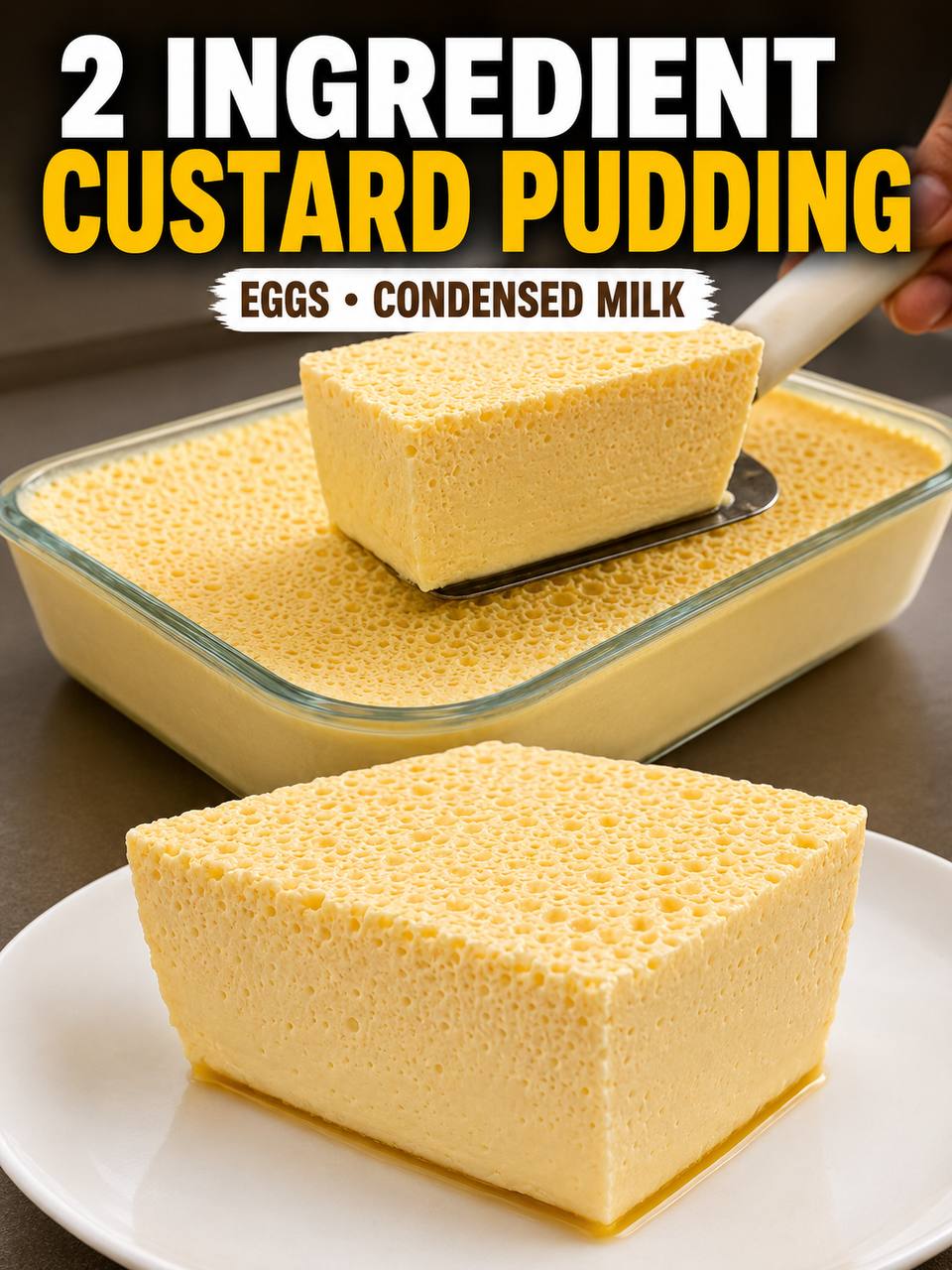
- Whisk the Eggs: In a medium-sized mixing bowl, crack the 4 large eggs. Whisk them thoroughly and vigorously until the yolks and whites are completely combined and slightly frothy. This step is crucial for achieving the airy, porous texture seen in the image. Ensure there are no streaks of unmixed egg white or yolk.
- Combine with Condensed Milk: Pour the entire can of sweetened condensed milk into the whisked eggs. Add the optional vanilla extract and a pinch of salt if using. Continue to whisk the mixture until everything is perfectly combined and smooth. Be gentle but thorough to avoid incorporating too much additional air at this stage, as the initial whisking of the eggs has already done its job.
- Strain (Optional, for extra smoothness): For an exceptionally silky custard, you can strain the mixture through a fine-mesh sieve into another bowl or directly into your prepared baking dish. This removes any potential egg chalazae or small lumps, ensuring a uniformly smooth texture.
- Pour into Dish: Carefully pour the custard mixture into your greased 8×8 inch baking dish or individual ramekins.
- Cook with a Water Bath (Oven Method): If baking in the oven, carefully pour hot water into the larger roasting pan, surrounding the baking dish, until the water comes about halfway up the sides of the custard dish. This water bath (bain-marie) is essential for gentle, even cooking, preventing the custard from curdling or developing a rubbery texture, and ensuring that coveted smooth, unbrowned surface.
- Cook by Steaming (Stovetop Method): If steaming on the stovetop, carefully place the baking dish or ramekins into the steamer basket. Cover the pot tightly with a lid, ensuring no steam escapes.
- Bake/Steam: For the oven method, carefully transfer the roasting pan with the water bath to the preheated oven. Bake for approximately 45-60 minutes for a large dish, or 25-35 minutes for individual ramekins. For the stovetop steaming method, steam for 30-45 minutes for a large dish, or 15-25 minutes for individual ramekins. The custard is done when the edges are set, but the center still has a slight jiggle when gently shaken. A knife inserted near the center should come out mostly clean, or with just a slight moistness.
- Cooling: Once cooked, carefully remove the baking dish from the water bath or steamer. Let the custard cool at room temperature for at least 30-60 minutes. This slow cooling process helps the custard set further and prevents cracking.
- Chill Thoroughly: Once cooled to room temperature, cover the dish with plastic wrap and refrigerate for at least 4 hours, or preferably overnight. Chilling is crucial for the custard to fully set, firm up, and develop its best flavor and sliceable texture.
- Serve: Once thoroughly chilled, slice the custard pudding into desired portions. You can run a thin knife around the edges of the dish if needed before slicing. Serve plain or with your favorite toppings.
Cooking Tips and Variations
Achieving the perfect custard pudding is all about understanding a few key principles and having a little patience. The primary secret to that smooth, silky texture and even cooking is the gentle heat provided by a water bath or steaming. This moist environment prevents the eggs from cooking too quickly or curdling, ensuring a delicate, un-curdled consistency. Always make sure your water bath is filled with hot (but not boiling) water, as this helps maintain an even temperature throughout the baking process. When steaming, ensure your pot is tightly covered to trap the steam effectively.
To avoid lumps and achieve ultimate smoothness, consider straining your custard mixture through a fine-mesh sieve after combining the ingredients. This removes any unmixed egg bits or chalazae, leading to a truly pristine pudding. Another crucial tip is to avoid overcooking. Custard is notoriously delicate; it should still have a slight jiggle in the center when you remove it from the heat, as it will continue to set as it cools. Overcooking will result in a rubbery or grainy texture, a far cry from the desired melt-in-your-mouth experience. Patience during the cooling and chilling phases is also paramount. Rushing these steps can compromise the final texture and setting of the pudding. Allow it to cool completely at room temperature before transferring to the refrigerator, and then give it ample time to chill and firm up, ideally overnight.
While delicious in its pure form, this 2-ingredient custard pudding is also incredibly versatile, lending itself well to various flavor enhancements. A splash of vanilla extract is a classic addition that elevates the flavor profile without overpowering it. For a citrusy twist, add a teaspoon of finely grated lemon or orange zest to the mixture; the oils from the zest will infuse the custard with a bright, aromatic note. Coffee lovers might enjoy a tablespoon of instant espresso powder dissolved in a tiny bit of hot water and then mixed into the custard base for a subtle coffee-flavored pudding. Matcha powder can also be incorporated for an earthy, vibrant green variation. You could even infuse the condensed milk with spices like cinnamon sticks or star anise before mixing with the eggs, then strain out the solids for a delicately spiced pudding. Don’t be afraid to experiment with these simple additions to customize this basic recipe to your taste.
Storage and Reheating
Proper storage is essential to maintain the freshness and delightful texture of your 2-ingredient custard pudding. Once it has been thoroughly chilled and set, any leftovers should be stored in an airtight container in the refrigerator. This prevents the custard from absorbing odors from other foods in the fridge and helps maintain its moisture content. When stored correctly, the custard pudding will remain fresh and delicious for up to 3-4 days. It’s generally not recommended to freeze custard, as the freezing and thawing process can significantly alter its delicate texture, often making it watery or grainy.
This custard pudding is primarily designed to be enjoyed chilled, as its firm yet smooth consistency is best appreciated when cold. Therefore, reheating is generally not recommended. Reheating can cause the custard to lose its smooth texture, potentially turning it rubbery or causing the eggs to curdle, especially if heated too quickly or at too high a temperature. The beauty of this dessert lies in its cool, refreshing nature. If you prefer it slightly less cold, simply take it out of the refrigerator 10-15 minutes before serving to allow it to come closer to room temperature, but avoid any active heating methods. Serve it straight from the fridge for the optimal experience, allowing its cool, creamy goodness to truly shine.
Frequently Asked Questions
Why did my custard turn out rubbery or full of holes?
A rubbery texture or excessive holes usually indicates that the custard was cooked at too high a temperature or for too long. Custard requires gentle, even heat to set properly without curdling the eggs. Using a water bath (bain-marie) in the oven or steaming on the stovetop is crucial for this. Ensure your oven temperature isn’t too high, and always aim for a slight jiggle in the center when you remove it from the heat, as it will continue to set as it cools.
Can I make this recipe without sweetened condensed milk?
This specific recipe relies on sweetened condensed milk for both its sweetness and its creamy, thick dairy base, which contributes significantly to the unique texture. Substituting it with regular milk and sugar would require a different recipe with different ratios and likely an added thickening agent, resulting in a different type of custard or pudding. For this 2-ingredient recipe, sweetened condensed milk is an essential component.
How can I prevent a skin from forming on top of my custard?
The water bath or steaming method is the best way to prevent a skin from forming, as the moist heat keeps the surface hydrated. If baking in the oven without a water bath (though not recommended for this recipe), covering the dish loosely with aluminum foil for most of the cooking time can help. Once cooled, covering the custard with plastic wrap directly touching the surface before refrigerating will also prevent a skin from forming during chilling.