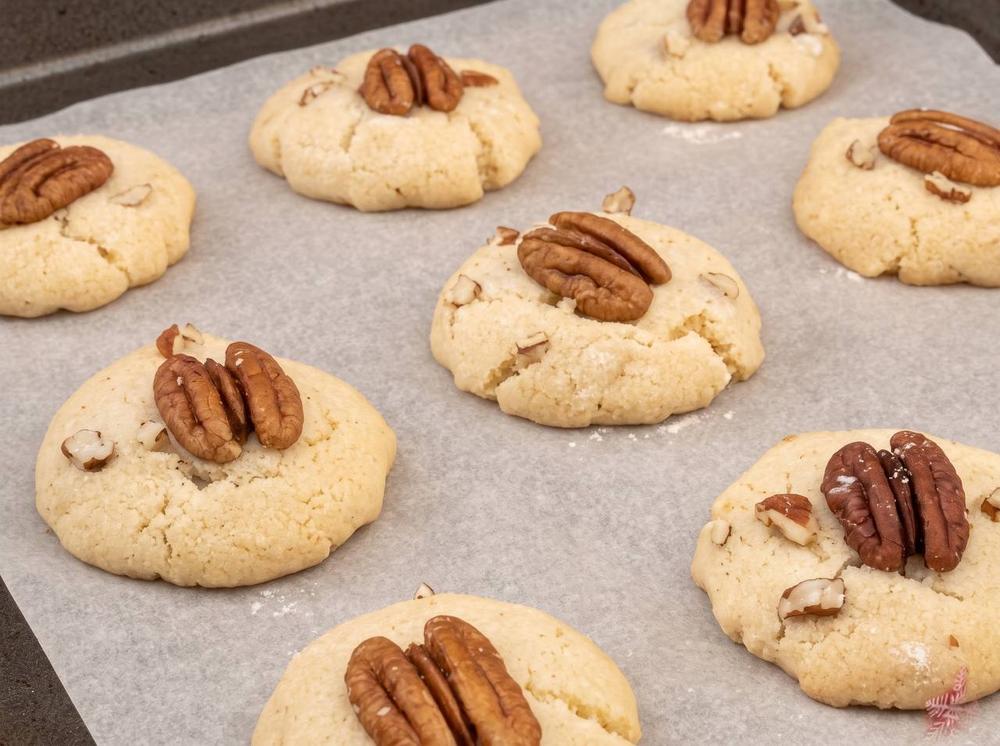
Instructions
- Preheat your oven to 350°F (175°C). Line two baking sheets with parchment paper.
- In a large mixing bowl, using an electric mixer, cream together the softened unsalted butter and granulated sugar until light and fluffy. This usually takes about 2-3 minutes. Ensure the mixture is pale yellow and well combined.
- Beat in the pure vanilla extract and salt until just incorporated.
- Gradually add the all-purpose flour to the wet ingredients, mixing on low speed until just combined. Be careful not to overmix, as this can lead to tough cookies. The dough will be thick and crumbly.
- Fold in the 1 cup of chopped pecans until they are evenly distributed throughout the dough.
- Scoop rounded tablespoons of dough and roll them into uniform balls, about 1 inch in diameter. Alternatively, you can use a small cookie scoop.
- Place the dough balls about 1 inch apart on the prepared baking sheets.
- Gently press one pecan half onto the top of each cookie dough ball.
- Bake for 12-15 minutes, or until the edges are lightly golden brown. The centers may still appear soft, but they will firm up as they cool.
- Remove the baking sheets from the oven and let the cookies cool on the sheets for 5 minutes before carefully transferring them to a wire rack to cool completely. This helps them set and prevents breakage.
- Once completely cooled, store your Pecan Sandies in an airtight container.
Cooking Tips and Variations
For the absolute best Pecan Sandies, start with high-quality ingredients. Good unsalted butter makes a significant difference in the flavor and texture. Ensure your butter is truly softened, but not melted, for proper creaming. If your butter is too cold, it won’t cream properly, and if it’s too warm, the cookies might spread excessively.
Toasting your pecans before adding them to the dough or using them as a topping can elevate the flavor tremendously. Simply spread the pecans on a baking sheet and toast in a 300°F (150°C) oven for 5-7 minutes, or until fragrant. Let them cool completely before using. This simple step brings out their natural oils and deepens their nutty taste.
When mixing the dough, be mindful not to overmix, especially after adding the flour. Overmixing develops the gluten in the flour, which can result in tougher, less tender cookies. Mix just until the flour streaks disappear and the ingredients are combined.
Chilling the dough for at least 30 minutes before baking can help prevent the cookies from spreading too much, leading to a thicker, more desirable texture. This also allows the flavors to meld together.
Keep an eye on the cookies as they bake. Ovens can vary, so the suggested baking time is a guideline. Look for lightly golden edges; the centers should still look slightly soft. Overbaking can make these cookies dry and crumbly rather than tender and sandy.
For a classic “snowball” cookie variation, you can omit the pecan half topping and, once the cookies are completely cooled, roll them in powdered sugar. For an extra touch, you can roll them once while still warm and then again once fully cooled.
Experiment with other extracts! A tiny dash of almond extract (about 1/4 teaspoon) can complement the pecan flavor beautifully. You could also try a hint of maple extract for a different autumnal twist.
If you prefer a different nut, walnuts or even macadamia nuts can be substituted for the pecans, creating a whole new cookie experience. Just remember to adjust the topping accordingly.
For a hint of citrus, add 1 teaspoon of finely grated orange or lemon zest to the butter and sugar mixture. The bright zest will cut through the richness of the butter and complement the nutty pecans.
Storage and Reheating
Pecan Sandies are wonderful cookies that maintain their freshness and delightful texture for several days when stored properly. Once your cookies have completely cooled to room temperature, transfer them to an airtight container. They will stay fresh and delicious at room temperature for up to 5-7 days. To prevent them from drying out, ensure the container is sealed tightly.
For longer storage, Pecan Sandies freeze exceptionally well. Arrange the cooled cookies in a single layer on a baking sheet and place them in the freezer for about an hour, or until solid. This “flash freezing” step prevents them from sticking together. Once frozen, transfer the cookies to a freezer-safe airtight container or a heavy-duty freezer bag. They can be stored in the freezer for up to 3 months. When you’re ready to enjoy them, simply remove the desired number of cookies from the freezer and let them thaw at room temperature for about 30-60 minutes. There’s no need to reheat them; they are best enjoyed at room temperature.
If you’ve frozen the dough, you can also bake it from frozen. Simply place the frozen dough balls on a parchment-lined baking sheet and add a few extra minutes to the baking time, watching for the golden edges. This is a fantastic way to have freshly baked cookies on demand!
Avoid storing Pecan Sandies in the refrigerator, as the cold environment can tend to dry them out and make them less tender. Room temperature or freezer storage are your best options for maintaining their buttery, crumbly perfection.
Frequently Asked Questions
What makes these cookies “sandy” in texture?
The “sandy” texture comes from the ratio of butter, sugar, and flour, similar to a shortbread cookie. The relatively low liquid content and the creaming method for butter and sugar create a tender, crumbly, melt-in-your-mouth consistency rather than a chewy or crisp one. The finely chopped pecans also contribute to this pleasant, slightly grainy texture, giving the cookies their signature “sandies” characteristic.
Can I use salted butter instead of unsalted butter?
While it’s always recommended to use unsalted butter in baking to control the amount of salt in the recipe, you can use salted butter in a pinch. If you do, omit the 1/2 teaspoon of added salt from the recipe. Be aware that the salt content in salted butter can vary between brands, so the final taste might be slightly different. For consistent results, unsalted butter is always the best choice.
Why did my Pecan Sandies spread too much while baking?
Several factors can cause cookies to spread too much. The most common reasons include using butter that is too soft or melted, not chilling the dough (if recommended), or an oven that is not at the correct temperature (too low). Ensure your butter is softened but still cool to the touch, and consider chilling the dough for at least 30 minutes before baking. Also, double-check your oven temperature with an oven thermometer to ensure it’s accurate.
Can I substitute other nuts for pecans?
Absolutely! While pecans are traditional for Pecan Sandies, you can certainly experiment with other nuts. Walnuts are a popular substitute and will give a similar flavor and texture profile. Almonds, macadamia nuts, or even a mix of different nuts can also work beautifully. Just ensure they are finely chopped (unless using halves for topping) to integrate well into the dough and maintain the desired cookie texture.