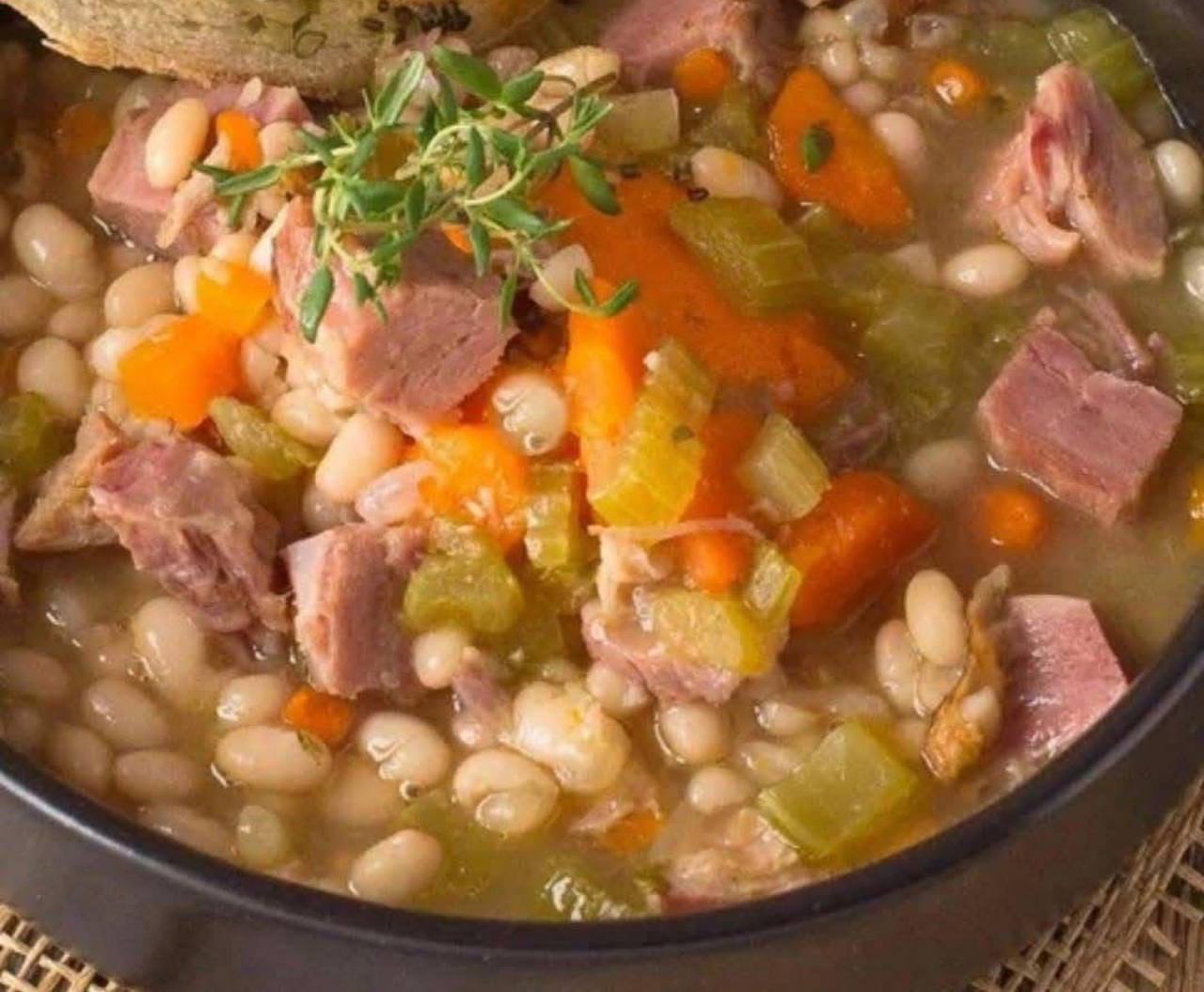
Instructions
- Soak the Beans: Rinse the dried beans thoroughly. There are two methods for soaking:
- Overnight Soak: Place beans in a large bowl, cover with at least 3 inches of cold water, and let soak for 8-12 hours at room temperature.
- Quick Soak: Place beans in a large pot, cover with water (at least 3 inches above beans), bring to a boil for 5 minutes, then remove from heat, cover, and let stand for 1 hour.
After soaking, drain the beans and rinse again.
- Sauté the Aromatics: In a large Dutch oven or heavy-bottomed pot, heat the olive oil over medium heat. Add the diced onion, carrots, and celery. Sauté for 8-10 minutes, stirring occasionally, until the vegetables have softened and the onion is translucent.
- Add Garlic and Ham: Add the minced garlic to the pot and cook for another 1-2 minutes until fragrant, being careful not to burn it. If using a smoked ham hock or turkey leg, add it to the pot now. Stir in the diced cooked ham.
- Combine with Beans and Broth: Add the drained, soaked beans to the pot. Pour in the chicken or vegetable broth. Add the bay leaf, dried thyme, and black pepper. Stir everything together gently.
- Simmer the Soup: Bring the soup to a boil over medium-high heat. Once boiling, reduce the heat to low, cover the pot, and let it simmer for 1.5 to 2 hours, or until the beans are tender. Stir occasionally to prevent sticking. If using a ham hock, remove it from the pot after the beans are tender, shred any meat from the bone, and return the meat to the soup. Discard the bone and skin.
- Check Consistency and Seasoning: After the beans are tender, check the consistency of the soup. If you prefer a thicker soup, you can mash some of the beans against the side of the pot with a spoon or potato masher, or carefully remove 1-2 cups of soup, blend it, and return it to the pot. Taste and adjust seasoning, adding salt if needed (remembering the ham and broth contribute salinity).
- Finish and Serve: If desired, stir in a splash of apple cider vinegar or lemon juice to brighten the flavors. Ladle the hot soup into bowls. Garnish with fresh parsley or thyme, if using. Serve immediately with crusty bread.
Cooking Tips and Variations
Achieving the perfect bowl of Ham and Bean Soup is an art, and these tips and variations will help you master it and make it your own. The foundation of any great bean soup starts with the beans themselves. While we recommend Great Northern or Navy beans for their creamy texture and mild flavor, feel free to experiment. Cannellini beans offer a similar creaminess, while a mix of different white beans can add complexity. If you’re short on time, using pre-cooked or canned beans is an option, though you’ll miss some of the depth that comes from cooking dried beans from scratch. If using canned, rinse them thoroughly to reduce sodium and add them in the last 30 minutes of simmering.
For an unparalleled smoky depth, incorporating a smoked ham hock, a chunk of smoked bacon, or even a smoked turkey leg during the simmering process is highly recommended. These additions slowly release their rich, savory, and smoky flavors into the broth, transforming the soup from good to extraordinary. If you’re aiming for a vegetarian version or simply don’t have ham, you can still achieve a wonderful smoky essence. A generous teaspoon of smoked paprika added with the dried thyme will infuse the soup with a delightful, earthy smokiness. You can also sauté some sliced mushrooms with the aromatics for an umami boost.
Don’t be afraid to customize the vegetable base. While carrots, celery, and onion are the classic mirepoix, feel free to add other vegetables like diced potatoes, parsnips, or even a handful of spinach or kale in the last 10 minutes of cooking for added nutrition and color. A touch of acidity at the end can truly elevate the soup. A splash of apple cider vinegar, red wine vinegar, or fresh lemon juice just before serving brightens all the flavors and provides a lovely counterpoint to the richness of the ham and beans. This simple trick can make a surprising difference.
The consistency of your soup is a matter of personal preference. If you like a thicker, heartier soup, you have a few options. One popular method is to remove about 1-2 cups of the cooked soup (beans and some broth) and blend it until smooth using an immersion blender or a regular blender (be cautious with hot liquids in a blender). Return the blended mixture to the pot and stir it in. Alternatively, you can use a potato masher to gently mash some of the beans directly in the pot. This releases their starch and thickens the soup naturally, while still leaving plenty of whole beans for texture. For a truly rich broth, consider using homemade chicken stock. Its depth of flavor will shine through. If using store-bought, opt for low-sodium varieties so you can control the salt content yourself, especially since ham can be quite salty. Always taste and adjust seasoning incrementally throughout the cooking process.
Storage and Reheating
One of the many joys of Ham and Bean Soup is how well it stores, making it an ideal candidate for meal prepping or enjoying delicious leftovers. Proper storage ensures that your soup remains fresh, flavorful, and safe to eat for days to come. Once your soup has cooled to room temperature, transfer it to airtight containers. Make sure to divide it into smaller portions if you plan to reheat individual servings, as this will help with faster cooling and more efficient reheating. Refrigerated, Ham and Bean Soup will keep beautifully for 3-4 days. The flavors actually tend to meld and deepen overnight, often making the soup taste even better the next day!
For longer storage, Ham and Bean Soup freezes exceptionally well. Again, allow the soup to cool completely before transferring it to freezer-safe containers or heavy-duty freezer bags. If using bags, lay them flat in the freezer until solid, then stack them to save space. Frozen, Ham and Bean Soup can maintain its quality for up to 3 months. When you’re ready to enjoy it, simply transfer the frozen soup to the refrigerator to thaw overnight. This slow thawing process helps preserve the texture of the beans.
Reheating is straightforward. If reheating from the refrigerator, you can warm individual portions in the microwave, stirring occasionally, until heated through. For larger quantities, or for a more even reheat, transfer the soup to a saucepan or pot and warm it gently over medium-low heat on the stovetop, stirring frequently, until it reaches your desired temperature. If the soup has thickened too much during storage, you can add a splash of extra broth or water to thin it out to your preferred consistency. For frozen soup, once thawed, reheat using the same stovetop or microwave methods. Always ensure the soup is piping hot before serving, and never refreeze soup that has been previously thawed and reheated.
Frequently Asked Questions
Can I make Ham and Bean Soup in a slow cooker?
Absolutely! Ham and Bean Soup is an excellent candidate for slow cooking. After soaking your beans, sauté the aromatics (onion, carrots, celery, garlic) on the stovetop as directed. Then, combine the sautéed vegetables, soaked beans, diced ham, broth, bay leaf, and seasonings in your slow cooker. If using a ham hock, add it now. Cook on low for 6-8 hours or on high for 3-4 hours, or until the beans are tender. Remove the ham hock (if used), shred the meat, and return it to the soup. Adjust seasoning and consistency as desired before serving.
Why did my beans not get tender?
There are a few common reasons why beans might remain firm. The most common culprit is old beans; dried beans can lose their ability to soften if they’ve been stored for too long. Always try to use fresh dried beans. Another factor is hard water; minerals in hard water can prevent beans from softening. If you suspect hard water, consider using filtered water. Lastly, adding salt or acidic ingredients (like tomatoes or vinegar) too early in the cooking process can inhibit bean softening. It’s best to add salt and any acidic components towards the end of the cooking time, after the beans are already tender.
What can I serve with Ham and Bean Soup?
Ham and Bean Soup is truly a meal in itself, but it pairs wonderfully with a few simple accompaniments. Crusty bread or cornbread is almost a requirement for dipping and soaking up every last drop of the flavorful broth. A simple green salad with a light vinaigrette offers a fresh contrast to the richness of the soup. For an extra touch, consider topping individual bowls with a dollop of sour cream or Greek yogurt, a sprinkle of fresh herbs like parsley or chives, or a drizzle of good quality olive oil. A dash of hot sauce can also add a pleasant kick for those who enjoy a bit of spice.