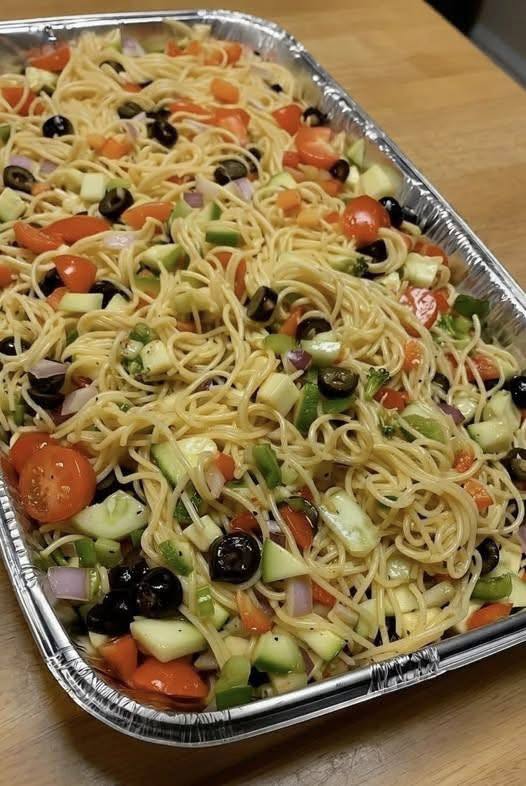
Instructions
- Bring a large pot of salted water to a rolling boil. Add the spaghetti pasta and cook according to package directions until al dente. This typically takes about 8-10 minutes. It’s crucial not to overcook the pasta, as it will continue to soften slightly as it cools and absorbs the dressing.
- While the pasta is cooking, prepare an ice bath by filling a large bowl with ice and water.
- Once the spaghetti is cooked al dente, immediately drain it in a colander. Transfer the drained spaghetti to the ice bath to rapidly cool it down. This stops the cooking process and helps prevent the pasta from sticking together. Let it cool for about 5 minutes, then drain thoroughly again. You can also rinse it under cold water if an ice bath isn’t convenient, but ensure it’s well-drained.
- Transfer the cooled spaghetti to a large mixing bowl. If the spaghetti strands are very long, you can gently break them into shorter, more manageable pieces (about 3-4 inches) for easier eating, though this is optional.
- Add the halved cherry tomatoes, sliced black olives, diced cucumber, finely diced red onion, and diced green bell pepper to the bowl with the spaghetti.
- In a separate small bowl or a jar with a lid, prepare the Italian dressing. Whisk together (or shake vigorously) the extra virgin olive oil, red wine vinegar, minced garlic, dried Italian seasoning, Dijon mustard, salt, black pepper, and optional granulated sugar until well combined and emulsified.
- Pour about two-thirds of the prepared dressing over the spaghetti and vegetable mixture. Toss gently but thoroughly to ensure all ingredients are evenly coated.
- Taste the salad and add more dressing, salt, or pepper as needed to suit your preference. If you’re adding Parmesan cheese directly into the salad, you can mix it in now.
- Cover the bowl with plastic wrap and refrigerate for at least 1 hour, or preferably 3-4 hours, to allow the flavors to meld and the salad to chill completely. The longer it chills, the better the flavors will develop.
- Before serving, give the salad another gentle toss. If desired, sprinkle with additional grated Parmesan cheese and fresh chopped parsley for garnish. Serve cold.
Cooking Tips and Variations
To ensure your Italian Spaghetti Pasta Salad is nothing short of spectacular, consider these tips and variations. Firstly, the pasta is paramount. Always cook your spaghetti al dente – firm to the bite. Overcooked pasta will become mushy and unpleasant in a cold salad. Rapidly cooling the pasta in an ice bath immediately after draining is a game-changer; it halts the cooking process, prevents stickiness, and keeps the pasta from absorbing too much dressing too quickly. If you don’t have time for an ice bath, a thorough rinse under cold running water followed by excellent draining will suffice. For easier serving and eating, you might want to break the cooked spaghetti into shorter segments (about 3-4 inches) before mixing.
The dressing is the heart of this salad. While a good quality store-bought Italian dressing can work in a pinch, making your own elevates the flavor profile significantly. Adjust the amount of garlic, herbs, and even a touch of sugar to balance the acidity of the vinegar to your personal taste. Don’t be shy about seasoning! Taste and adjust the dressing before adding it to the salad. For a creamier dressing, you could whisk in a tablespoon of mayonnaise or Greek yogurt, though this deviates from a traditional Italian vinaigrette style.
This recipe is incredibly adaptable to your preferences and what you have on hand. For extra protein and heartiness, consider adding diced cooked chicken, pepperoni, salami, or chickpeas. If you love cheese, cubes of fresh mozzarella (bocconcini), provolone, or feta would be fantastic additions. Other vegetables that would shine in this salad include artichoke hearts (canned, drained, and chopped), roasted red peppers, sun-dried tomatoes (packed in oil, drained), or even steamed broccoli florets. For a touch of spice, a pinch of red pepper flakes in the dressing can add a subtle kick. Fresh herbs are always a welcome addition; besides parsley, fresh basil or oregano chopped finely will enhance the Italian flavors.
When assembling, add the dressing in stages. Start with about two-thirds, toss, and then add more if needed. This prevents the salad from becoming overly dressed or soggy. Remember, the salad tastes best after the flavors have had time to meld, so making it a few hours or even a day in advance is highly recommended. Just give it a good toss before serving, and you might need to add a splash more dressing if the pasta has absorbed too much.
Storage and Reheating
Italian Spaghetti Pasta Salad is an excellent make-ahead dish, and proper storage is key to maintaining its freshness and flavor. Once prepared, transfer the salad to an airtight container. This helps prevent the pasta from drying out and shields the ingredients from absorbing unwanted odors from the refrigerator. Store the sealed container in the refrigerator for up to 3-4 days. The flavors actually tend to deepen and improve over time as the ingredients marinate in the dressing, making it a fantastic option for meal prep or feeding a crowd over several days.
Before serving leftovers, give the salad a good stir. You might find that the pasta has absorbed a significant amount of the dressing, and the salad could seem a bit dry. If this is the case, feel free to add a little extra dressing, a splash of olive oil, or even a bit of red wine vinegar to refresh it. Toss gently until the salad regains its desired moisture and flavor. You can also adjust seasonings like salt and pepper at this point if needed.
Since this is a cold pasta salad, reheating is generally not recommended or necessary. The beauty of pasta salad lies in its refreshing, chilled state. Attempting to reheat it, especially in a microwave, can lead to mushy pasta, wilted vegetables, and an unpleasant texture. The dressing can also separate when heated. Therefore, always serve this Italian Spaghetti Pasta Salad chilled, directly from the refrigerator. If you’ve taken it to a picnic or potluck, ensure it’s kept in a cooler with ice packs to maintain its cool temperature, especially on warm days, to ensure food safety and optimal taste.
Frequently Asked Questions
How do I prevent the spaghetti from sticking together?
The best way to prevent spaghetti from sticking, especially for a cold salad, is to cook it al dente and then immediately transfer it to an ice bath after draining. This rapid cooling stops the cooking process and washes away excess starch, keeping the strands separate. If an ice bath isn’t feasible, rinsing thoroughly under cold water after draining will also help, but ensure it’s very well-drained before mixing with other ingredients.
Can I make this pasta salad ahead of time?
Absolutely, and it’s highly recommended! This Italian Spaghetti Pasta Salad tastes even better after the flavors have had time to meld. You can prepare it up to 24 hours in advance. Store it in an airtight container in the refrigerator. Before serving, give it a good stir, and you might need to add a little extra dressing or a splash of olive oil if the pasta has absorbed too much liquid.
What kind of spaghetti should I use?
Any standard spaghetti pasta will work perfectly for this recipe. You can also experiment with other long pasta shapes like linguine or fettuccine, or even shorter pasta shapes like rotini or penne if you prefer. The key is to cook it al dente so it holds up well in the salad without becoming mushy.
Is this pasta salad vegetarian or vegan?
As written, this recipe is vegetarian, especially if you include Parmesan cheese. To make it vegan, simply omit the optional Parmesan cheese. The dressing itself is typically vegan, consisting of oil, vinegar, herbs, and spices. Always double-check ingredient labels for any hidden animal products if you are strictly vegan.