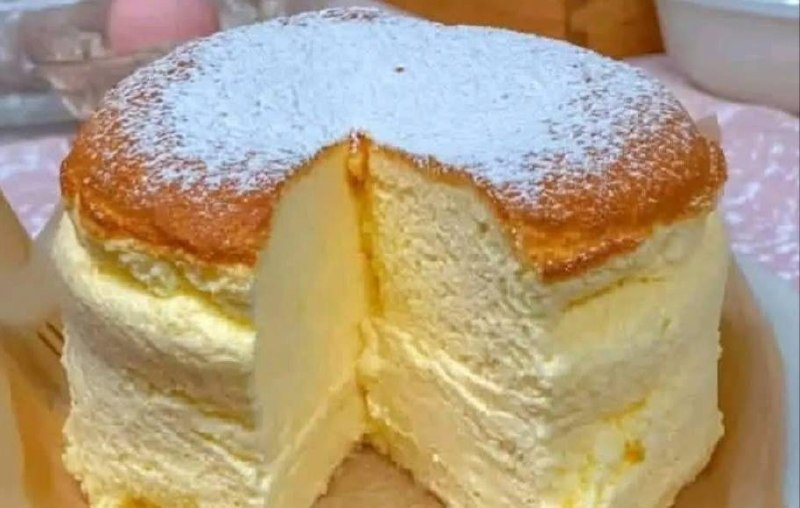
Instructions
- Preheat your oven to 160°C (325°F). Prepare a 20cm (8-inch) round cake pan by greasing the bottom and sides, then lining the bottom and sides with parchment paper. Ensure the parchment paper on the sides extends a few inches above the rim of the pan. Wrap the outside of the pan securely with two layers of aluminum foil to prevent water from seeping in during the water bath.
- Fill a larger roasting pan (or any oven-safe pan that can hold your cake pan) with about 2-3 cm (1 inch) of hot water. Place this in the oven as it preheats.
- In a heatproof bowl set over a saucepan of simmering water (bain-marie), combine the softened cream cheese, butter, and milk. Stir continuously until the mixture is smooth and melted, with no lumps. Remove from heat and let cool slightly.
- Separate the egg whites and yolks. Add the egg yolks to the cream cheese mixture one at a time, whisking well after each addition until fully incorporated. Stir in the vanilla extract.
- Sift the flour and cornstarch together into the cream cheese mixture. Add the salt. Whisk gently until just combined and smooth. Be careful not to overmix, as this can develop the gluten and make the cake less tender.
- In a separate large, clean bowl, begin whipping the egg whites with an electric mixer on medium speed. Once they become foamy, add the lemon juice (if using). Gradually add the granulated sugar (120g) in three additions, increasing the speed to high. Continue whipping until the meringue forms soft, glossy peaks. When you lift the whisk, the peak should hold its shape but the tip should curl slightly. Do not overwhip to stiff, dry peaks, as this can make it difficult to fold into the batter.
- Gently fold about one-third of the meringue into the cream cheese batter using a spatula. Use a cutting and folding motion to lighten the batter.
- Add the remaining meringue to the lightened batter. Continue to fold gently until no streaks of white remain and the batter is uniformly combined. Be careful not to deflate the meringue, as this is crucial for the cake’s airy texture.
- Pour the batter into the prepared cake pan. Gently tap the pan on the counter a few times to release any large air bubbles.
- Carefully place the cake pan into the roasting pan already filled with hot water in the oven. The water should come about halfway up the sides of the cake pan.
- Bake for 15 minutes at 160°C (325°F). Then, reduce the oven temperature to 140°C (285°F) and bake for another 60-70 minutes, or until the top is golden brown and the cheesecake is slightly jiggly in the center when gently shaken.
- Once baked, turn off the oven and leave the oven door ajar for 30-60 minutes to allow the cheesecake to cool gradually inside the oven. This slow cooling helps prevent the cheesecake from cracking or sinking dramatically.
- Remove the cheesecake from the oven and the water bath. Let it cool completely on a wire rack at room temperature before carefully removing it from the pan.
- Chill the cheesecake in the refrigerator for at least 4 hours, or preferably overnight, before serving. This allows the texture to set properly.
- Just before serving, you can lightly dust the top with powdered sugar, if desired.
Cooking Tips and Variations
For the best results with your Japanese Cotton Cheesecake, precision and patience are key. Always ensure your ingredients, especially the cream cheese and butter, are at room temperature for a smooth, lump-free batter. When whipping the egg whites, make sure your bowl and whisk are perfectly clean and free of any grease, as even a tiny amount can prevent the whites from whipping properly. The soft peak stage for the meringue is crucial; too soft, and the cake won’t rise; too stiff, and it will be difficult to fold in without deflating. The water bath is non-negotiable for achieving that signature moist, even bake and preventing cracks, so ensure your pan is well-wrapped in foil to avoid water seepage.
To prevent your cheesecake from sinking or cracking after baking, the gradual cooling process is vital. Resisting the urge to immediately remove it from the oven allows the cake to adjust to temperature changes slowly. If you notice your cheesecake browning too quickly, you can loosely tent it with aluminum foil during the last part of the baking time.
For variations, you can infuse your cheesecake with different flavors. Add 1-2 tablespoons of matcha powder (sifted) into the flour mixture for a delightful green tea cheesecake. A tablespoon of finely grated orange or lemon zest can also add a bright, citrusy note to the batter. For a chocolate version, melt 50g of dark chocolate with the cream cheese and butter, and reduce the sugar slightly if the chocolate is sweetened. You can also serve this cheesecake with fresh berries, a light fruit compote, or a drizzle of caramel sauce for an extra touch of indulgence.
Storage and Reheating
Japanese Cotton Cheesecake is best enjoyed chilled. To store leftovers, cover the cheesecake tightly with plastic wrap or place it in an airtight container. It will keep well in the refrigerator for up to 3-4 days. While it’s generally not recommended to freeze this type of cheesecake due to its delicate texture, if you must, wrap individual slices tightly in plastic wrap and then in aluminum foil. It can be frozen for up to 1 month. Thaw frozen cheesecake overnight in the refrigerator.
This cheesecake is typically served cold or at room temperature, so reheating is not necessary or recommended, as it can alter the delicate “cottony” texture. If you prefer it slightly less cold, simply let it sit out at room temperature for about 15-20 minutes before serving.
Frequently Asked Questions
Why did my Japanese Cotton Cheesecake crack on top?
Cracking is a common issue and is often due to sudden temperature changes, overbaking, or too much air incorporated into the batter. Ensure you don’t overbeat the egg whites beyond soft peaks, and always use the water bath. Most importantly, allow the cheesecake to cool very slowly in the oven with the door ajar after baking. Rapid cooling can cause the cake to contract too quickly and crack.
Can I make this cheesecake without a water bath?
While you technically can bake it without a water bath, it is strongly discouraged for Japanese Cotton Cheesecake. The water bath (bain-marie) is crucial for providing a moist, even heat that prevents the cake from drying out, cracking, and ensures that signature smooth, delicate texture. Without it, your cheesecake is likely to be denser, drier, and more prone to cracking on top.
How do I know when the Japanese Cotton Cheesecake is done?
The cheesecake is done when the top is golden brown, and the edges are set, but the center still has a slight jiggle when you gently shake the pan. It should not be completely liquid in the middle, but a slight wobble indicates it is perfectly cooked and will set further as it cools. An internal temperature of 75°C (167°F) is also a good indicator if you have a thermometer.
My cheesecake sank after cooling. What went wrong?
Sinking can occur if the meringue was not stable enough (underwhipped), or if it was deflated during the folding process. Overbaking can also cause it to puff up too much and then collapse. Ensure your meringue reaches soft, glossy peaks and fold it gently into the batter. Also, avoid opening the oven door frequently during baking, as sudden temperature drops can cause sinking.