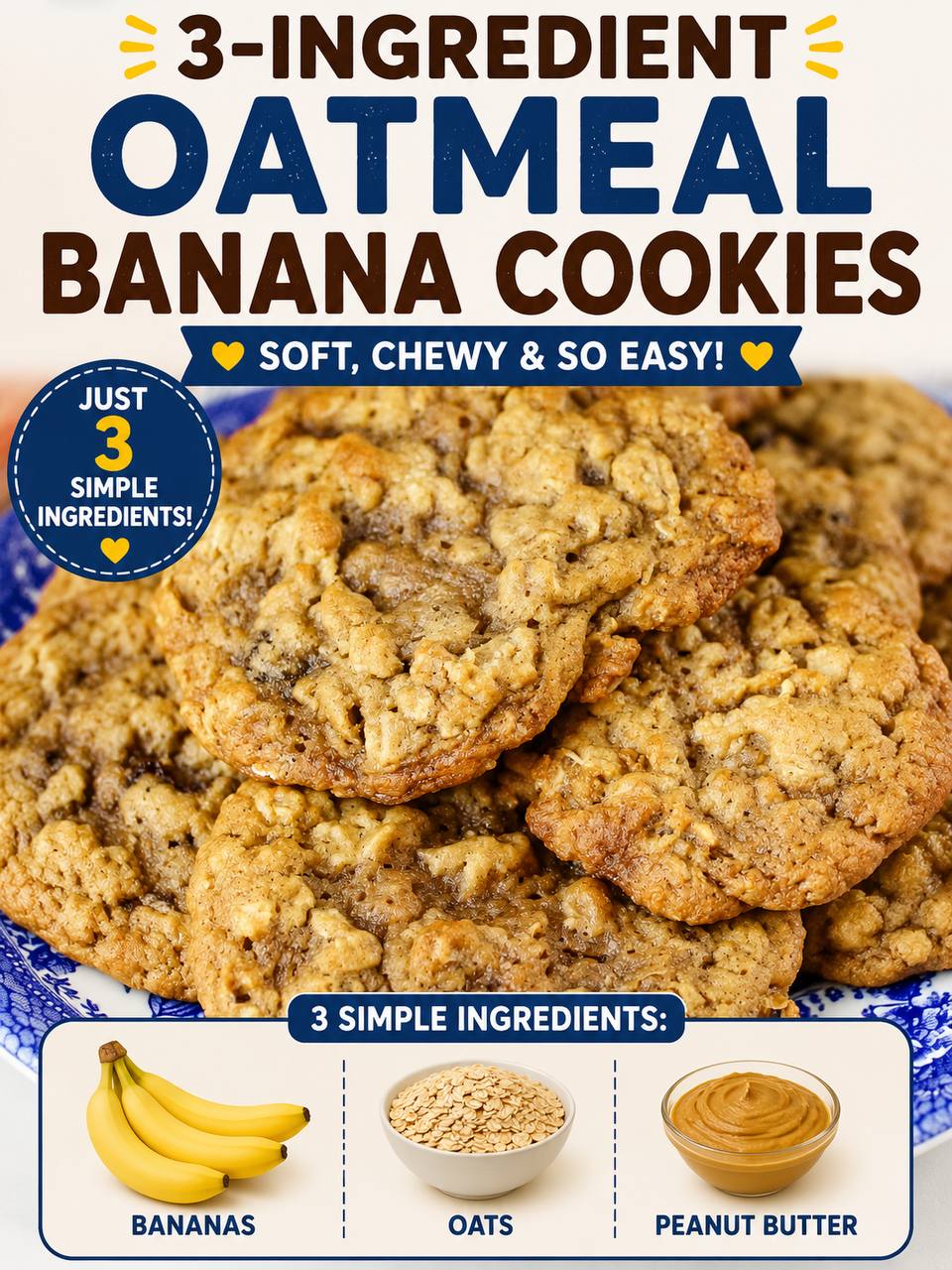
Instructions
- Preheat your oven to 350°F (175°C). Line a baking sheet with parchment paper or a silicone baking mat. This will prevent sticking and make cleanup a breeze.
- Prepare the bananas: In a medium-sized mixing bowl, peel the very ripe bananas. Using a fork or a potato masher, thoroughly mash the bananas until they are smooth with very few lumps. The riper the bananas, the easier they will be to mash and the sweeter your cookies will be.
- Add the peanut butter: Scoop the natural, unsweetened peanut butter into the bowl with the mashed bananas.
- Combine wet ingredients: Using a spoon or spatula, mix the mashed bananas and peanut butter together until they are well combined and form a uniform, creamy mixture.
- Stir in the oats: Add the old-fashioned rolled oats to the banana-peanut butter mixture.
- Mix thoroughly: Stir everything together until the oats are fully incorporated and evenly distributed throughout the mixture. Ensure there are no dry spots of oats remaining. If you are adding any optional ingredients like cinnamon or vanilla extract, now is the time to mix them in.
- Form the cookies: Take about a tablespoon-sized amount of the cookie dough and roll it into a ball between your palms. Place the ball onto the prepared baking sheet. Repeat with the remaining dough, spacing the cookies about 1-2 inches apart.
- Flatten the cookies: These cookies won’t spread much during baking, so you’ll need to gently flatten each ball with the back of a spoon or your fingertips to your desired cookie thickness (about ¼ to ½ inch thick).
- Bake the cookies: Place the baking sheet into the preheated oven and bake for 12-15 minutes. The baking time may vary slightly depending on your oven and the thickness of your cookies.
- Check for doneness: The cookies are ready when they are lightly golden brown around the edges and set in the center. They should feel firm to the touch when gently pressed.
- Cool on the baking sheet: Once baked, remove the baking sheet from the oven. Let the cookies cool on the baking sheet for 5-10 minutes. This is a crucial step as they are very soft when warm and can fall apart easily. Cooling them on the sheet allows them to firm up.
- Transfer to a wire rack: Carefully transfer the slightly cooled cookies to a wire rack to cool completely. They will continue to firm up as they cool.
- Serve and enjoy: Once completely cool, your Lower My Cholesterol Oatmeal Cookies are ready to be enjoyed!
Cooking Tips and Variations
For the best Lower My Cholesterol Oatmeal Cookies, selecting the right ingredients is key. Start with very ripe, spotty bananas; these provide natural sweetness, eliminating the need for added sugars, and are much easier to mash smoothly. When it comes to oats, old-fashioned rolled oats are highly recommended as they give the cookies a delightful chewy texture. While quick oats can be used in a pinch, they might result in a slightly softer, less textured cookie. The choice of peanut butter is perhaps the most crucial for the cholesterol-lowering aspect: opt for natural, unsweetened creamy peanut butter with minimal ingredients (ideally just peanuts and salt). Avoid varieties with added sugars, hydrogenated oils, or excessive sodium, as these can counteract the health benefits we’re aiming for.
To enhance the flavor profile of these simple cookies, consider adding a few optional ingredients. A half teaspoon of ground cinnamon can add a warm, comforting spice that pairs beautifully with banana and peanut butter. A quarter teaspoon of vanilla extract will deepen the overall flavor. For a touch of indulgence without derailing the health benefits too much, stir in 2 tablespoons of mini dark chocolate chips (70% cocoa or higher is best). For an extra boost of fiber and omega-3 fatty acids, 1 tablespoon of chia seeds or ground flaxseed can be easily incorporated into the dough. Other healthy additions include chopped nuts like walnuts or pecans for healthy fats and crunch, or a sprinkle of shredded unsweetened coconut for a tropical twist. Remember that adding extra ingredients will slightly alter the nutritional profile, so adjust quantities according to your dietary needs.
When mixing the dough, ensure the bananas are thoroughly mashed into a smooth consistency before adding the other ingredients. This helps create a uniform cookie texture. Once all ingredients are combined, the dough will be somewhat sticky, which is normal. If you find the dough too sticky to handle, you can chill it in the refrigerator for 15-20 minutes, which can make it easier to roll into balls. When forming the cookies, remember that they won’t spread much during baking, so flatten them to your desired thickness before they go into the oven. For a more uniform size, use a cookie scoop. Baking time can vary, so keep an eye on them; they are done when the edges are lightly golden and the centers are set. Allowing them to cool on the baking sheet before transferring is vital, as they are fragile when hot but firm up as they cool, making them easier to handle.
If you’re looking to adapt this recipe for specific dietary needs, it’s inherently gluten-free if you use certified gluten-free rolled oats. It’s also naturally vegan, making it suitable for a wide range of diets. For those with peanut allergies, almond butter or cashew butter can be excellent substitutes, just ensure they are also natural and unsweetened. Sunflower seed butter is another great option for a nut-free version. Experiment with different nut or seed butters to find your favorite variation. These cookies are a fantastic base for creativity, allowing you to tailor them to your taste and nutritional goals while keeping the heart-healthy benefits intact.
Don’t be afraid to double the batch if you want to have more on hand, as they disappear quickly! They make an excellent quick breakfast, a satisfying snack, or a guilt-free dessert. The natural sweetness from the bananas means there’s no need for added sugar, making them a truly wholesome treat. Enjoy the process of baking and the delicious results of these simple, yet profoundly healthy, oatmeal cookies.
Storage and Reheating
Once your Lower My Cholesterol Oatmeal Cookies have cooled completely, proper storage is key to maintaining their freshness and texture. Store the cookies in an airtight container at room temperature for up to 3-4 days. Placing a piece of parchment paper between layers of cookies can help prevent them from sticking together. Due to the high moisture content from the bananas, they tend to soften over time. If you live in a warm or humid climate, or if you want to extend their shelf life, storing them in the refrigerator is a good option. In the refrigerator, they will last for up to a week. They might become a bit firmer when chilled, but the flavor remains excellent.
These cookies also freeze exceptionally well, making them perfect for meal prepping or having a healthy treat on hand whenever a craving strikes. To freeze, arrange the fully cooled cookies in a single layer on a baking sheet and place them in the freezer for about 1-2 hours, or until they are solid. This “flash freezing” step prevents them from sticking together. Once frozen, transfer the cookies to a freezer-safe airtight container or a heavy-duty freezer bag. They can be stored in the freezer for up to 2-3 months. Label the container with the date for easy tracking.
When you’re ready to enjoy a frozen cookie, you have a few reheating options. For a quick thaw, simply take a cookie out of the freezer and let it sit at room temperature for 15-30 minutes until it’s soft enough to eat. If you prefer a warm, freshly baked taste and texture, you can gently reheat them. Place the cookies on a microwave-safe plate and microwave for 10-20 seconds, or until just warmed through. Be careful not to overheat, as they can become tough. Alternatively, you can warm them in a preheated oven or toaster oven at 300°F (150°C) for about 5-7 minutes. This method helps to restore a slightly crisper edge and a warm, soft interior. Always ensure the cookies are fully thawed and warmed to your liking before serving. Whether fresh, chilled, or reheated from frozen, these cookies remain a delicious and heart-healthy indulgence.
Frequently Asked Questions
Can I use quick oats instead of rolled oats?
While old-fashioned rolled oats are recommended for their chewy texture, you can use quick oats if that’s what you have on hand. However, quick oats are more finely processed and will absorb liquids more quickly, which might result in a slightly softer, less textured cookie. The overall flavor and health benefits will still be present, but the consistency will be different.
Do these cookies taste strongly of banana?
The flavor of banana is definitely present, especially if you use very ripe bananas, which are sweeter and more aromatic. However, the peanut butter and oats balance it out nicely, creating a harmonious blend of flavors. If you’re concerned about an overpowering banana taste, you can add optional spices like cinnamon or a dash of vanilla extract to complement and mellow the banana flavor.
Are these cookies suitable for a gluten-free diet?
Yes, these cookies can easily be made gluten-free! The recipe is naturally gluten-free if you ensure you use certified gluten-free rolled oats. While oats are inherently gluten-free, they are often processed in facilities that also handle wheat, barley, and rye, leading to cross-contamination. Always look for oats explicitly labeled “gluten-free” if you have a gluten sensitivity or celiac disease.
How do these cookies help lower cholesterol?
These cookies are effective in lowering cholesterol primarily due to the high soluble fiber content from the oats, specifically beta-glucan. Soluble fiber forms a gel-like substance in the digestive tract, which binds to cholesterol and prevents its absorption, leading to a reduction in LDL (“bad”) cholesterol. Additionally, the natural, unsweetened peanut butter provides healthy monounsaturated and polyunsaturated fats, which are beneficial for heart health and can also help improve cholesterol levels when replacing unhealthy saturated and trans fats.