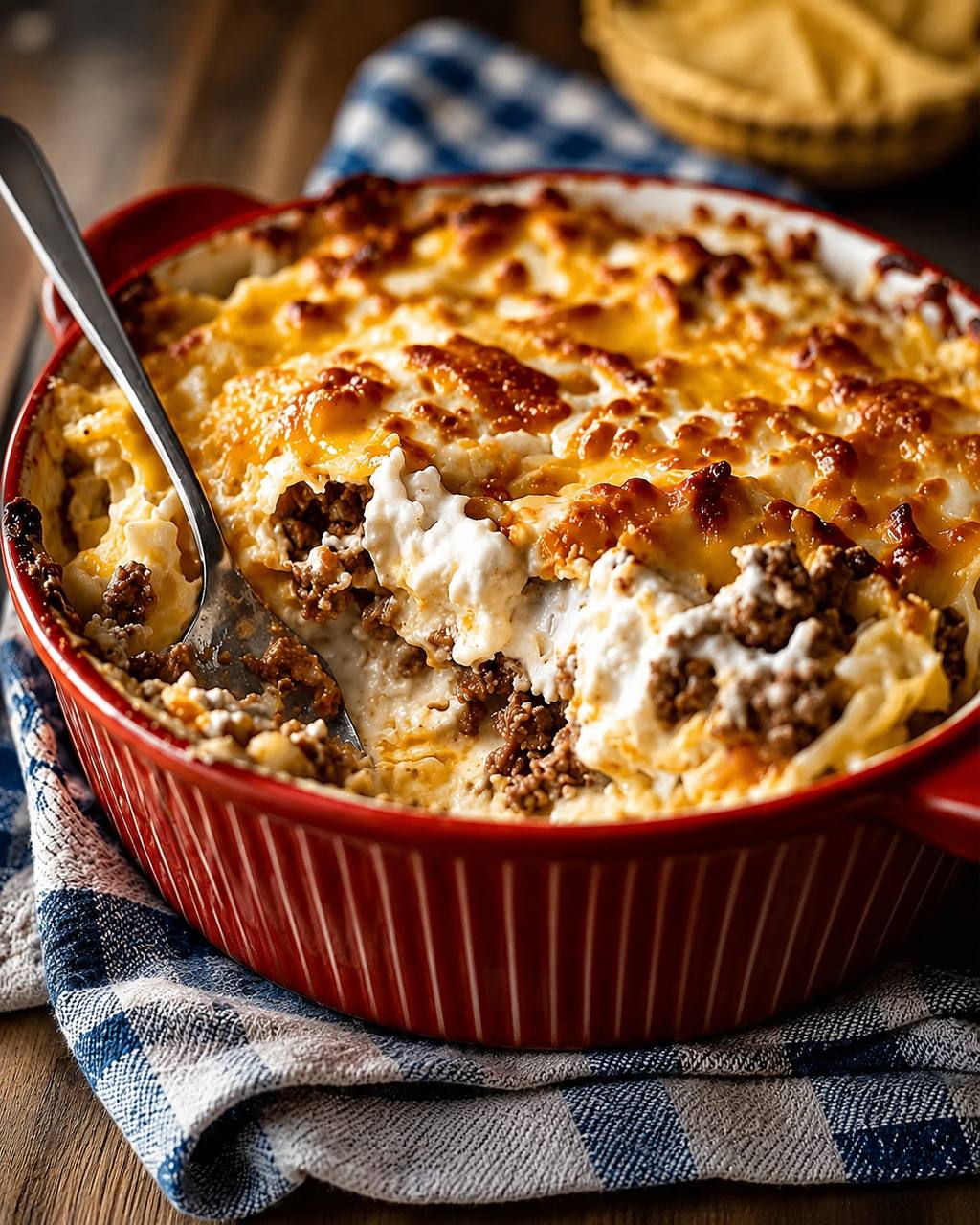
Instructions
- Preheat your oven to 375°F (190°C). Lightly grease a 9×13 inch baking dish.
- Heat the olive oil in a large skillet or Dutch oven over medium-high heat. Add the ground beef and chopped onion. Cook, breaking up the beef with a spoon, until the beef is browned and the onion is softened, about 7-10 minutes. Drain off any excess grease.
- Stir in the minced garlic and cook for another minute until fragrant.
- Add the taco seasoning mix, diced tomatoes with green chilies (undrained), tomato sauce, water or beef broth, chili powder, ground cumin, and cayenne pepper (if using) to the skillet. Bring the mixture to a simmer, then reduce heat to low and let it cook for 5-7 minutes, allowing the flavors to meld and the sauce to thicken slightly. Remove from heat.
- While the meat sauce is simmering, cook the elbow macaroni or small shells according to package directions until al dente. Drain well and set aside.
- In a medium bowl, combine the ricotta cheese, sour cream, milk, salt, and black pepper. Mix until well combined and smooth.
- Begin layering the casserole in the prepared baking dish. Spread half of the cooked macaroni evenly across the bottom of the dish.
- Next, spread the entire ricotta cheese mixture evenly over the macaroni layer.
- Evenly spread the entire seasoned ground beef mixture over the ricotta layer.
- Sprinkle 1 cup of the shredded cheddar cheese and 1/2 cup of the shredded Monterey Jack cheese over the ground beef layer.
- Top with the remaining cooked macaroni, spreading it out evenly.
- Finish by sprinkling the remaining 1 cup of shredded cheddar cheese and 1/2 cup of shredded Monterey Jack cheese over the top.
- Cover the baking dish loosely with aluminum foil.
- Bake for 25 minutes.
- Remove the foil and bake for an additional 15-20 minutes, or until the casserole is bubbly around the edges and the cheese on top is melted, golden brown, and slightly crispy.
- Remove the casserole from the oven and let it rest for 10-15 minutes before serving. This allows the layers to set, making it easier to cut and serve.
- Garnish with fresh chopped cilantro, if desired, and serve hot.
Cooking Tips and Variations
For the best results, always cook your pasta al dente, meaning it should still have a slight bite to it. Remember, it will continue to cook and absorb moisture in the oven, so starting it slightly undercooked prevents it from becoming mushy. When browning the ground beef, ensure you get a good sear before adding other ingredients; this adds depth of flavor. Don’t skip draining the excess fat, as this prevents the casserole from becoming greasy. For an extra kick, consider adding a dash of hot sauce to the meat mixture or a pinch more cayenne pepper. If you prefer a milder flavor, simply omit the cayenne. To achieve that perfect golden, bubbly cheese crust, consider a quick broil for the last 2-3 minutes of baking, but watch it closely to prevent burning!
This casserole is incredibly versatile, allowing for numerous delicious variations. If you’re not a fan of ground beef, feel free to swap it out for ground turkey or even ground pork sausage for a different flavor profile. To boost the veggie content and add more texture, try stirring in a can of drained black beans, corn, or diced bell peppers into the meat mixture before layering. For a smokier flavor, add a can of drained chipotle peppers in adobo sauce (minced, to taste) to the meat. You can also experiment with different cheeses; a Mexican blend, Colby Jack, or even a little queso fresco could be delicious. For a richer, creamier ricotta layer, a small amount of cream cheese can be added. If you like a little tang, a squeeze of fresh lime juice over the finished casserole before serving can brighten all the flavors beautifully.
Storage and Reheating
To store any leftover Mexican White Trash Casserole, allow it to cool completely to room temperature. Once cooled, cover the baking dish tightly with plastic wrap or aluminum foil, or transfer individual portions to airtight containers. The casserole will keep well in the refrigerator for up to 3-4 days. For longer storage, this casserole freezes beautifully. Once completely cooled, you can wrap the entire casserole dish (if freezer-safe) tightly with several layers of plastic wrap and then foil, or portion it into individual freezer-safe containers. It can be frozen for up to 2-3 months. Thaw frozen casserole overnight in the refrigerator before reheating.
When reheating, for individual portions from the refrigerator, the microwave is your quickest option. Heat on medium power in 1-minute intervals, stirring occasionally, until heated through. For larger portions or an entire casserole from the refrigerator, preheat your oven to 300-325°F (150-160°C). Cover the casserole loosely with foil to prevent the top from drying out, and bake for 20-30 minutes, or until thoroughly heated through. If reheating from frozen (after thawing), you may need to bake for 40-50 minutes. If the top seems a little dry, you can sprinkle a tablespoon or two of water or broth over it before covering and reheating. Avoid overheating, as this can dry out the pasta and meat. A bubbly, warm center indicates it’s ready to enjoy again!
Frequently Asked Questions
Can I make this casserole ahead of time?
Absolutely! This casserole is an excellent make-ahead meal. You can assemble the entire casserole, cover it tightly with plastic wrap, and refrigerate it for up to 24 hours before baking. If baking from cold, you may need to add an additional 10-15 minutes to the covered baking time. Let it sit at room temperature for about 30 minutes before putting it in the oven for more even cooking.
What are some good side dishes to serve with this casserole?
To complete your meal, this casserole pairs wonderfully with a variety of simple sides. A crisp green salad with a light vinaigrette offers a refreshing contrast. Other great options include warm tortilla chips with fresh salsa or guacamole, a side of creamy refried beans, or some grilled corn on the cob. Don’t forget some extra sour cream, pickled jalapeños, or a dash of your favorite hot sauce for garnish!
Why is my casserole watery after baking?
A watery casserole can often be attributed to not properly draining the fat from the ground beef, or using too much liquid in the meat sauce. Another common culprit is not cooking the pasta al dente; if the pasta is overcooked, it can release more starch and water into the casserole. Ensure your ground beef is well-drained and that the meat sauce has simmered long enough to thicken slightly. Also, make sure your canned diced tomatoes with green chilies are not overly watery, or drain some of their liquid if they seem excessive.
Can I use a different type of pasta?
Yes, you can! While elbow macaroni or small shells are classic choices for their ability to hold sauce and distribute evenly throughout the casserole, other small to medium pasta shapes will also work. Consider using penne, rotini, or even ziti. Just remember to cook any pasta you choose to an al dente stage before adding it to the casserole to prevent it from becoming mushy during baking.