Introduction
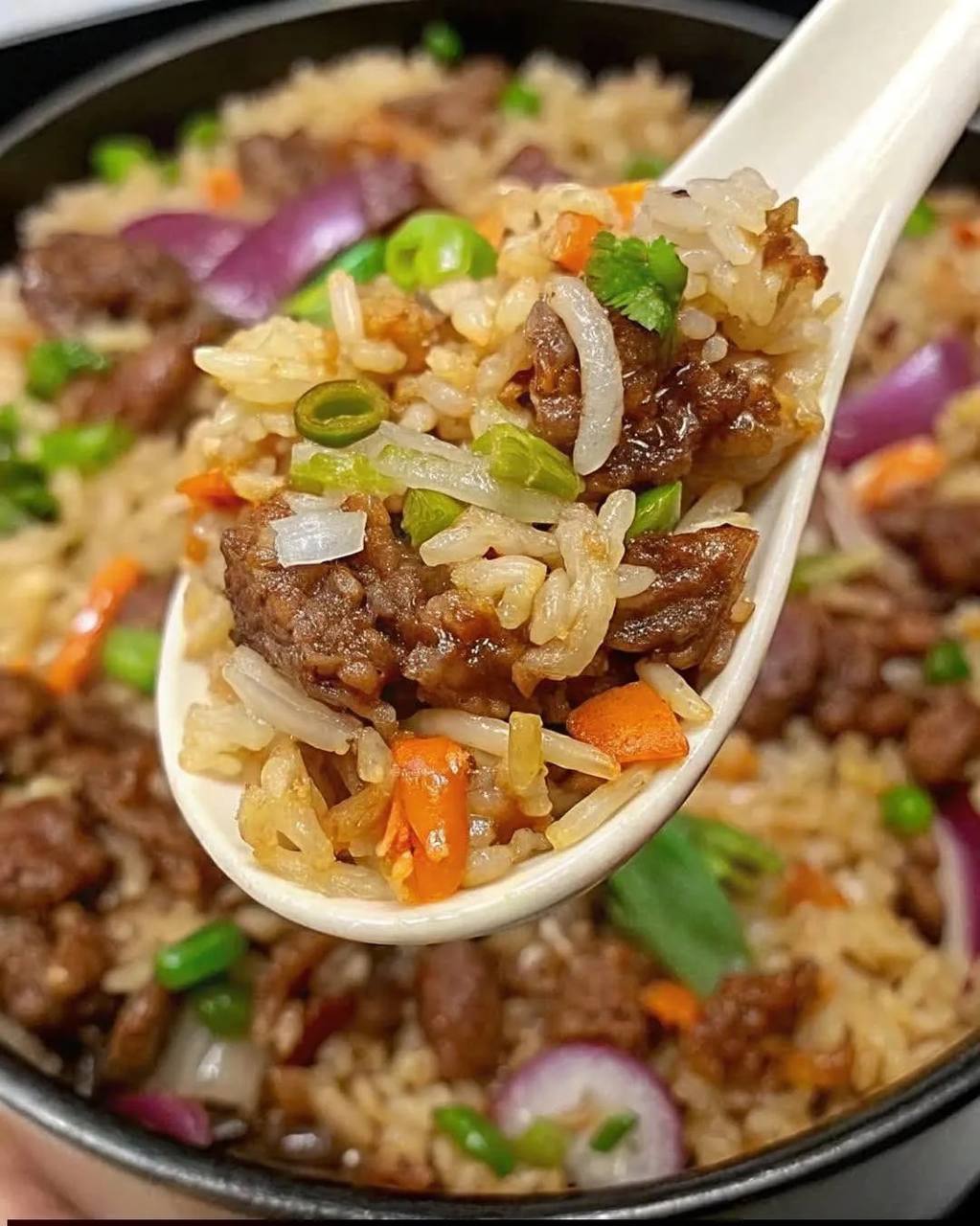
There are few dishes as universally beloved and deeply satisfying as a well-made plate of fried rice. It’s a culinary chameleon, adapting to countless ingredients and flavor profiles, yet always delivering that comforting, savory goodness. Today, we’re diving into a particularly delightful rendition: Onion Beef Fried Rice. This isn’t just any fried rice; it’s a symphony of textures and tastes, where tender, savory beef meets the sweet, aromatic bite of caramelized onions, all nestled amongst perfectly separated grains of golden-brown rice. It’s the kind of dish that transports you straight to your favorite Asian eatery, but with the added satisfaction of knowing you crafted it in your own kitchen.
What makes this Onion Beef Fried Rice truly special is the harmonious interplay of its star ingredients. The beef, seared to perfection, offers a rich, umami depth, while the onions, both red and white, contribute layers of sweetness and a delightful pungency that cuts through the richness. Every spoonful is a balanced bite of perfectly cooked rice, crisp-tender vegetables like carrots and peas, and those irresistible morsels of beef and onion. Whether you’re looking for a quick and flavorful weeknight dinner, a clever way to use up leftover rice, or a crowd-pleasing dish that will impress your family and friends, this recipe is a guaranteed winner. It’s hearty, flavorful, and surprisingly simple to master, making it an ideal choice for both novice cooks and seasoned stir-fry enthusiasts alike.
Beyond its incredible taste, this Onion Beef Fried Rice is a testament to the magic of simple ingredients transformed through proper technique. We’ll guide you through each step, from preparing your beef and vegetables to achieving that coveted “wok hei” – the smoky, complex flavor imparted by high-heat stir-frying. We’ll share all the essential tips, including the golden rule of using day-old rice, to ensure your fried rice is never mushy but always perfectly textured and bursting with flavor. Get ready to embark on a culinary adventure that will elevate your homemade fried rice game to new heights, proving that truly extraordinary meals can be created with everyday components.
Nutritional Information
Per serving (approximate values):
- Calories: 580
- Protein: 35g
- Carbohydrates: 65g
- Fat: 20g
- Fiber: 4g
- Sodium: 980mg
Ingredients
- 2 cups cold, day-old cooked long-grain white rice
- 12 ounces beef sirloin or flank steak, thinly sliced against the grain
- 1 tablespoon soy sauce (for beef marinade)
- 1 teaspoon cornstarch (for beef marinade)
- 1/2 teaspoon sesame oil (for beef marinade)
- 2 tablespoons vegetable oil (or other high smoke point oil), divided
- 1/2 white onion, thinly sliced
- 1/2 red onion, cut into wedges
- 1 medium carrot, finely diced
- 1/2 cup frozen green peas
- 2 cloves garlic, minced
- 1 inch fresh ginger, grated (about 1 teaspoon)
- 2 large eggs, lightly beaten
- 2 tablespoons soy sauce (for fried rice)
- 1 tablespoon oyster sauce (optional, for extra umami)
- 1 teaspoon sugar
- 1/4 teaspoon white pepper
- 2 scallions, green and white parts, thinly sliced (for garnish)
- Fresh cilantro, chopped (for garnish, optional)
Instructions
- Prepare the Beef: In a medium bowl, combine the thinly sliced beef with 1 tablespoon soy sauce, 1 teaspoon cornstarch, and 1/2 teaspoon sesame oil. Mix well and let it marinate for at least 15 minutes, or up to 30 minutes at room temperature. This tenderizes the beef and helps it brown beautifully.
- Prepare the Eggs: In a small bowl, lightly beat the two eggs. Set aside.
- Prepare the Sauce: In a separate small bowl, whisk together 2 tablespoons soy sauce, 1 tablespoon oyster sauce (if using), 1 teaspoon sugar, and 1/4 teaspoon white pepper. Set aside.
- Heat the Wok/Pan: Heat 1 tablespoon of vegetable oil in a large wok or a large, heavy-bottomed skillet over high heat until it just begins to smoke. High heat is crucial for good fried rice.
- Cook the Beef: Add the marinated beef to the hot wok in a single layer. Do not overcrowd the pan; cook in batches if necessary. Sear the beef for 1-2 minutes per side until nicely browned and just cooked through. Remove the beef from the wok and set aside on a plate.
- Cook the Eggs: Add a tiny bit more oil to the wok if needed. Pour in the beaten eggs and scramble them quickly for about 30 seconds to 1 minute until just set but still soft. Break them into small pieces. Remove the cooked eggs from the wok and set aside with the beef.
- Sauté Aromatics and Vegetables: Add the remaining 1 tablespoon of vegetable oil to the wok. Add the sliced white onion, red onion wedges, and diced carrots. Stir-fry for 2-3 minutes until the onions start to soften and become slightly translucent, and the carrots are crisp-tender.
- Add Garlic and Ginger: Push the vegetables to one side of the wok. Add the minced garlic and grated ginger to the empty space and stir-fry for 30 seconds until fragrant. Then, mix them into the vegetables.
- Incorporate the Rice: Add the cold, day-old cooked rice to the wok. Break up any clumps with your spatula. Stir-fry vigorously for 3-4 minutes, tossing constantly, to ensure the rice grains are well separated and heated through. You should hear a slight crackling sound as the rice fries.
- Add Peas and Sauce: Add the frozen green peas to the rice and continue to stir-fry for another minute. Pour the prepared sauce mixture evenly over the rice. Stir-fry for 1-2 minutes, ensuring all the rice grains are coated with the sauce and absorb the flavors.
- Combine and Finish: Return the cooked beef and scrambled eggs to the wok. Toss everything together gently for 1-2 minutes until all ingredients are well combined and thoroughly heated.
- Garnish and Serve: Remove the fried rice from the heat. Garnish generously with sliced scallions and fresh chopped cilantro (if using). Serve immediately and enjoy your homemade Onion Beef Fried Rice!
Cooking Tips and Variations
To achieve truly restaurant-quality Onion Beef Fried Rice, remember that high heat and proper preparation are your best friends. Always use day-old, cold cooked rice; this is perhaps the most critical tip, as fresh, warm rice contains too much moisture and will result in a mushy texture. When cooking the beef and later the vegetables, resist the urge to overcrowd your wok or pan. Cooking in batches ensures everything sears and fries properly, rather than steaming. A very hot wok is essential for developing that coveted “wok hei” – the distinct smoky flavor that makes fried rice so addictive. Don’t be afraid to let the rice sit undisturbed for a few seconds on the hot surface before tossing, allowing for some slight caramelization. For the beef, slicing it thinly against the grain and marinating it with a touch of cornstarch will guarantee tenderness and a beautiful sear.
This recipe is also incredibly versatile, allowing for numerous delicious variations. If beef isn’t your preference, feel free to substitute it with other proteins. Thinly sliced chicken breast or thigh, shrimp, or even firm tofu cubed and pan-fried until crispy, all make excellent alternatives. For a vegetarian option, simply omit the beef and add extra vegetables or even some scrambled tofu. The vegetable lineup is also highly customizable: broccoli florets, corn kernels, sliced mushrooms, bell peppers, or even bok choy can be added or swapped out based on what you have on hand or what you prefer. Just be mindful of their cooking times; harder vegetables like broccoli might need a minute or two head start. To adjust the spice level, a dash of sriracha or a pinch of red pepper flakes can be added to the sauce, or a drizzle of chili oil can be added at the end. For a richer flavor, a tablespoon of butter can be added to the wok just before adding the rice, giving it a delightful aroma and a slightly creamier texture. You can also experiment with different types of onions; sweet onions or even shallots can add unique flavor dimensions. Don’t be afraid to make this recipe your own!
Storage and Reheating
Storing and reheating your Onion Beef Fried Rice properly will ensure you can enjoy its deliciousness for days to come. Once cooled, transfer any leftover fried rice to an airtight container. It can be safely stored in the refrigerator for up to 3-4 days. For longer storage, you can freeze fried rice in a freezer-safe container or bag for up to 1-2 months. If freezing, make sure the rice is completely cool before packaging to prevent ice crystals from forming.
When it comes to reheating, the goal is to restore the fried rice to its original texture without it becoming dry or mushy. The best method is to reheat it in a skillet or wok over medium-high heat. Add a small amount of oil (about 1 teaspoon) to the pan, then add the fried rice. Stir-fry for 5-7 minutes, breaking up any clumps, until it’s heated through and develops a slight crispness again. You can add a splash of water or a tiny bit of soy sauce if it seems too dry. Alternatively, you can reheat it in the microwave; however, this method often results in a softer texture. If using the microwave, place the fried rice in a microwave-safe dish, sprinkle a tablespoon of water over it, and cover it. Heat on high for 1-2 minutes, stir, and then continue heating in 30-second intervals until hot. For frozen fried rice, it’s best to thaw it in the refrigerator overnight before reheating in a skillet, or you can reheat it directly from frozen in a skillet, though it will take longer and may require a bit more oil to prevent sticking.
Frequently Asked Questions
Why is day-old rice essential for fried rice?
Day-old rice is crucial because it has less moisture content than freshly cooked rice. When rice cools and sits in the refrigerator, it dries out slightly, allowing the grains to separate easily during stir-frying. This prevents the fried rice from becoming clumpy and mushy, ensuring each grain gets properly fried and coated with flavor, resulting in that distinct chewy-yet-tender texture.
Can I use other types of rice for this recipe?
While long-grain white rice (like jasmine or basmati) is traditionally preferred for its texture and ability to separate, you can experiment with other types. Medium-grain rice can work, but avoid short-grain or sushi rice as it tends to be stickier and higher in starch, making it more prone to clumping. Brown rice can also be used, but it will result in a chewier texture and may require slightly longer cooking time to heat through.
What if I don’t have a wok?
No wok? No problem! A large, heavy-bottomed skillet or a cast-iron pan will work perfectly fine. The key is to use a pan that can withstand high heat and distribute it evenly. Ensure your chosen pan is large enough to accommodate all the ingredients without overcrowding, as this is vital for proper stir-frying and browning.