Introduction
There’s something undeniably comforting and elegant about a classic shortbread cookie, and when you introduce the rich, buttery crunch of pecans, you elevate it to an entirely new level of deliciousness. Our Pecan Shortbread Cookies are a testament to simple ingredients coming together to create an extraordinary treat. Imagine a cookie that practically melts in your mouth, with a tender, crumbly texture that yields to a burst of nutty flavor in every bite. This isn’t just any cookie; it’s a buttery, golden delight, generously studded with pecans, offering a perfect balance of sweet and savory notes that will have everyone reaching for more.
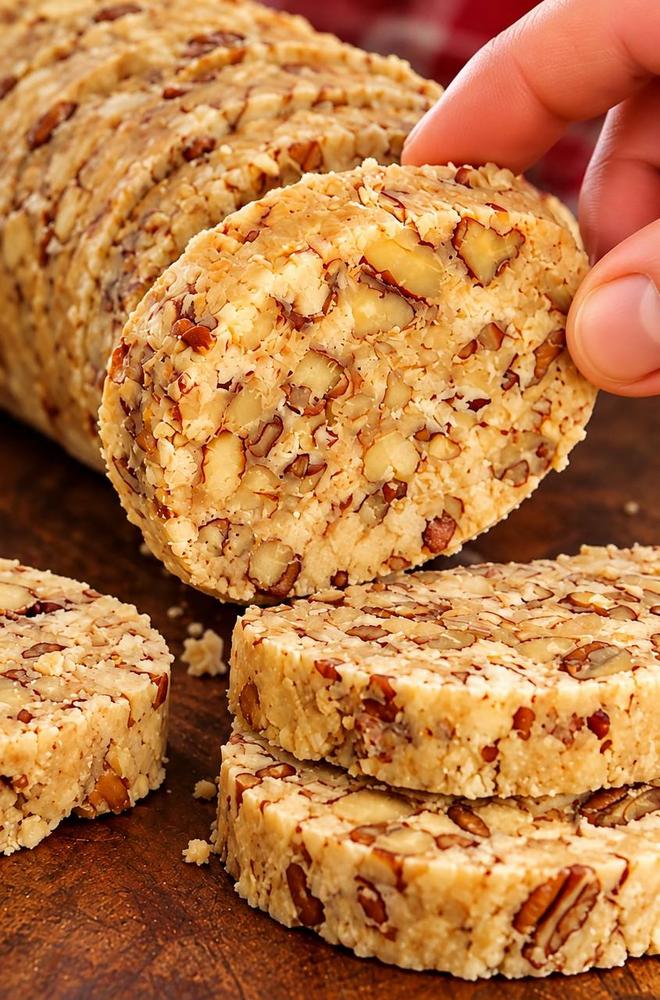
These cookies are more than just a sweet indulgence; they’re a versatile staple for any occasion. Whether you’re hosting a sophisticated tea party, preparing a holiday dessert platter, or simply craving a delightful treat to accompany your afternoon coffee, Pecan Shortbread Cookies fit the bill perfectly. Their rustic charm, with pecans peeking out from the golden dough, makes them as visually appealing as they are delicious. Despite their impressive taste and appearance, you’ll be pleasantly surprised by how straightforward they are to make. We’ve streamlined the process, focusing on the classic “slice and bake” method, which means minimal fuss and maximum enjoyment.
What truly sets our Pecan Shortbread Cookies apart is the harmonious blend of textures and flavors. The shortbread itself is a masterpiece of buttery richness, achieving that perfect crumbly yet firm consistency that defines a truly great shortbread. Then, the pecans join the party, adding not just their distinctive flavor but also a delightful textural contrast. Each round cookie is a little disc of pure bliss, promising a moment of culinary joy. Get ready to fill your kitchen with the irresistible aroma of baking butter and toasted nuts, because once you try this recipe, it’s sure to become a beloved favorite in your home.
Nutritional Information
Per serving (approximate values):
- Calories: 180
- Protein: 2g
- Carbohydrates: 18g
- Fat: 12g
- Fiber: 1g
- Sodium: 60mg
Ingredients
- 1 cup (2 sticks or 226g) unsalted butter, softened
- ½ cup (100g) granulated sugar
- ½ teaspoon vanilla extract
- 2 cups (240g) all-purpose flour
- ¼ teaspoon salt
- 1 cup (115g) pecans, finely chopped
Instructions
- In a large mixing bowl, using an electric mixer, cream together the softened unsalted butter and granulated sugar until light and fluffy. This usually takes about 2-3 minutes on medium speed. Ensure the mixture is well combined and has a pale, airy consistency.
- Beat in the vanilla extract until just incorporated. Scrape down the sides of the bowl with a spatula to ensure all ingredients are evenly mixed.
- In a separate medium bowl, whisk together the all-purpose flour and salt. This step helps to distribute the salt evenly throughout the flour and prevents lumps.
- Gradually add the dry flour mixture to the wet butter mixture, mixing on low speed until just combined. Be careful not to overmix, as overmixing can lead to tough shortbread. The dough will be thick and crumbly at first.
- Fold in the finely chopped pecans using a spatula or by hand until they are evenly distributed throughout the dough. Again, avoid overmixing. The dough should come together but might still look a bit crumbly.
- Turn the dough out onto a clean work surface. Gather the dough and gently knead it a few times to bring it together into a cohesive mass. Do not overwork the dough.
- Divide the dough into two equal portions. On a piece of parchment paper or plastic wrap, shape each portion into a log, approximately 1 ½ to 2 inches in diameter and about 8-10 inches long. Try to make the logs as uniform in thickness as possible to ensure even baking later.
- Wrap each dough log tightly in parchment paper or plastic wrap. Place the wrapped logs in the refrigerator and chill for at least 2 hours, or preferably overnight. Chilling is crucial as it allows the butter to firm up, making the dough easier to slice and helping the cookies maintain their shape during baking.
- Preheat your oven to 350°F (175°C). Line two baking sheets with parchment paper.
- Remove one chilled dough log from the refrigerator. Using a sharp knife, slice the dough into ¼-inch thick rounds. If the dough is too cold and hard to slice, let it sit at room temperature for 5-10 minutes before cutting.
- Arrange the sliced cookies about 1 inch apart on the prepared baking sheets.
- Bake for 12-15 minutes, or until the edges are lightly golden and the centers are set but still pale. Shortbread cookies should not brown significantly; their characteristic pale color indicates tenderness.
- Remove the baking sheets from the oven and let the cookies cool on the sheets for 5 minutes before transferring them to a wire rack to cool completely. Cooling on the baking sheet helps them firm up without breaking.
- Repeat the slicing and baking process with the second dough log.
- Once completely cooled, store the Pecan Shortbread Cookies in an airtight container at room temperature.
Cooking Tips and Variations
Achieving shortbread perfection is all about understanding the nuances of a few key techniques and ingredients. For the best results, always start with good quality unsalted butter. Since butter is a primary flavor component in shortbread, its quality will significantly impact the final taste. Ensure your butter is truly at room temperature – soft enough to indent with your finger but not melted or greasy. This allows it to cream properly with the sugar, incorporating air for a tender crumb. When mixing the dough, be gentle and avoid overmixing once the flour is added. Overworking the gluten in the flour will lead to tough, chewy cookies rather than the desired melt-in-your-mouth tenderness. Mix just until the ingredients are combined and no streaks of flour remain.
Chilling the dough is perhaps the most critical step for slice-and-bake shortbread. A well-chilled log will slice cleanly and evenly, which is essential for uniform baking. If your dough is too soft, the cookies will spread too much in the oven. If it’s too hard, it will crumble when you try to slice it. Aim for a firm but sliceable consistency. For enhanced pecan flavor, consider lightly toasting your chopped pecans before adding them to the dough. Spread them on a baking sheet and toast in a 350°F (175°C) oven for 5-7 minutes, or until fragrant. Let them cool completely before mixing them in. This simple step deepens their nutty aroma and taste, making an already delicious cookie even better. When baking, keep a close eye on your cookies. Shortbread is delicate and should be removed from the oven when the edges are just barely golden. Overbaking will make them dry and less tender.
Once you’ve mastered the classic Pecan Shortbread, feel free to experiment with delightful variations. For an extra layer of flavor, add a pinch of ground cinnamon or cardamom to the flour mixture. A teaspoon of orange or lemon zest can also brighten the cookies with a lovely citrusy aroma. For a touch of indulgence, consider dipping half of each cooled cookie in melted dark or white chocolate. You can then sprinkle them with a few extra finely chopped pecans for a beautiful finish. Another simple variation is to dust the cooled cookies with powdered sugar for an elegant presentation and a subtle sweetness. You could also create a simple glaze by mixing powdered sugar with a little milk or lemon juice and drizzling it over the cooled cookies. For a slightly different texture, you can roll the dough logs in granulated sugar or turbinado sugar before chilling; this creates a lovely crunchy sugar crust on the baked cookies. These variations allow you to customize your shortbread to suit any preference or occasion, making them truly your own.
Storage and Reheating
Pecan Shortbread Cookies are excellent keepers, making them a fantastic make-ahead treat. Once your cookies have completely cooled to room temperature, which is essential to prevent condensation, store them in an airtight container. A cookie tin or a plastic container with a tight-fitting lid works perfectly. Store the container at room temperature, away from direct sunlight or heat sources. When stored properly, these cookies will maintain their freshness, buttery flavor, and tender texture for up to 1 week. If you live in a very humid environment, you might find their shelf life to be slightly shorter, or you might prefer to store them in the refrigerator to prevent them from becoming soft.
For longer storage, Pecan Shortbread Cookies freeze beautifully. Once the cookies are completely cool, arrange them in a single layer on a baking sheet and place them in the freezer for about 30 minutes, or until they are firm. This step, known as flash freezing, prevents them from sticking together. Once firm, transfer the cookies to a freezer-safe airtight container or a heavy-duty freezer bag. Be sure to remove as much air as possible from the bag to prevent freezer burn. You can also layer them between sheets of parchment paper in the container. Frozen Pecan Shortbread Cookies will keep well for up to 3 months. To enjoy, simply remove the desired number of cookies from the freezer and let them thaw at room temperature for about 15-30 minutes. There’s no need to reheat them, as their delicate texture is best enjoyed at room temperature. If you prefer a slightly warmed cookie, you can place them in a preheated oven at 250°F (120°C) for 5-7 minutes, but be careful not to overbake them, as this can dry them out.
You can also freeze the unbaked dough logs. After shaping the dough into logs and wrapping them tightly in plastic wrap, you can place them directly into the freezer. For best quality, use within 3 months. When you’re ready to bake, simply transfer a frozen dough log to the refrigerator the night before, or let it sit at room temperature for 30-60 minutes until it’s firm enough to slice but not rock-hard. Then, proceed with slicing and baking as per the instructions. This is an excellent method for having freshly baked cookies on demand, perfect for unexpected guests or a sudden craving. This versatility in storage makes Pecan Shortbread Cookies a convenient and delightful addition to your baking repertoire, allowing you to always have a batch ready to enjoy or share.
Frequently Asked Questions
What makes shortbread different from other cookies?
Shortbread is distinct from most other cookies primarily due to its high butter content and the absence of leavening agents like baking powder or baking soda. This unique composition gives shortbread its characteristic rich, buttery flavor, dense, crumbly, and melt-in-your-mouth texture. Unlike chewy or crispy cookies, shortbread is designed to be tender and slightly sandy, dissolving on the tongue. The “short” in shortbread refers to the high fat content, which inhibits gluten development, resulting in a tender, crumbly texture rather than a chewy one.
Can I use different nuts instead of pecans?
Absolutely! While pecans offer a classic flavor profile that pairs beautifully with shortbread, you can certainly experiment with other nuts. Walnuts, almonds, or even hazelnuts would make excellent substitutions. For the best flavor and texture, ensure that whatever nuts you choose are finely chopped and, if desired, lightly toasted before incorporating them into the dough. Toasting nuts enhances their natural oils and deepens their flavor, adding another layer of complexity to your shortbread cookies.
Why did my shortbread cookies spread too much?
There are a few common reasons why shortbread cookies might spread excessively. The most frequent culprit is insufficient chilling of the dough. If the butter in the dough is too soft when it goes into the oven, it will melt too quickly, causing the cookies to lose their shape. Ensure your dough logs are thoroughly chilled for at least 2 hours, or even overnight, until very firm. Another reason could be that your kitchen or oven temperature is too warm, or your butter was too soft to begin with. Overmixing the dough can also contribute to spreading by developing too much gluten, making the dough less stable. Lastly, using too much butter or not enough flour in the recipe can also alter the dough’s consistency and lead to spreading.
How can I prevent my shortbread from being dry or tough?
To ensure your shortbread is tender and not dry or tough, several factors are crucial. First, avoid overmixing the dough once the flour is added. Overmixing develops gluten, which leads to a tough texture. Mix just until the ingredients are combined. Second, do not overbake the cookies. Shortbread should be removed from the oven when it is set and the edges are just barely golden, not deeply browned. Overbaking will dry them out and make them hard. Third, ensure your ingredients, especially butter, are at the correct temperature as specified in the recipe. Using butter that is too cold can lead to uneven mixing and a less tender crumb, while butter that is too warm can affect the dough’s structure. Following these guidelines will help you achieve that perfect melt-in-your-mouth shortbread texture.