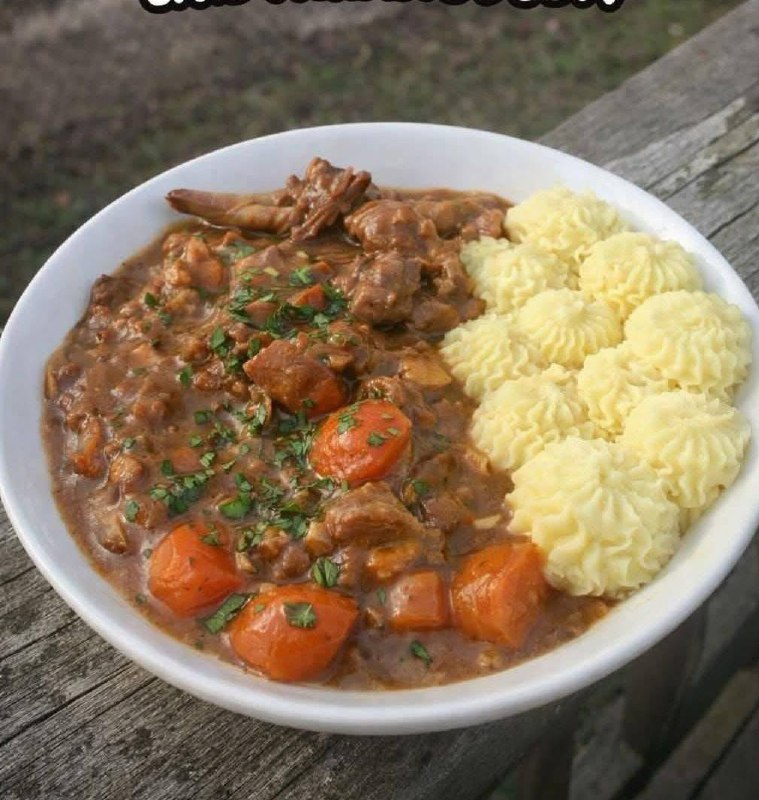
Instructions
- Pat the rabbit pieces dry thoroughly with paper towels. Season generously with salt and freshly ground black pepper on all sides.
- Heat the olive oil in a large Dutch oven or heavy-bottomed pot over medium-high heat. Once hot, add the rabbit pieces in batches, taking care not to overcrowd the pot. Sear the rabbit until deeply golden brown on all sides, about 3-5 minutes per side. Remove the browned rabbit to a plate and set aside.
- Reduce the heat to medium. Add the chopped onion, carrots, and celery to the pot. Sauté, stirring occasionally, until the vegetables begin to soften, about 5-7 minutes.
- Add the minced garlic and tomato paste to the pot. Cook for another 1-2 minutes, stirring constantly, until fragrant and the tomato paste has slightly darkened.
- If using flour for thickening, sprinkle it over the vegetables and cook for 1 minute, stirring constantly, to create a roux. This step is optional but helps to thicken the stew.
- Pour in the dry white wine, scraping the bottom of the pot with a wooden spoon to deglaze and release any browned bits. Bring to a simmer and cook for 2-3 minutes, allowing the alcohol to cook off slightly.
- Return the browned rabbit pieces to the pot. Add the chicken broth, diced tomatoes (undrained), dried thyme, dried rosemary, and bay leaves. Stir everything together gently.
- Bring the stew to a gentle simmer. Once simmering, reduce the heat to low, cover the pot, and cook for 1 hour and 30 minutes, or until the rabbit is very tender.
- After 1 hour and 30 minutes, add the quartered cremini mushrooms and the halved or quartered new potatoes to the pot. Stir gently to combine.
- Continue to simmer, covered, for another 30-45 minutes, or until the potatoes are fork-tender and the mushrooms are cooked through. The rabbit should be falling off the bone at this point.
- Taste the stew and adjust seasoning with additional salt and pepper if needed. Remove and discard the bay leaves before serving.
- Ladle the hot rabbit stew into bowls. Garnish generously with fresh chopped parsley before serving.
Cooking Tips and Variations
For the best results, ensure your rabbit pieces are thoroughly dried before searing. This allows for a beautiful, deep brown crust to form, which is crucial for building flavor in the stew. Do not overcrowd the pot during searing; work in batches if necessary. Overcrowding will steam the meat instead of browning it. Another key tip is to let the stew simmer gently for the recommended time. Slow cooking is what truly tenderizes the rabbit and allows the flavors to meld beautifully. Resist the urge to rush it; patience is a virtue when making stew. If you prefer a thicker stew, you can create a slurry with 1 tablespoon of cornstarch mixed with 2 tablespoons of cold water and stir it into the simmering stew during the last 10 minutes of cooking until it reaches your desired consistency.
For variations, consider swapping the white wine for a dry hard cider or even a dark beer for a different depth of flavor. If you want to add more green vegetables, frozen peas or green beans can be stirred in during the last 15 minutes of cooking. For an even richer flavor, you can add a strip or two of bacon or pancetta, diced and rendered in the pot before searing the rabbit; remove the rendered pieces, then proceed with the recipe, adding them back in with the broth. You can also experiment with different herbs like sage or marjoram to customize the aromatic profile. If you enjoy a touch of heat, a pinch of red pepper flakes can be added with the garlic. Serve this stew with crusty bread for soaking up the delicious broth, or over creamy polenta or mashed potatoes for an even heartier meal.
Storage and Reheating
To store leftover rabbit stew, allow it to cool completely to room temperature. Transfer the stew to an airtight container and refrigerate promptly. It will keep well in the refrigerator for up to 3-4 days. For longer storage, rabbit stew freezes exceptionally well. Transfer cooled stew to freezer-safe containers or heavy-duty freezer bags, leaving a little headspace for expansion. It can be stored in the freezer for up to 3 months. Thaw frozen stew overnight in the refrigerator before reheating.
To reheat, transfer the desired portion of stew to a saucepan or pot. Heat gently over medium-low heat, stirring occasionally, until heated through. If the stew appears too thick, you can add a splash of chicken broth or water to achieve the desired consistency. Avoid reheating at high temperatures, as this can cause the meat to become tough. You can also reheat individual portions in the microwave, using a microwave-safe bowl and heating in 1-minute intervals, stirring in between, until hot. Ensure the stew is piping hot throughout before serving.
Frequently Asked Questions
Can I use frozen rabbit for this recipe?
Yes, you can absolutely use frozen rabbit for this recipe. Just make sure to thaw it completely in the refrigerator overnight before cutting and preparing it. Patting it very dry is even more crucial with previously frozen meat to ensure good browning.
What if I don’t have white wine? Can I omit it?
While white wine adds a wonderful depth of flavor and helps deglaze the pot, you can substitute it with an equal amount of additional chicken broth. The flavor profile will be slightly different, but the stew will still be delicious. A splash of apple cider vinegar can also add a touch of acidity if you’re omitting the wine.
How can I make this stew in a slow cooker?
To adapt this recipe for a slow cooker, follow steps 1-5 (searing the rabbit and sautéing the aromatics) on your stovetop. Then, transfer the browned rabbit and sautéed vegetables to your slow cooker. Add the wine, chicken broth, diced tomatoes, tomato paste, herbs, and bay leaves. Cook on low for 6-8 hours or on high for 3-4 hours, or until the rabbit is tender. Add the mushrooms and potatoes during the last 1.5-2 hours of cooking on low, or the last 45 minutes-1 hour on high. Adjust seasoning before serving.