Instructions
- Preheat your oven to 400°F (200°C). Line a large baking sheet with parchment paper for easy cleanup.
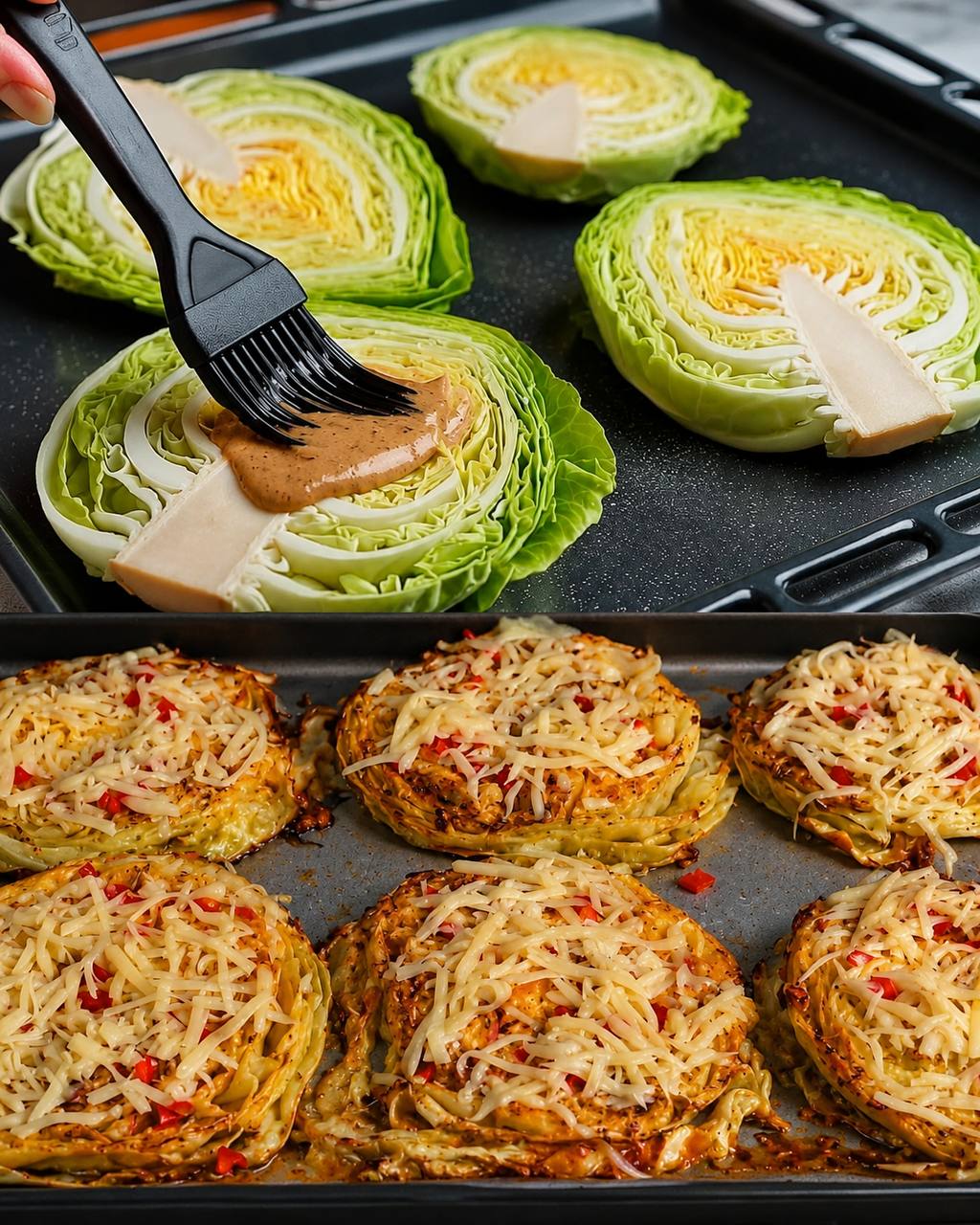
- Prepare the cabbage: Remove any loose or damaged outer leaves from the cabbage. Place the cabbage on a cutting board with the core facing down. Carefully slice the cabbage into 1-inch thick rounds, ensuring that the core remains intact in each slice. The core is crucial for holding the “steaks” together during cooking. You should get 4-6 good steaks from one head of cabbage, depending on its size.
- Make the seasoning sauce: In a small bowl, whisk together the olive oil, Dijon mustard, soy sauce, smoked paprika, garlic powder, black pepper, and red pepper flakes (if using) until well combined.
- Season the cabbage steaks: Arrange the cabbage steaks in a single layer on the prepared baking sheet. Using a pastry brush, generously brush both sides of each cabbage steak with the prepared seasoning sauce.
- Initial roasting: Roast the cabbage steaks in the preheated oven for 20-25 minutes, or until the edges are tender and slightly caramelized. The cooking time may vary slightly depending on the thickness of your steaks and your oven.
- Prepare the cheese topping: While the cabbage is roasting, in another small bowl, combine the shredded mozzarella cheese, grated Parmesan cheese, and finely diced red bell pepper (if using).
- Add cheese and final roast: Carefully remove the baking sheet from the oven. Evenly sprinkle the cheese mixture over the top of each roasted cabbage steak. Return the baking sheet to the oven and continue to roast for another 8-12 minutes, or until the cheese is melted, bubbly, and golden brown. Keep a close eye on it to prevent burning.
- Serve immediately: Carefully transfer the roasted cabbage steaks to serving plates. Garnish with fresh chopped parsley, if desired. Serve hot and enjoy!
Cooking Tips and Variations
For the best results, select a firm, dense head of green cabbage. Savoy cabbage, with its crinkled leaves, also works wonderfully and can offer a slightly different texture. When slicing, a sharp chef’s knife is key to getting clean, even cuts. Ensure the core stays intact in each slice; if it falls out, the steak might separate during cooking. Don’t overcrowd your baking sheet; if necessary, use two baking sheets to ensure the cabbage roasts rather than steams, allowing for proper caramelization.
The seasoning sauce is highly customizable. Feel free to experiment with different spices like onion powder, dried oregano, or a pinch of cayenne for extra heat. For an umami boost, a dash of Worcestershire sauce can be added to the seasoning. If you prefer a nuttier flavor, swap out some of the mozzarella for Gruyère or sharp cheddar. For a richer, creamier topping, a thin layer of cream cheese or a spoonful of mascarpone can be spread on the cabbage before adding the shredded cheese. To add a bit of crunch, sprinkle some breadcrumbs or crushed pork rinds over the cheese before the final roast. For a complete meal, you can add cooked bacon bits, crumbled sausage, or even thinly sliced cooked chicken breast on top of the cheese before the final bake.
Storage and Reheating
Leftover Roasted Cabbage Steaks with Cheese can be stored in an airtight container in the refrigerator for up to 3-4 days. To reheat, the oven is your best friend for maintaining texture. Preheat your oven to 350°F (175°C). Place the leftover cabbage steaks on a baking sheet and bake for 10-15 minutes, or until heated through and the cheese is re-crisped. You can also reheat them in a toaster oven for smaller portions. Microwaving is an option, but it may result in a softer, less crispy texture for both the cabbage and the cheese. If microwaving, heat in 30-second intervals until warmed through.
Frequently Asked Questions
Can I use other types of cabbage for this recipe?
Yes, while green cabbage is traditional, you can certainly experiment with other varieties. Savoy cabbage works wonderfully and offers a slightly more tender texture and beautiful ruffled edges. Red cabbage can also be used, though it might take a little longer to soften and will impart a slightly different flavor and color to the dish. Avoid very loose-leaf varieties like Napa cabbage, as they won’t hold together as well in the “steak” form.
How do I prevent the cabbage from getting soggy?
The key to preventing soggy cabbage is to ensure proper roasting. First, don’t overcrowd your baking sheet. Give each cabbage steak enough space so that air can circulate around it. If the sheet is too crowded, the cabbage will steam instead of roast. Second, make sure your oven is at the correct temperature. Roasting at a higher temperature helps to caramelize the sugars in the cabbage and drive off moisture, resulting in tender-crisp rather than soggy results.
Can I make this recipe vegan?
Absolutely! To make this recipe vegan, simply substitute the cheese with your favorite brand of dairy-free shredded mozzarella or a vegan Parmesan alternative. Many plant-based cheeses melt beautifully and will provide a similar creamy, savory topping. Ensure your soy sauce is gluten-free if needed, or use tamari. The rest of the ingredients are typically vegan-friendly.
What can I serve with these cabbage steaks?
These roasted cabbage steaks are incredibly versatile. They can easily stand alone as a light vegetarian meal. For a more substantial dinner, they pair wonderfully with grilled chicken or fish, roasted pork loin, or even a hearty lentil soup. They also make an excellent side dish for holiday meals, adding a vibrant and flavorful vegetable option that’s a step up from traditional steamed vegetables. A simple side salad or some crusty bread would also complement them beautifully.