Introduction
There are some desserts that instantly transport you back to childhood, conjuring images of cozy kitchens and comforting warmth. Rice pudding is undoubtedly one of them. This classic dessert, with its creamy texture, sweet flavor, and spiced aroma, has been a beloved staple for generations. While traditional stovetop methods can sometimes demand constant stirring and watchful eyes to prevent scorching, our slow cooker version promises all the nostalgic charm with none of the fuss. Imagine a dessert that practically makes itself, filling your home with an irresistible fragrance as you go about your day – that’s the magic of Slow Cooker Rice Pudding.
What makes this slow cooker recipe truly exceptional is its unparalleled convenience. It’s the ultimate “set it and forget it” dish, perfect for busy weeknights, lazy weekends, or when you need a comforting treat without a lot of active cooking time. The gentle, consistent heat of the slow cooker ensures that the rice slowly absorbs the creamy liquid, resulting in a perfectly tender grain and a lusciously thick, homogeneous pudding every single time. No more standing over a hot stove, no more worrying about lumps or burnt bottoms; just consistently creamy, dreamy rice pudding that tastes like it was made with love and patience.
Beyond its ease, this Slow Cooker Rice Pudding is a versatile delight. Serve it warm on a chilly evening, perhaps with a dollop of whipped cream or a sprinkle of extra cinnamon, for a truly soul-satisfying dessert. Or, chill it overnight for a delightful breakfast or a refreshing snack on a warmer day. The combination of plump, starchy rice, rich dairy, sweet sugar, and fragrant spices like cinnamon and nutmeg creates a flavor profile that is both simple and profoundly comforting. Add in the chewy sweetness of raisins, and you have a dish that appeals to nearly everyone, making it a fantastic crowd-pleaser for any occasion.
Nutritional Information
Per serving (approximate values):
- Calories: 350-400
- Protein: 10-12g
- Carbohydrates: 60-70g
- Fat: 8-12g
- Fiber: 2-3g
- Sodium: 150-200mg
Ingredients
- 1 cup short-grain white rice (such as Arborio or sushi rice), uncooked and rinsed
- 4 cups whole milk
- 1 cup heavy cream
- ½ cup granulated sugar (or to taste)
- ½ teaspoon ground cinnamon, plus extra for serving
- ¼ teaspoon ground nutmeg
- ¼ teaspoon salt
- ½ cup raisins (optional, but highly recommended)
- 1 teaspoon vanilla extract (added at the end)
- Optional toppings: whipped cream, chopped nuts, fresh berries, fruit compote
Instructions
- Lightly grease the inside of a 6-quart (or larger) slow cooker with butter or non-stick spray. This helps prevent sticking.
- Add the rinsed short-grain rice to the bottom of the slow cooker.
- In a large bowl, whisk together the whole milk, heavy cream, granulated sugar, ground cinnamon, ground nutmeg, and salt until the sugar is dissolved.
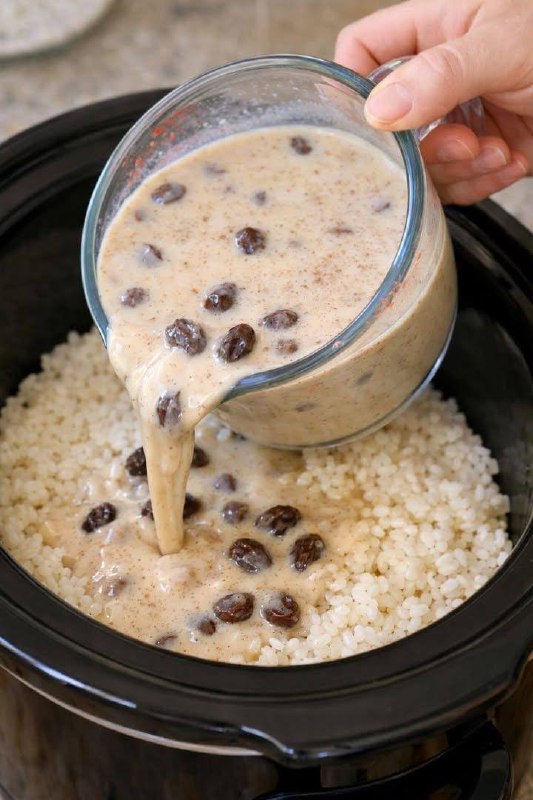
- Pour the milk mixture over the rice in the slow cooker. Stir gently to combine and ensure the rice is evenly distributed and submerged in the liquid.
- Add the raisins (if using) to the slow cooker and stir them into the mixture.
- Cover the slow cooker with its lid.
- Cook on LOW for 3 to 4 hours, or on HIGH for 1.5 to 2 hours. The cooking time can vary slightly depending on your slow cooker model.
- During the last 30 minutes of cooking, remove the lid and stir the pudding. This helps to distribute the rice and prevent it from sticking to the bottom. If cooking on low, you might stir once more halfway through cooking. If cooking on high, one stir towards the end is usually sufficient.
- The pudding is done when the rice is tender, creamy, and has absorbed most of the liquid, resulting in a thick, custardy consistency. It should still be somewhat loose, as it will thicken further as it cools.
- Once cooked, turn off the slow cooker. Stir in the vanilla extract.
- Let the rice pudding sit, uncovered, for about 15-20 minutes in the slow cooker to cool slightly and thicken further before serving.
- Serve warm or chilled, garnished with extra cinnamon, whipped cream, or your favorite toppings.
Cooking Tips and Variations
Achieving the perfect Slow Cooker Rice Pudding is all about understanding a few key principles and knowing how to adapt the recipe to your taste. The beauty of this method lies in its simplicity, but a few pointers can elevate your pudding from good to absolutely sublime.
First and foremost, the type of rice you use is crucial. Emphasize using short-grain or medium-grain rice, such as Arborio, sushi rice, or even a basic pudding rice. These varieties are naturally rich in starch, which is released during the slow cooking process, creating that signature creamy, velvety texture we all crave in rice pudding. Long-grain rice, while perfectly fine for savory dishes, tends to produce a more separate, less creamy result, which isn’t ideal for pudding. Always rinse your rice before adding it to the slow cooker; this removes excess surface starch and prevents the pudding from becoming overly gummy.
When it comes to dairy, full-fat milk and heavy cream are your best friends for ultimate richness. The fat content contributes significantly to the pudding’s luxurious mouthfeel. However, if you’re looking for a lighter option or have dietary restrictions, you can certainly experiment with different milk types. 2% milk will yield a slightly less rich but still delicious pudding. For dairy-free versions, full-fat coconut milk or a blend of almond and oat milk can work wonderfully, though they will impart their own distinct flavors. Be mindful that plant-based milks might require slight adjustments to cooking time or thickness, as their protein and fat structures differ from dairy.
While the slow cooker minimizes the need for constant stirring, a gentle stir once or twice during the cooking process, especially towards the end, can be beneficial. This helps to prevent the rice from settling and sticking to the bottom, ensuring even cooking and distribution of ingredients. However, avoid over-stirring, as this can break down the rice grains too much and lead to a mushy texture rather than distinct, tender grains suspended in cream. The “set it and forget it” mantra applies mostly to the initial stages; a brief check-in and stir towards the end is always a good idea.
Sweetness is a personal preference, so feel free to adjust the amount of sugar in the recipe. The ½ cup specified is a good starting point for a moderately sweet pudding. If you prefer it sweeter, you can add an extra tablespoon or two. For those who like it less sweet, reduce it slightly. Remember that dried fruits like raisins also contribute natural sweetness, so factor that in. You can also experiment with different sweeteners like maple syrup or brown sugar for a different flavor dimension, though these might alter the color and overall taste profile.
Flavor enhancements are where you can truly make this recipe your own. Vanilla extract, added at the very end, brightens all the flavors. Beyond the classic cinnamon and nutmeg, consider adding a pinch of cardamom for an exotic twist, or a tiny amount of ground ginger for a subtle warmth. Orange zest or lemon zest, added along with the liquid, can provide a wonderful fragrant lift, especially if you’re omitting raisins. For nut lovers, a handful of finely chopped almonds or pecans can be stirred in during the last hour of cooking, or sprinkled on top as a garnish for added texture and flavor.
Doneness is key. The pudding is ready when the rice is tender to the bite and the mixture has thickened to a creamy, custardy consistency. It’s important to remember that rice pudding will continue to thicken significantly as it cools, so it’s better to err on the side of it being slightly looser when you turn off the slow cooker. If it seems too thin, you can continue cooking it for another 15-30 minutes, stirring occasionally, until it reaches your desired consistency. If it becomes too thick after cooling, you can always thin it out with a splash of milk or cream when reheating.
Consider variations for serving. While warm rice pudding is incredibly comforting, chilled rice pudding is equally delightful, especially in warmer weather. Top it with fresh berries like raspberries or blueberries, a spoonful of fruit compote, a sprinkle of toasted coconut flakes, or even a drizzle of caramel or chocolate sauce. For a more decadent treat, a dollop of homemade whipped cream or a scoop of vanilla ice cream is always a welcome addition. Don’t be afraid to get creative and tailor the toppings to your mood or the season.
Storage and Reheating
Slow Cooker Rice Pudding is a fantastic make-ahead dessert or breakfast, and it stores beautifully, allowing you to enjoy its comforting flavors for days. Proper storage ensures its freshness and deliciousness.
Once your rice pudding has cooled completely to room temperature, transfer it to an airtight container. This is crucial for preventing it from absorbing odors from other foods in the refrigerator and for maintaining its moisture. Store the container in the refrigerator for up to 3-4 days. Over time, the pudding will continue to thicken in the fridge, becoming firmer. This is completely normal and expected, as the rice starches continue to set and absorb more liquid.
When you’re ready to enjoy leftovers, you have a few reheating options depending on your preference. For a warm, freshly made experience, the stovetop is generally the best method. Transfer the desired portion of rice pudding to a saucepan over low to medium-low heat. As it heats, it will likely be quite thick. Stir in a splash or two of milk or cream (dairy or non-dairy, depending on what you used in the recipe) until it reaches your desired consistency. Continue to stir gently and heat until it’s warmed through, being careful not to let it boil or stick to the bottom. This process usually takes about 5-10 minutes.
Alternatively, you can reheat individual servings in the microwave. Place a portion of rice pudding in a microwave-safe bowl. Add a tablespoon or two of milk or cream to loosen it up. Heat on medium power for 30-60 second intervals, stirring well after each interval, until warmed to your liking. Be cautious not to overheat, as this can make the pudding too dry or cause the milk to separate. Microwaving tends to be quicker but may not always provide the same even heating as the stovetop method.
If you prefer your rice pudding chilled, there’s no need for reheating. Simply scoop it directly from the refrigerator and serve. If it’s too thick for your liking when cold, you can stir in a tiny bit of cold milk or cream to loosen it slightly before serving. Chilled rice pudding is particularly refreshing and makes a wonderful breakfast or light snack.
Frequently Asked Questions
Can I use long-grain rice for this recipe?
While you can technically use long-grain rice, it is not recommended for traditional creamy rice pudding. Short-grain or medium-grain rice varieties (like Arborio, sushi rice, or specific pudding rice) are preferred because they release more starch during cooking, which is essential for creating the thick, creamy, and custardy texture that rice pudding is known for. Long-grain rice tends to result in a more separate, less cohesive, and less creamy pudding.
My rice pudding is too thin/too thick. What went wrong?
If your rice pudding is too thin, it likely needs more cooking time. Continue cooking it on low for another 30-60 minutes, stirring occasionally, until it thickens to your desired consistency. Remember it will thicken further as it cools. If it’s too thick, especially after cooling, you can easily remedy this by stirring in a splash of additional milk or cream (dairy or non-dairy) when serving or reheating, until it reaches your preferred consistency.
Can I make this dairy-free or vegan?
Yes, you can adapt this recipe to be dairy-free or vegan. Substitute the whole milk and heavy cream with full-fat coconut milk, or a combination of oat milk and almond milk. For best results, use full-fat versions of plant-based milks for richness. Be aware that the flavor profile will be slightly different, especially with coconut milk, which will impart a distinct coconut taste. Ensure any sugar used is vegan-friendly if strictly avoiding animal products.
How do I prevent the rice from sticking to the bottom of the slow cooker?
To prevent sticking, first, make sure to lightly grease the inside of your slow cooker pot with butter or non-stick spray before adding ingredients. Secondly, a gentle stir once or twice during the cooking process, especially towards the last hour, can help redistribute the rice and prevent it from settling and sticking to the bottom. The “low” setting also tends to be less prone to sticking than “high.”