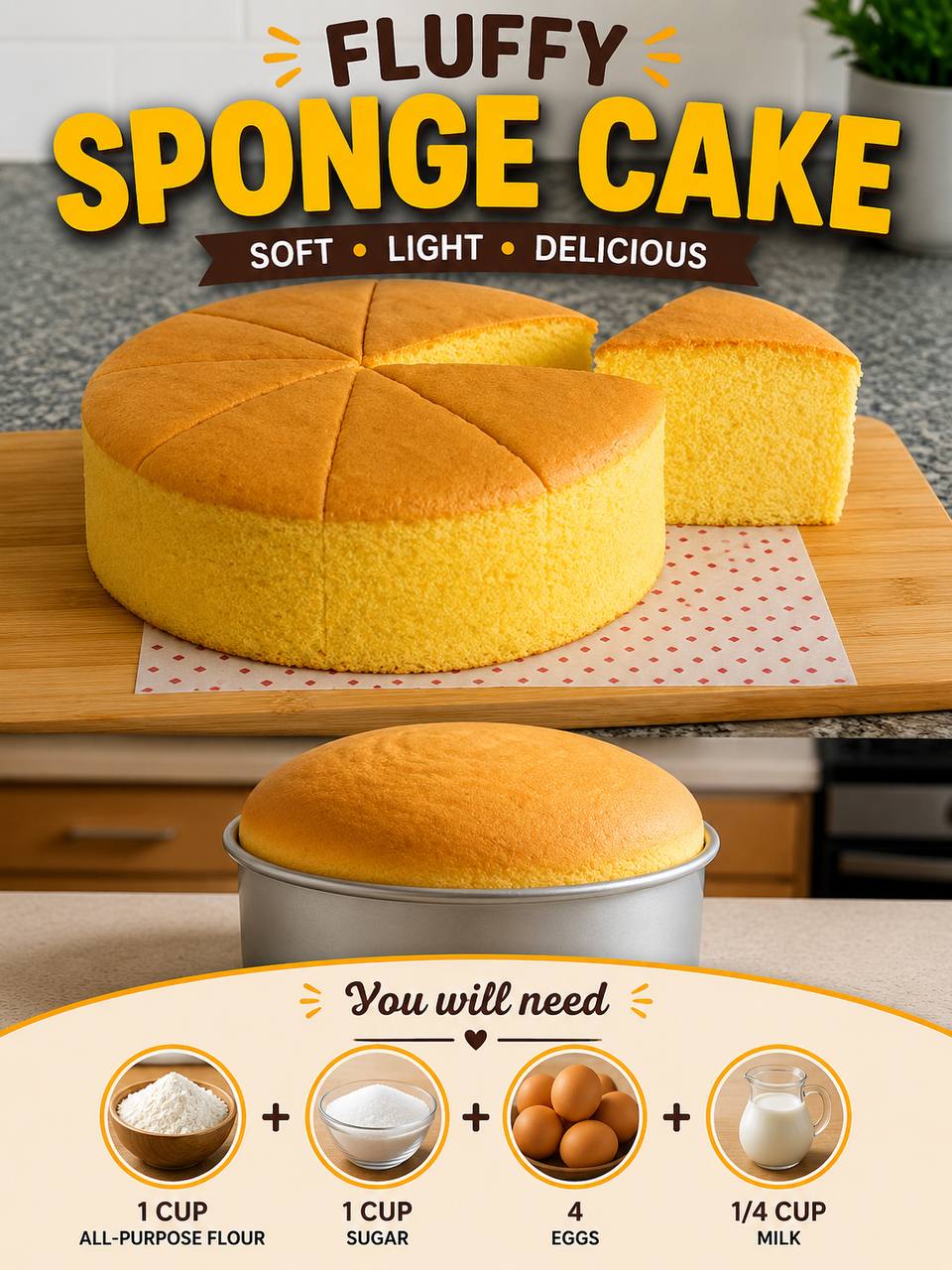
Instructions
- Prepare Your Pan: Preheat your oven to 350°F (175°C). Grease a 9-inch round cake pan generously with unsalted butter. Dust the greased pan with a light coating of flour, tapping out any excess. Alternatively, line the bottom of the pan with parchment paper, then grease and flour the sides. This ensures your beautiful cake won’t stick.
- Sift Dry Ingredients: In a medium bowl, sift together the all-purpose flour, salt, and optional baking powder. Sifting is crucial for aerating the flour and preventing lumps, contributing to the cake’s light texture. Set aside.
- Whip the Eggs and Sugar: In a large, clean mixing bowl, combine the room temperature large eggs and granulated sugar. Using an electric mixer (handheld or stand mixer with a whisk attachment), beat the mixture on high speed for 7-10 minutes. This step is the absolute cornerstone of a fluffy sponge cake. You’re looking for a pale yellow, thick, and voluminous mixture that has tripled in volume and forms a “ribbon” when the whisk is lifted (meaning the batter falls in a thick stream and holds its shape on the surface for a few seconds before dissolving).
- Warm the Milk and Vanilla: While the eggs are whipping, gently warm the milk in a small saucepan over low heat or in the microwave until it’s just warm to the touch (not hot or boiling). Remove from heat and stir in the vanilla extract.
- Gently Fold in Dry Ingredients: Reduce the mixer speed to low, or remove the bowl from the mixer and use a spatula. Gradually add the sifted flour mixture to the egg mixture in three additions, folding gently after each addition. The key here is to fold, not stir vigorously, to preserve all the air you’ve incorporated into the eggs. Use a cutting motion through the center of the batter and then fold it up from the bottom, rotating the bowl as you go. Continue until just combined; do not overmix.
- Incorporate Warm Milk: Pour the warm milk and vanilla mixture down the side of the bowl. Gently fold it into the batter until just combined. Again, be very careful not to deflate the batter. The warm milk helps to make the cake tender and moist without weighing it down.
- Pour and Bake: Carefully pour the batter into your prepared cake pan. Gently tap the pan on the counter a couple of times to release any large air bubbles.
- Bake to Perfection: Transfer the pan to the preheated oven and bake for 25-30 minutes, or until the cake is golden brown, springs back when lightly touched in the center, and a wooden skewer or toothpick inserted into the center comes out clean. Avoid opening the oven door during the first 20 minutes of baking, as this can cause the cake to sink.
- Cooling Process: Once baked, remove the cake from the oven and let it cool in the pan on a wire rack for 10-15 minutes. This allows the cake to firm up slightly before you attempt to invert it.
- Invert and Finish Cooling: After 10-15 minutes, carefully invert the cake onto the wire rack. If you used parchment paper, peel it off gently. Let the cake cool completely on the wire rack before slicing or decorating. Cooling completely is crucial for the cake’s structure and texture.
- Serve and Enjoy: Once completely cooled, slice your fluffy sponge cake into wedges. It’s wonderful on its own, dusted with powdered sugar, or served with fresh berries and whipped cream.
Cooking Tips and Variations
Achieving a truly fluffy sponge cake is all about technique and attention to detail. Here are some essential tips to ensure your sponge cake is a resounding success every time. Firstly, ensure all your ingredients, especially the eggs and milk, are at room temperature. This allows them to emulsify better and contributes to a more uniform batter and a finer crumb. Cold eggs, for instance, won’t whip to their maximum volume, which is critical for the cake’s lift. Secondly, the egg whipping stage is non-negotiable for fluffiness. Beat the eggs and sugar until they are very pale, thick, and form a “ribbon” when the whisk is lifted. This indicates maximum air incorporation, which is your primary leavening agent. Do not cut this step short. Thirdly, when folding in the dry ingredients and the warm milk, be incredibly gentle. Overmixing will deflate the beautifully aerated eggs, resulting in a dense, heavy cake. Use a large spatula and a light hand, folding just until no streaks of flour remain.
Another crucial tip is to avoid opening the oven door too early during baking. The sudden change in temperature can cause the cake to sink in the middle. Wait until at least two-thirds of the baking time has passed before checking for doneness. Use a light-colored metal baking pan rather than a dark one, as dark pans can cause the edges to brown too quickly or even burn before the center is cooked through. An oven thermometer can also be a wise investment to ensure your oven’s temperature is accurate. Always cool the cake completely on a wire rack; attempting to slice or decorate a warm sponge cake can lead to crumbling or a sticky texture.
For variations, the possibilities are endless. To add a citrusy brightness, fold in the zest of one lemon or orange with the dry ingredients. For a chocolate sponge, replace 1/4 cup of the all-purpose flour with unsweetened cocoa powder, sifting it in with the rest of the dry ingredients. You can also experiment with different extracts; almond extract can offer a lovely, subtle flavor, or try a touch of coffee extract for a sophisticated twist. For a richer, genoise-style sponge, you can melt 2 tablespoons of unsalted butter and gently fold it into the batter just before adding it to the pan. This adds a beautiful depth of flavor and a slightly more tender crumb. Serve your sponge cake simply dusted with powdered sugar, with a generous dollop of fresh whipped cream and seasonal berries, or as the base for a trifle, shortcake, or layered cake with lemon curd or fruit preserves. The versatility of this fluffy sponge cake makes it a truly rewarding bake!
Storage and Reheating
Proper storage is key to maintaining the delicate texture and freshness of your fluffy sponge cake. Once completely cooled, an unfrosted sponge cake can be stored at room temperature for up to 2-3 days. To do this, wrap the entire cake tightly in plastic wrap or place it in an airtight cake dome or container. This prevents it from drying out and absorbing odors from its surroundings. If your kitchen is particularly warm or humid, or if the cake is frosted with a perishable frosting (like cream cheese frosting or whipped cream), it’s best to store it in the refrigerator. When refrigerating, ensure it’s still well-wrapped to prevent it from drying out; it will last for up to 5 days in the fridge. Note that refrigeration can sometimes slightly alter the texture, making it a bit firmer, but it will still be delicious.
For longer storage, sponge cake freezes beautifully. Once completely cooled, wrap the entire cake (or individual slices) tightly in plastic wrap, then wrap again with aluminum foil. Place it in a freezer-safe bag or container. It can be stored in the freezer for up to 2-3 months. When you’re ready to enjoy it, thaw the cake overnight in the refrigerator, or for a few hours at room temperature, keeping it wrapped until fully thawed to retain moisture. Do not attempt to reheat a sponge cake in the microwave or oven, as this can quickly dry it out and alter its delicate texture. Sponge cake is best enjoyed at room temperature, allowing its soft, airy crumb to shine. If refrigerated, let it sit out for 20-30 minutes before serving to return to its ideal texture and flavor.
Frequently Asked Questions
Why did my sponge cake sink in the middle?
There are several common reasons why a sponge cake might sink. The most frequent culprits include opening the oven door too early during baking, which causes a sudden drop in temperature; underbaking, meaning the cake’s structure hasn’t fully set; overmixing the batter after adding the flour, which deflates the air incorporated into the eggs; or using too much leavening agent (if using baking powder) which can cause it to rise too quickly and then collapse. Ensure your oven temperature is accurate and resist the urge to peek until the last 10 minutes of baking.
Can I make this sponge cake ahead of time?
Absolutely! Sponge cake is an excellent make-ahead dessert. An unfrosted sponge cake can be stored at room temperature, tightly wrapped, for 2-3 days, or in the refrigerator for up to 5 days. For longer storage, it freezes wonderfully for up to 2-3 months. Just be sure to wrap it very well to prevent it from drying out. You can then thaw it and frost it on the day of serving, making it perfect for entertaining.
What is the difference between a sponge cake and a regular butter cake?
The primary difference lies in how they achieve their leavening and their fat content. Sponge cakes, like this recipe, rely heavily on the air whipped into eggs for their light, airy, and fluffy texture, with little to no added fat (or very minimal, like the milk in this recipe). Butter cakes, on the other hand, typically use butter as a primary ingredient, which is creamed with sugar to incorporate air, and often rely on chemical leaveners like baking powder and baking soda for their rise. This results in a denser, moister crumb for butter cakes, compared to the delicate, open texture of a sponge cake.
Do I need to use room temperature eggs?
Yes, using room temperature eggs is highly recommended for this sponge cake recipe. Cold eggs will not whip up to the same volume or achieve the same stable foam as room temperature eggs. The air incorporated into the eggs is crucial for the cake’s light and fluffy texture, and room temperature eggs allow for maximum aeration. If you forget to take your eggs out ahead of time, you can quickly warm them by placing them in a bowl of warm (not hot) water for 5-10 minutes.