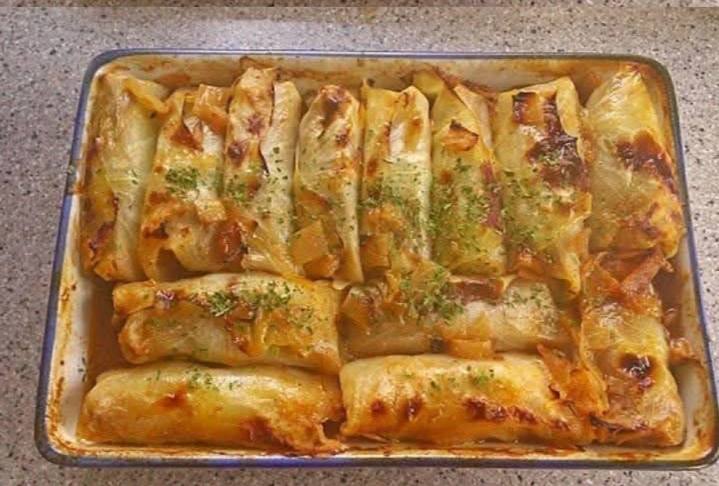
Instructions
- Prepare the Cabbage:
- Carefully remove the core from the bottom of the cabbage head using a sharp knife.
- Bring a large pot of salted water to a rolling boil.
- Place the cored cabbage head into the boiling water. Cook for 8-12 minutes, or until the outer leaves soften and can be easily peeled away. As leaves soften, carefully remove them with tongs and set aside on a plate to cool. Return the cabbage head to the boiling water to soften more leaves as needed. You should aim for 12-15 large, pliable leaves. Trim any thick veins from the base of each leaf to make rolling easier.
- Alternatively, to soften cabbage leaves without boiling: Place the cored cabbage head in a freezer-safe bag and freeze overnight. Thaw completely at room temperature or in the refrigerator. The freezing process naturally breaks down the cell walls, making the leaves pliable.
- Prepare the Filling:
- Heat olive oil in a large skillet over medium heat. Add the chopped onion and cook until softened, about 5-7 minutes. Add the minced garlic and cook for another minute until fragrant. Remove from heat and let cool slightly.
- In a large mixing bowl, combine the ground beef, uncooked rice, beaten egg, dried dill, dried parsley, salt, and pepper. Add the cooled onion and garlic mixture.
- Using your hands, gently mix all the ingredients until just combined. Be careful not to overmix, as this can make the filling tough.
- Prepare the Sauce:
- In a separate medium bowl, combine the crushed tomatoes, tomato sauce, and water or beef broth.
- If desired, stir in the brown sugar and apple cider vinegar to balance the flavors. Taste and adjust seasonings as needed.
- Assemble the Cabbage Rolls:
- Preheat your oven to 350°F (175°C).
- Pour about 1 cup of the tomato sauce into the bottom of a large baking dish (a 9×13 inch dish works well).
- Lay a softened cabbage leaf flat on a clean surface. Place about 2-3 tablespoons of the meat filling near the stem end of the leaf.
- Fold the sides of the cabbage leaf over the filling, then starting from the stem end, tightly roll the leaf towards the tip, creating a snug packet.
- Place the rolled cabbage seam-side down in the prepared baking dish. Repeat with the remaining cabbage leaves and filling, arranging the rolls snugly in the dish. If you have extra small cabbage leaves, you can chop them and scatter them on the bottom of the baking dish before placing the rolls, or use them to line the dish.
- Bake the Cabbage Rolls:
- Once all the rolls are assembled and placed in the baking dish, pour the remaining tomato sauce evenly over the top of the rolls.
- Cover the baking dish tightly with aluminum foil.
- Bake for 1 hour and 30 minutes.
- Remove the foil and continue baking for another 30-45 minutes, or until the cabbage is very tender, the rice is cooked through, and the sauce has thickened slightly. The tops of the rolls should be lightly browned.
- Serve:
- Carefully remove the baking dish from the oven.
- Let the cabbage rolls rest for 10-15 minutes before serving.
- Garnish with fresh chopped parsley or dill, if desired.
Cooking Tips and Variations
Achieving perfectly tender, flavorful stuffed cabbage rolls is a culinary triumph, and these tips will help you get there. Firstly, when preparing your cabbage leaves, remember that proper softening is key. If you’re boiling, don’t rush it; the leaves need to be pliable enough to roll without tearing. For an even easier method, freezing the whole cored cabbage head overnight and then thawing it works wonders, as the ice crystals break down the cell walls, making the leaves incredibly flexible. When it comes to trimming the thick veins, be gentle. You want to thin them out without cutting through the leaf, which helps with a tighter, more uniform roll. For the filling, avoid overmixing the meat and rice, as this can lead to a dense, tough texture. Mix just until everything is incorporated. If you find your filling a bit dry, a tablespoon or two of water or broth can help moisten it. To ensure your rolls don’t burst during cooking, don’t overfill them; a good rule of thumb is about 2-3 tablespoons of filling per large leaf. Rolling them snugly but not overly tight will also help. If you’re worried about them unraveling, a toothpick through the middle can secure them, just remember to remove them before serving.
Experimenting with variations can make this classic dish uniquely yours. For the filling, feel free to substitute ground pork, ground turkey, or a combination of meats for the ground beef. For a vegetarian option, a mixture of mushrooms, lentils, more rice, and finely diced vegetables like carrots and celery can create a delicious and hearty alternative. You can also play with the herbs and spices; a pinch of smoked paprika, a dash of marjoram, or even a touch of caraway seeds can add interesting dimensions. The sauce is another area for creativity. While our tomato-based sauce is a classic, you could enrich it by adding a dollop of sour cream or heavy cream towards the end of cooking for a creamier finish, or even a splash of red wine for deeper flavor. Some traditional recipes call for a sauerkraut-based sauce for a tangier profile. For an extra layer of flavor, consider browning the rolls lightly in a skillet with a little oil before placing them in the baking dish; this adds a lovely depth to the exterior. Lastly, if you have extra cabbage leaves or trimmings, don’t discard them! You can chop them finely and layer them at the bottom of the baking dish, creating a delicious bed for the rolls and preventing them from sticking, while also adding more cabbage goodness to the dish.
Storage and Reheating
Stuffed cabbage rolls are one of those wonderful dishes that often taste even better the next day, making them excellent for meal prepping or enjoying leftovers. To store cooked cabbage rolls, allow them to cool completely to room temperature. Once cooled, transfer them, along with their sauce, to an airtight container. They can be stored in the refrigerator for up to 3-4 days. For longer storage, cabbage rolls freeze exceptionally well. Place cooled rolls and sauce in freezer-safe containers or heavy-duty freezer bags. They will keep well in the freezer for up to 3 months. Thaw frozen rolls overnight in the refrigerator before reheating.
Reheating stuffed cabbage rolls is straightforward, whether from the refrigerator or thawed from the freezer. For individual servings, the microwave is a quick option: place one or two rolls with some sauce in a microwave-safe dish, cover, and heat on high for 2-4 minutes, or until heated through, stirring the sauce occasionally. For larger batches or to maintain the texture, oven reheating is ideal. Preheat your oven to 325°F (160°C). Place the cabbage rolls and sauce in an oven-safe dish, cover tightly with foil, and bake for 20-30 minutes if refrigerated, or 45-60 minutes if thawed, until thoroughly heated. If you prefer a slightly crisper top, you can remove the foil for the last 10 minutes of reheating. Avoid overheating, as this can dry out the filling or make the cabbage mushy.
Frequently Asked Questions
What kind of cabbage is best for stuffed cabbage rolls?
Green cabbage is typically the best choice for stuffed cabbage rolls. Its leaves are large, sturdy, and flexible enough to roll without tearing after being softened. Savoy cabbage can also be used, offering a slightly crinklier texture, but its leaves might be a bit more delicate. Avoid red cabbage, as its color can bleed and its flavor is often too strong for this dish.
Can I prepare stuffed cabbage rolls in advance?
Absolutely! Stuffed cabbage rolls are an excellent make-ahead meal. You can assemble the rolls and arrange them in the baking dish with the sauce, then cover and refrigerate for up to 24 hours before baking. This allows the flavors to meld beautifully. You can also prepare the filling a day in advance and store it in the refrigerator, then assemble and bake on the day you plan to serve.
Why are my cabbage rolls tough or falling apart?
If your cabbage rolls are tough, it’s likely that the cabbage leaves weren’t softened enough before rolling, or the rolls weren’t cooked long enough. Ensure the leaves are very pliable, almost translucent, after blanching or freezing. If they’re falling apart, they might have been overfilled, or not rolled tightly enough. Trimming the thick veins from the leaves can also help them hold their shape better.
Can I make stuffed cabbage rolls in a slow cooker?
Yes, stuffed cabbage rolls can be successfully cooked in a slow cooker. After assembling the rolls and placing them in the slow cooker with the sauce, cook on low for 6-8 hours or on high for 3-4 hours. The slower cooking method yields incredibly tender cabbage and a rich, deeply flavored sauce. Ensure there’s enough liquid to cover the rolls halfway to prevent them from drying out.