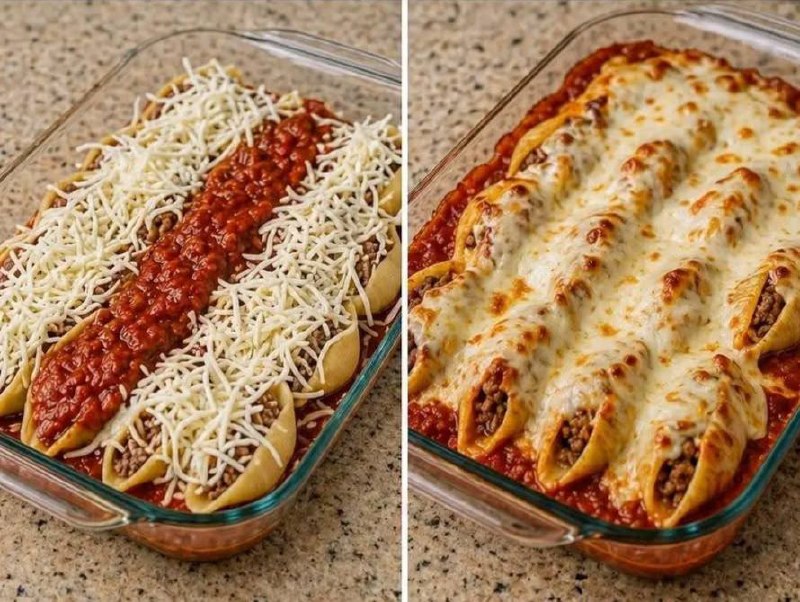
Instructions
- Prepare the Pasta Shells: Bring a large pot of salted water to a rolling boil. Add the jumbo pasta shells and cook according to package directions until al dente, usually about 8-10 minutes. It’s crucial not to overcook them, as they will continue to cook in the oven. Drain the shells thoroughly and rinse with cold water to prevent sticking. Lay them out in a single layer on a baking sheet or clean kitchen towel to cool slightly and prevent them from sticking together.
- Make the Meat Sauce: While the pasta boils, heat the olive oil in a large skillet or Dutch oven over medium-high heat. Add the ground beef and cook, breaking it up with a spoon, until browned and cooked through. Drain any excess grease.
- Add the chopped onion to the skillet with the cooked beef and sauté for 5-7 minutes, until softened and translucent. Stir in the minced garlic and cook for another minute until fragrant.
- Pour in the crushed tomatoes, tomato sauce, and water or beef broth. Add the chopped fresh basil, oregano, sugar (if using), 1/4 teaspoon salt, and 1/8 teaspoon black pepper. Stir everything together.
- Bring the sauce to a simmer, then reduce the heat to low, cover, and let it gently simmer for at least 20-30 minutes, stirring occasionally, to allow the flavors to meld. The longer it simmers, the richer the flavor.
- Prepare the Cheese Filling: In a large mixing bowl, combine the ricotta cheese, beaten egg, 1/2 cup grated Parmesan cheese, chopped fresh parsley, ground nutmeg (if using), remaining 1/4 teaspoon salt, and remaining 1/8 teaspoon black pepper. Mix until all ingredients are well combined and the filling is smooth.
- Stir 1/2 cup of the shredded mozzarella cheese into the ricotta mixture.
- Assemble the Stuffed Shells: Preheat your oven to 375°F (190°C).
- Spread about 1 to 1 1/2 cups of the meat sauce evenly over the bottom of a 9×13-inch baking dish.
- Carefully take each cooked jumbo pasta shell and fill it generously with the cheese mixture, using a small spoon or your fingers. Don’t overfill, but make sure each shell is plump.
- Arrange the filled shells in a single layer in the prepared baking dish, nestled closely together over the bed of sauce.
- Spoon the remaining meat sauce evenly over the stuffed shells, ensuring most of them are covered.
- Sprinkle the remaining 1 1/2 cups of shredded mozzarella cheese and a little extra grated Parmesan cheese over the top of the sauce.
- Bake the Stuffed Shells: Cover the baking dish tightly with aluminum foil.
- Bake for 25 minutes.
- Remove the foil and continue to bake for another 10-15 minutes, or until the cheese is melted, bubbly, and lightly golden brown.
- Rest and Serve: Remove the dish from the oven and let it rest for 5-10 minutes before serving. This allows the sauce to settle and prevents the shells from falling apart when scooped.
- Garnish with extra fresh basil or parsley, if desired, and serve hot.
Cooking Tips and Variations
For the best stuffed shells, start with good quality ingredients. Using whole milk ricotta will give you a creamier, richer filling. If you’re using ground beef, a lean variety works well to keep the dish from being too greasy. A blend of ground beef and Italian sausage (sweet or spicy) can add an incredible depth of flavor to your meat sauce. When cooking your jumbo shells, remember the “al dente” rule – they should be firm to the bite. Since they’ll be baking in sauce, undercooking them slightly ensures they don’t turn mushy. Rinsing them with cold water after draining is also key to stopping the cooking process and preventing them from sticking together, making them much easier to handle and stuff.
Don’t be shy with your seasonings. Fresh herbs like basil and oregano make a huge difference in the sauce, and a pinch of nutmeg in the cheese filling might sound unusual, but it truly enhances the savory notes of the ricotta. If you prefer a vegetarian option, simply omit the ground meat and increase the amount of vegetables in the sauce, perhaps adding finely diced zucchini, mushrooms, or bell peppers, or even a can of drained lentils for a heartier texture. You can also experiment with different cheeses in the filling – provolone, fontina, or even a touch of goat cheese can add unique twists. For a spicier kick, add a pinch of red pepper flakes to the meat sauce.
To make this recipe even easier for busy weeknights, consider making the meat sauce ahead of time and refrigerating it for up to 3-4 days. You can also assemble the entire dish, cover it tightly with foil, and refrigerate it for up to 24 hours before baking. If baking from cold, you’ll need to add an extra 10-15 minutes to the covered baking time. If you find the cheese on top browning too quickly during the final uncovered bake, simply tent the dish loosely with foil to prevent over-browning while the rest of the dish heats through.
When stuffing the shells, a small spoon works well, but for a quicker and cleaner method, you can transfer the cheese filling to a piping bag (or a large Ziploc bag with a corner snipped off) and pipe the filling into each shell. This ensures even distribution and minimizes mess. Finally, don’t forget to let the dish rest for a few minutes after it comes out of the oven. This allows the hot cheese and sauce to settle, making for cleaner portions and preventing everything from spilling out when you serve. A simple green salad and some crusty garlic bread are the perfect accompaniments to complete this satisfying meal.
Storage and Reheating
Leftover stuffed jumbo shells are just as delicious the next day, if not more so, as the flavors have had more time to meld. To store, allow the baked dish to cool completely to room temperature. Then, transfer any remaining shells and sauce to an airtight container. They can be stored in the refrigerator for up to 3-4 days. For longer storage, stuffed shells freeze exceptionally well. You can freeze them either baked or unbaked. If freezing unbaked, assemble the dish as instructed but stop before the baking step. Cover the baking dish tightly with a double layer of aluminum foil, or transfer individual portions to freezer-safe containers.
To reheat refrigerated leftovers, you can either microwave individual portions until heated through, or for a larger quantity, place them in an oven-safe dish, cover with foil, and bake at 350°F (175°C) for 20-30 minutes, or until warmed through. If the sauce seems a bit dry, you can add a splash of water or broth before reheating. When reheating from frozen, it’s best to thaw the dish in the refrigerator overnight. Once thawed, bake as you would a refrigerated dish. If baking from completely frozen (which is possible but will take longer), cover the dish tightly with foil and bake at 350°F (175°C) for 60-90 minutes, or until heated through, removing the foil for the last 15-20 minutes if you want the cheese to re-crisp. Ensure the internal temperature reaches 165°F (74°C).
Frequently Asked Questions
How do I prevent the pasta shells from breaking when I stuff them?
The key to preventing shells from breaking is to cook them just until al dente. They should be tender but still have a slight bite and firmness. Overcooked shells become too soft and are prone to tearing. After draining, rinse them with cold water to stop the cooking process and prevent them from sticking together. Lay them out on a clean towel or baking sheet to cool slightly before handling. Be gentle when stuffing them, using a small spoon or your fingers to carefully push the filling inside.
Can I make stuffed shells ahead of time?
Absolutely! Stuffed shells are an excellent make-ahead meal. You can prepare the meat sauce up to 3-4 days in advance and store it in the refrigerator. The cheese filling can also be made a day in advance. For full assembly, you can stuff the shells and arrange them in the baking dish with the sauce and cheese, then cover tightly with foil and refrigerate for up to 24 hours before baking. If baking from cold, add an extra 10-15 minutes to the covered baking time to ensure it heats through properly.
What if I don’t have ricotta cheese? Can I substitute it?
While ricotta cheese provides the classic creamy texture and flavor, you can certainly experiment with substitutions. A good alternative is cottage cheese, especially if you prefer a slightly tangier flavor and don’t mind a slightly different texture (you can blend it first for a smoother consistency). Cream cheese can also be used in combination with some Parmesan to achieve a creamy, savory filling, though it will be denser. For a dairy-free option, there are several plant-based ricotta alternatives available on the market that work well.
Can I add vegetables to the filling or sauce?
Yes, adding vegetables is a fantastic way to boost flavor and nutrition. For the sauce, finely diced carrots, celery, or bell peppers can be sautéed with the onion and garlic. For the filling, consider adding finely chopped spinach (ensure it’s well-drained to remove excess water), sautéed mushrooms, or even finely grated zucchini. Just be sure to cook down any high-moisture vegetables before adding them to the filling to prevent the shells from becoming watery.