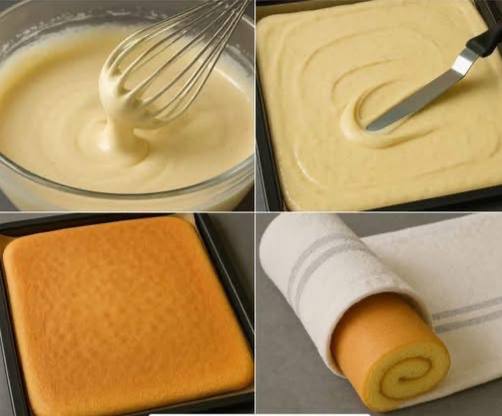
Instructions
- Preheat your oven to 375°F (190°C). Line a 10×15-inch (25×38 cm) baking sheet with parchment paper, extending the paper over the short ends to create “handles.” Lightly grease the parchment paper.
- In a large bowl, using an electric mixer, beat the egg yolks with 1/4 cup (50g) of the granulated sugar until the mixture is pale yellow and thick, about 3-4 minutes. Stir in the vanilla extract.
- In a separate clean, dry bowl, beat the egg whites with the salt using an electric mixer on medium speed until soft peaks form. Gradually add the remaining 1/4 cup (50g) of granulated sugar, increasing the speed to high, and continue to beat until stiff, glossy peaks form. Be careful not to overbeat.
- Gently fold about one-third of the beaten egg whites into the egg yolk mixture to lighten it. Then, gently fold in the remaining egg whites until just combined, being careful not to deflate the mixture.
- Sift the flour over the egg mixture in two additions, gently folding it in after each addition until no streaks of flour remain. Be very gentle to maintain the airiness of the batter.
- Pour the batter onto the prepared baking sheet and spread it evenly to the edges using an offset spatula. Ensure the batter is spread thinly and uniformly for an even bake.
- Bake for 10-12 minutes, or until the cake is golden brown, springs back when lightly touched, and the edges are starting to pull away from the sides of the pan. Do not overbake, as this will make the cake dry and prone to cracking.
- While the cake is baking, lay a clean kitchen towel on a flat surface and dust it generously with powdered sugar. This dusting helps prevent the cake from sticking to the towel.
- As soon as the cake comes out of the oven, immediately invert it onto the prepared sugared towel. Carefully peel off the parchment paper.
- Starting from one of the short ends, tightly roll the warm cake and the towel together. This step is crucial for training the cake to hold its rolled shape without cracking.
- Place the rolled cake, seam-side down, on a wire rack and let it cool completely to room temperature, about 1-2 hours. This cooling period allows the cake to set in its rolled form.
- While the cake is cooling, prepare the filling. In a chilled bowl, beat the very cold heavy cream, powdered sugar, and vanilla extract with an electric mixer on high speed until stiff peaks form. Be careful not to overbeat, or the cream will become grainy.
- Once the cake is completely cool, carefully unroll it. If it cracks slightly, don’t worry too much; the filling will help mask minor imperfections.
- Evenly spread the whipped cream filling over the entire surface of the cake, leaving a small border (about 1/2 inch) around the edges.
- Starting from the same short end you rolled previously, carefully and tightly re-roll the cake, without the towel this time. Roll it as tightly as possible to create a neat spiral.
- Transfer the Swiss Roll to a serving platter, seam-side down. Cover it loosely with plastic wrap and refrigerate for at least 1 hour (or up to overnight) to allow the filling to set and the flavors to meld.
- Before serving, dust the top of the Swiss Roll generously with powdered sugar. Slice with a sharp, serrated knife for clean cuts.
Cooking Tips and Variations
The secret to a perfect Swiss Roll lies in a light, flexible sponge and confident rolling. For the sponge cake, ensure your eggs are at room temperature; this helps them whip up to their maximum volume, resulting in a truly airy cake. When separating your eggs, be meticulous – even a tiny bit of yolk in the whites can prevent them from whipping properly. When folding the ingredients together, always be gentle. The goal is to incorporate the flour and egg whites without deflating the precious air you’ve whipped in, which is what gives the cake its delicate texture. Sifting the flour is also a small but important step that prevents lumps and ensures a smoother batter.
The rolling process is often where home bakers feel the most apprehension, but it’s simpler than it seems. The key is to roll the cake while it’s still warm, immediately after it comes out of the oven. This is when the cake is most pliable and least likely to crack. Don’t be afraid to roll it tightly with the towel; this trains the cake to hold its shape. If you wait too long, the cake will cool and become brittle, making it prone to breaking. A generous dusting of powdered sugar on the towel not only prevents sticking but also adds a subtle sweetness to the outside of the cake. If you experience minor cracks upon unrolling, don’t fret! The filling will often fill these in, and a final dusting of powdered sugar will hide any remaining imperfections.
Beyond the classic whipped cream, the Swiss Roll is incredibly versatile. For a rich chocolate version, fold 1/4 cup (20g) of unsweetened cocoa powder into the flour mixture for the cake, and add 2 tablespoons of cocoa powder to the whipped cream filling. A delightful fruit variation can be achieved by spreading a thin layer of your favorite jam or fruit curd (like raspberry or lemon) over the cake before adding the whipped cream. For an elegant touch, try a coffee-flavored Swiss Roll by adding a teaspoon of instant espresso powder to both the cake batter and the whipped cream. Another popular option is a cream cheese filling, made by beating 8 ounces (226g) of softened cream cheese with 1/2 cup (60g) powdered sugar and 1 teaspoon vanilla extract until smooth, then folding in 1 cup (240ml) of whipped heavy cream. You can also add a hint of liqueur, such as rum or Kahlua, to the whipped cream for an adult twist. Experiment with different extracts like almond or peppermint for unique flavor profiles. For a festive look, you can drizzle melted chocolate over the finished roll or sprinkle with chocolate shavings or colorful sprinkles.
Storage and Reheating
Proper storage is essential to keep your Swiss Roll fresh and delicious. Once assembled, the Swiss Roll should be stored in an airtight container in the refrigerator. This is particularly important if your filling contains dairy, such as whipped cream or cream cheese, to prevent spoilage. When stored correctly, a Swiss Roll will typically last for 3-4 days in the refrigerator. To prevent the cake from drying out or absorbing refrigerator odors, you can also wrap it snugly in plastic wrap before placing it in the airtight container.
For longer storage, a Swiss Roll can be frozen. It’s best to freeze it before dusting with additional powdered sugar, as the sugar can become watery upon thawing. Wrap the entire roll tightly in several layers of plastic wrap, then an additional layer of aluminum foil to prevent freezer burn. It can be stored in the freezer for up to 1 month. When you’re ready to enjoy it, transfer the frozen Swiss Roll to the refrigerator and allow it to thaw overnight. Once thawed, you can dust it with fresh powdered sugar before slicing and serving. It’s generally not recommended to reheat a Swiss Roll, as the delicate sponge cake and cream-based filling are best enjoyed chilled or at room temperature. Reheating would likely melt the filling and alter the texture of the cake, making it less pleasant.
Frequently Asked Questions
Why did my Swiss Roll crack when I unrolled it?
The most common reason for cracking is that the cake was either overbaked or allowed to cool too much before the initial rolling. An overbaked cake will be dry and less pliable, making it prone to breaking. Rolling it immediately after it comes out of the oven, while it’s still warm and flexible, is crucial. Ensure you roll it tightly with the towel to train its shape. If the crack is minor, the filling and a dusting of powdered sugar can often hide it.
Can I make the Swiss Roll ahead of time?
Absolutely! The Swiss Roll is an excellent make-ahead dessert. You can bake the cake, roll it in the towel, and let it cool completely. Once cool, you can even wrap the un-filled rolled cake (still in its towel) in plastic wrap and refrigerate it for up to 1-2 days. Prepare the filling and assemble the roll a few hours before you plan to serve it, allowing it ample time to chill and set in the refrigerator for the best texture and flavor. The assembled roll can be kept refrigerated for 3-4 days.
What if I don’t have a 10×15-inch baking sheet?
A 10×15-inch jelly roll pan is ideal, but if you don’t have one, you can use a slightly larger baking sheet and create a border with aluminum foil to reduce the baking area to approximately 10×15 inches. Alternatively, you can use a slightly smaller pan, but be aware that the cake will be thicker, potentially requiring a few extra minutes of baking time and being a bit more challenging to roll. The key is to have a thin, even layer of batter for a pliable sponge.