Introduction
There’s a certain magic that happens when a simple batter transforms into a delicate, thin, and utterly irresistible crepe. It’s a culinary experience that transports you, whether you’re enjoying a stack for a leisurely breakfast, a delightful brunch, or even a sophisticated dessert. Crepes, those impossibly thin pancakes, boast a tender texture and a subtle sweetness that makes them the perfect canvas for an endless array of fillings, from fresh berries and whipped cream to savory ham and cheese. They’re a staple in French cuisine, beloved worldwide, and for good reason – their versatility and sheer deliciousness are unmatched.
But let’s be honest, not all crepes are created equal. You’ve likely encountered those that are too thick, too rubbery, or just don’t have that melt-in-your-mouth quality. That’s where this recipe comes in. Prepare to discover the secret to achieving the softest homemade crepes you’ll ever make, crepes so tender they practically dissolve on your tongue. We’re talking about crepes that are beautifully pliable, with a gossamer-thin texture and a delicate flavor that sings. This isn’t just another crepe recipe; it’s a promise of perfection, a guide to unlocking the true potential of this classic dish, making them an absolute joy to prepare and even more delightful to devour.
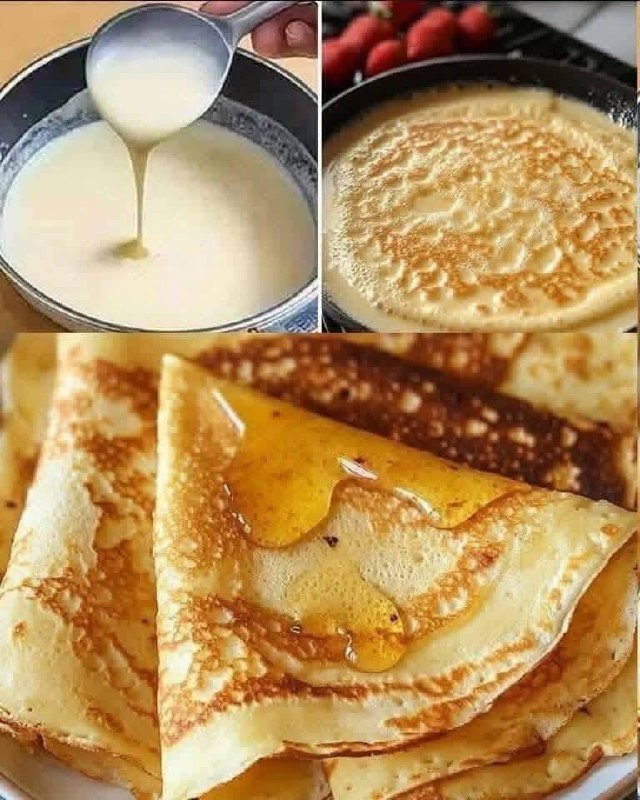
Beyond their incredible softness, these crepes are also remarkably versatile. Imagine them as a comforting start to your day, piled high with fresh strawberries and a generous drizzle of golden honey, just like the image suggests. Or perhaps you’re craving something more savory? These delicate beauties can easily be filled with cheeses, sautéed mushrooms, or even leftover roasted chicken for a fantastic light lunch or dinner. The possibilities are truly endless, making this recipe a valuable addition to any home cook’s repertoire. Get ready to impress yourself and everyone you share these ethereal crepes with!
Nutritional Information
Per serving (approximate values for one crepe without toppings):
- Calories: 95-110
- Protein: 4-5g
- Carbohydrates: 12-15g
- Fat: 3-5g
- Fiber: 0-1g
- Sodium: 50-70mg
Ingredients
- 1 cup all-purpose flour
- 2 large eggs
- 1/2 cup milk (whole or 2% recommended for richness)
- 1/2 cup water
- 2 tablespoons granulated sugar
- 1/4 teaspoon salt
- 2 tablespoons unsalted butter, melted, plus extra for greasing the pan
- 1/2 teaspoon vanilla extract (optional, for sweet crepes)
Instructions
- In a large bowl, whisk together the flour, granulated sugar, and salt until well combined. This helps to prevent lumps later on.
- In a separate medium bowl, lightly beat the two large eggs.
- Gradually whisk the milk and water into the beaten eggs until smooth.
- Pour the wet ingredients into the dry ingredients, whisking continuously until a smooth batter forms. It’s important to whisk well to eliminate any lumps of flour.
- Stir in the 2 tablespoons of melted unsalted butter and the optional vanilla extract (if using) until fully incorporated. The batter should be quite thin, resembling heavy cream. If it seems too thick, you can add another tablespoon or two of water or milk.
- Cover the bowl with plastic wrap and refrigerate the batter for at least 30 minutes, or ideally 1-2 hours. This crucial resting period allows the flour to fully hydrate and the gluten to relax, which is key to achieving incredibly soft and pliable crepes. You can even make the batter the night before and refrigerate it overnight.
- When ready to cook, remove the batter from the refrigerator. Give it a quick whisk to ensure everything is well mixed, as some solids may have settled.
- Heat a 8-inch non-stick crepe pan or skillet over medium-low heat. The right temperature is critical: too hot and the crepes will burn; too cool and they won’t brown properly.
- Lightly grease the pan with a small pat of butter or a brush of melted butter. You only need a very thin film.
- Pour about 1/4 cup of batter into the center of the hot pan. Immediately lift the pan and gently swirl it in a circular motion so the batter spreads evenly to cover the entire bottom surface of the pan in a thin layer. This technique is essential for thin crepes.
- Cook the crepe for 1-2 minutes, or until the edges begin to look dry and slightly crispy, and the bottom is lightly golden brown. You’ll see tiny bubbles forming on the surface.
- Carefully loosen the edges of the crepe with a thin spatula. Once loose, gently flip the crepe over. A wide, thin spatula works best.
- Cook the second side for another 30-60 seconds, or until lightly golden. This side typically cooks faster.
- Slide the cooked crepe onto a plate. Continue with the remaining batter, lightly greasing the pan between each crepe if necessary. Stack the cooked crepes on top of each other; the residual heat will help keep them warm and soft.
- Serve immediately with your favorite sweet or savory fillings and toppings.
Cooking Tips and Variations
Achieving the “softest ever” crepes relies on a few key techniques and considerations. First and foremost, don’t skip the batter resting period. This isn’t an optional step; it’s fundamental. Resting allows the flour to fully absorb the liquid, ensuring a smoother, more uniform batter and preventing the crepes from being tough or rubbery. It also gives the gluten a chance to relax, which is paramount for that delicate, melt-in-your-mouth texture. Think of it as a mini-vacation for your batter, and it genuinely makes all the difference.
Another crucial element is your pan and its temperature. A good quality non-stick pan is your best friend here. An 8-inch pan is ideal for standard-sized crepes. Heat control is key; aim for medium-low heat. If your pan is too hot, the crepes will brown too quickly on the outside and remain raw or gummy in the center. Too cold, and they won’t cook evenly or get that beautiful golden hue. Test the temperature by dropping a tiny amount of batter; it should sizzle gently. The first crepe is often a “test crepe” – don’t worry if it’s not perfect. It helps you adjust the heat and batter amount.
When greasing the pan, less is more. You want a very thin film of butter or oil, just enough to prevent sticking. Too much grease can make the crepes oily and prevent even browning. A pastry brush or a small piece of paper towel dipped in melted butter works wonders for this. The pouring and swirling technique is also vital for thin crepes. Pour the batter into the center and immediately lift and tilt the pan to coat the bottom evenly. Work quickly but smoothly. You’ll get the hang of it after a couple of tries.
Knowing when to flip is all about visual cues. Look for the edges to set and become slightly dry and crisp. You’ll also see small bubbles forming on the surface of the crepe. Once the bottom is golden brown, it’s ready. Don’t be afraid to gently lift an edge with your spatula to peek. For flipping, a wide, thin spatula is a lifesaver. Some experienced crepe makers can flip them by hand, but a spatula offers more control, especially for beginners.
To keep your crepes warm and soft while you cook the rest, stack them on a plate and cover them loosely with aluminum foil or a clean kitchen towel. The steam trapped between them will keep them pliable and warm. For variations, the sky’s the limit! For sweet crepes, try adding a pinch of cinnamon or nutmeg to the batter, or a tablespoon of orange zest for a citrusy note. For savory crepes, omit the sugar and vanilla extract, and perhaps add a pinch of dried herbs like chives or thyme to the batter. You can also experiment with different flours, like a blend of all-purpose and buckwheat flour for a more rustic, nutty flavor, though this might slightly alter the “softest” texture.
Storage and Reheating
One of the many beauties of homemade crepes is that they can be made ahead of time, which makes them perfect for entertaining or for a quick weeknight treat. To store cooked crepes, allow them to cool completely to room temperature. This prevents condensation from forming and making them soggy. Once cooled, stack them with a piece of parchment paper or wax paper between each crepe. This prevents them from sticking together and makes them easier to separate later. Wrap the stack tightly in plastic wrap, then place them in an airtight container or a freezer-safe bag.
Cooked crepes can be stored in the refrigerator for up to 2-3 days. For longer storage, they freeze beautifully. Properly wrapped and stacked crepes can be kept in the freezer for up to 1-2 months. When you’re ready to enjoy them, thaw frozen crepes in the refrigerator overnight, or for a quicker thaw, you can carefully separate them (if parchment paper was used) and microwave them for a few seconds until pliable.
Reheating crepes is straightforward. For individual crepes, you can gently warm them in a non-stick skillet over low heat for about 30 seconds per side until heated through and pliable again. Be careful not to overcook them, as they can become crisp. Alternatively, you can stack a few crepes on a microwave-safe plate, cover them with a damp paper towel (to prevent drying out), and microwave on low power for 15-30 seconds, or until warm and soft. If you have a larger batch, you can also wrap them in foil and warm them in an oven preheated to 250°F (120°C) for about 5-10 minutes. Always reheat gently to maintain their delicate texture.
Frequently Asked Questions
Why is my crepe batter lumpy?
Lumpy batter is a common issue and usually indicates that the dry ingredients weren’t thoroughly whisked before adding the wet ingredients, or that the wet ingredients were added too quickly. To avoid this, always whisk your flour, sugar, and salt very well first. Then, add the wet ingredients gradually while continuously whisking. If you still end up with lumps, don’t despair! You can pour the batter through a fine-mesh sieve to catch any remaining lumps, or use an immersion blender for a few seconds to smooth it out. Resting the batter also helps dissolve smaller lumps over time.
My crepes keep tearing when I try to flip them. What am I doing wrong?
Crepes tearing can be due to a few factors. Firstly, your batter might be too thin. If it’s excessively watery, the crepes will be too delicate and lack the structural integrity to hold together. Try adding an extra tablespoon of flour to thicken it slightly. Secondly, you might be trying to flip them too soon. Wait until the edges are nicely set and slightly crispy, and the bottom has a good golden color. If the crepe isn’t fully cooked on the first side, it will tear. Lastly, ensure you’re using a good quality non-stick pan and that it’s adequately (but lightly) greased. A thin, wide spatula also provides better support when flipping.
Can I make these crepes gluten-free or dairy-free?
Yes, you absolutely can! For gluten-free crepes, substitute the all-purpose flour with a good quality gluten-free all-purpose flour blend (one that contains xanthan gum works best for structure). You might need to adjust the liquid slightly as gluten-free flours absorb liquids differently, so add milk/water gradually until you reach the desired thin consistency. For dairy-free crepes, simply swap the dairy milk for your favorite unsweetened non-dairy milk (almond, soy, or oat milk work well) and use a dairy-free butter alternative or neutral oil (like canola or vegetable oil) instead of butter. The texture might be slightly different, but they will still be delicious.