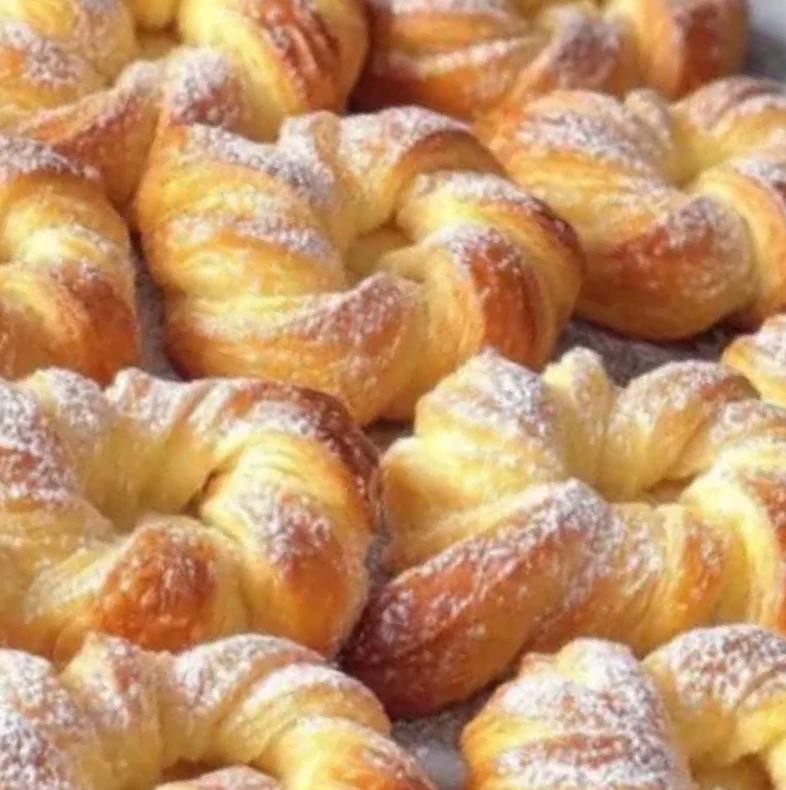
Instructions
- Preheat your oven to 400°F (200°C). Line a large baking sheet with parchment paper. This will prevent sticking and make cleanup much easier.
- Carefully unroll the thawed puff pastry sheet onto a lightly floured surface or directly onto the parchment-lined baking sheet. Ensure the pastry is still cold, as this helps maintain its flaky layers during baking.
- Brush the entire surface of the puff pastry sheet evenly with the melted butter. Make sure to get to the edges, as this will help the sugar adhere and create a lovely golden crust.
- Sprinkle the 1/4 cup of granulated sugar evenly over the buttered surface of the puff pastry. Gently press the sugar into the pastry with your fingertips or a rolling pin to ensure it adheres well. This step is crucial for the sugary crunch.
- Using a sharp knife or a pizza cutter, cut the puff pastry sheet lengthwise into 12 equal strips, each about 1 inch (2.5 cm) wide. Try to make the cuts as straight and even as possible for uniform pastries.
- Take each strip and carefully twist it several times from end to end. You can twist it as many times as you like, creating a tighter or looser spiral depending on your preference. The more twists, the more intricate the final look.
- Arrange the twisted pastry strips on the prepared baking sheet, leaving about 1-2 inches of space between each one to allow for expansion during baking. Don’t overcrowd the tray, as this can lead to uneven baking.
- In a small bowl, whisk the egg with a tablespoon of water to create an egg wash. Lightly brush the tops of each twisted pastry roll with the egg wash. This will give them a beautiful golden-brown color and a slight sheen when baked.
- Bake for 15-20 minutes, or until the pastries are puffed up, golden brown, and cooked through. Keep a close eye on them, as oven temperatures can vary, and puff pastry can brown quickly.
- Once baked, remove the pastries from the oven and transfer them to a wire rack to cool slightly. Allowing them to cool on a rack prevents the bottoms from becoming soggy.
- If desired, once the pastries have cooled for about 5-10 minutes (still warm but not hot), dust them generously with powdered sugar using a fine-mesh sieve. This adds an extra layer of sweetness and a beautiful presentation.
- Serve warm or at room temperature. These are best enjoyed fresh, but they can be stored as per the instructions below.
Cooking Tips and Variations
To ensure your Twisted Sugar Puff Pastry Rolls are nothing short of spectacular, mastering a few key techniques and exploring variations can elevate your baking game. Firstly, the golden rule of puff pastry is to keep it cold. A cold pastry sheet is easier to handle, less sticky, and crucial for achieving those distinct, flaky layers. If your pastry becomes too warm and soft while working with it, simply pop it back into the refrigerator for 10-15 minutes to firm up. When cutting the strips, use a very sharp knife or a pizza cutter; a dull blade will drag and compress the layers, hindering the puff. For an even golden finish and enhanced flavor, don’t skimp on the egg wash. A light, even coating makes all the difference in presentation.
Now, let’s talk variations! The beauty of this recipe lies in its simplicity, making it a fantastic base for experimentation. For a delightful hint of warmth, sprinkle a teaspoon of ground cinnamon or cardamom along with the granulated sugar before twisting. If you’re a chocolate lover, finely chopped chocolate chips or a thin spread of Nutella can be added to half of the pastry sheet before cutting and twisting. For a fruity twist, a thin layer of your favorite fruit preserves (apricot, raspberry, or cherry work wonderfully) can be spread over the pastry before sprinkling sugar. Just be mindful not to overload it, as too much moisture can make the pastry soggy. A sprinkle of finely chopped nuts like pecans or almonds can also add a lovely texture and nutty flavor. For a more savory option, skip the sugar, brush with olive oil, sprinkle with herbs like rosemary and a pinch of sea salt, and twist for a delicious appetizer. The possibilities are truly endless, allowing you to tailor this simple recipe to any craving or occasion.
Storage and Reheating
Proper storage is key to maintaining the deliciousness of your Twisted Sugar Puff Pastry Rolls, although they are undeniably at their best when fresh from the oven. Once cooled completely, store any leftover pastries in an airtight container at room temperature for up to 2-3 days. If you live in a particularly humid environment, or if you want to extend their shelf life, you can store them in the refrigerator for up to 5 days. However, be aware that refrigeration can sometimes alter the texture of puff pastry, making it a little less crisp.
For longer storage, these pastries freeze beautifully. Once completely cooled, place them in a single layer on a baking sheet and freeze until solid. Then, transfer the frozen pastries to a freezer-safe bag or airtight container, separating layers with parchment paper to prevent sticking. They can be stored in the freezer for up to 1 month. When you’re ready to enjoy them, you can reheat them directly from frozen. To reheat, place the pastries on a baking sheet in a preheated oven at 350°F (175°C) for about 5-10 minutes, or until warmed through and crispy again. If reheating from room temperature, a few minutes in the oven or even a quick blast in a toaster oven will restore their delightful flakiness. Avoid microwaving, as this will make them soft and chewy rather than crisp.
Frequently Asked Questions
Can I make the puff pastry rolls ahead of time?
Yes, you can prepare the twisted pastry strips and arrange them on the baking sheet, then cover them loosely with plastic wrap and refrigerate for up to 24 hours before baking. You can also freeze the unbaked twists. Arrange them on a parchment-lined baking sheet and freeze until solid, then transfer to a freezer bag. When ready to bake, place them frozen on a baking sheet, brush with egg wash, and bake for a few extra minutes until golden brown.
Why is my puff pastry not puffing up?
The most common reasons for puff pastry not puffing are that the pastry was too warm when handled, causing the butter layers to melt and merge, or the oven temperature wasn’t high enough. Ensure your pastry is cold, work quickly, and your oven is preheated to the correct temperature. Also, avoid overworking the dough, as this can inhibit the layers from separating and rising.
Can I use brown sugar instead of granulated sugar?
While granulated sugar provides a crisp, sparkling finish, you can certainly experiment with brown sugar. Brown sugar will add a deeper, caramel-like flavor and a slightly chewier texture. However, it might not create the same level of crispness and sparkle as granulated sugar. If using brown sugar, consider a light dusting of powdered sugar after baking for visual appeal.
What if I don’t have an egg for the egg wash?
If you don’t have an egg for an egg wash, you can use a little milk or cream brushed over the pastries for a slight sheen and to help with browning. Alternatively, melted butter can also be used to achieve a golden color and add richness, though it might not provide the same glossy finish as an egg wash.