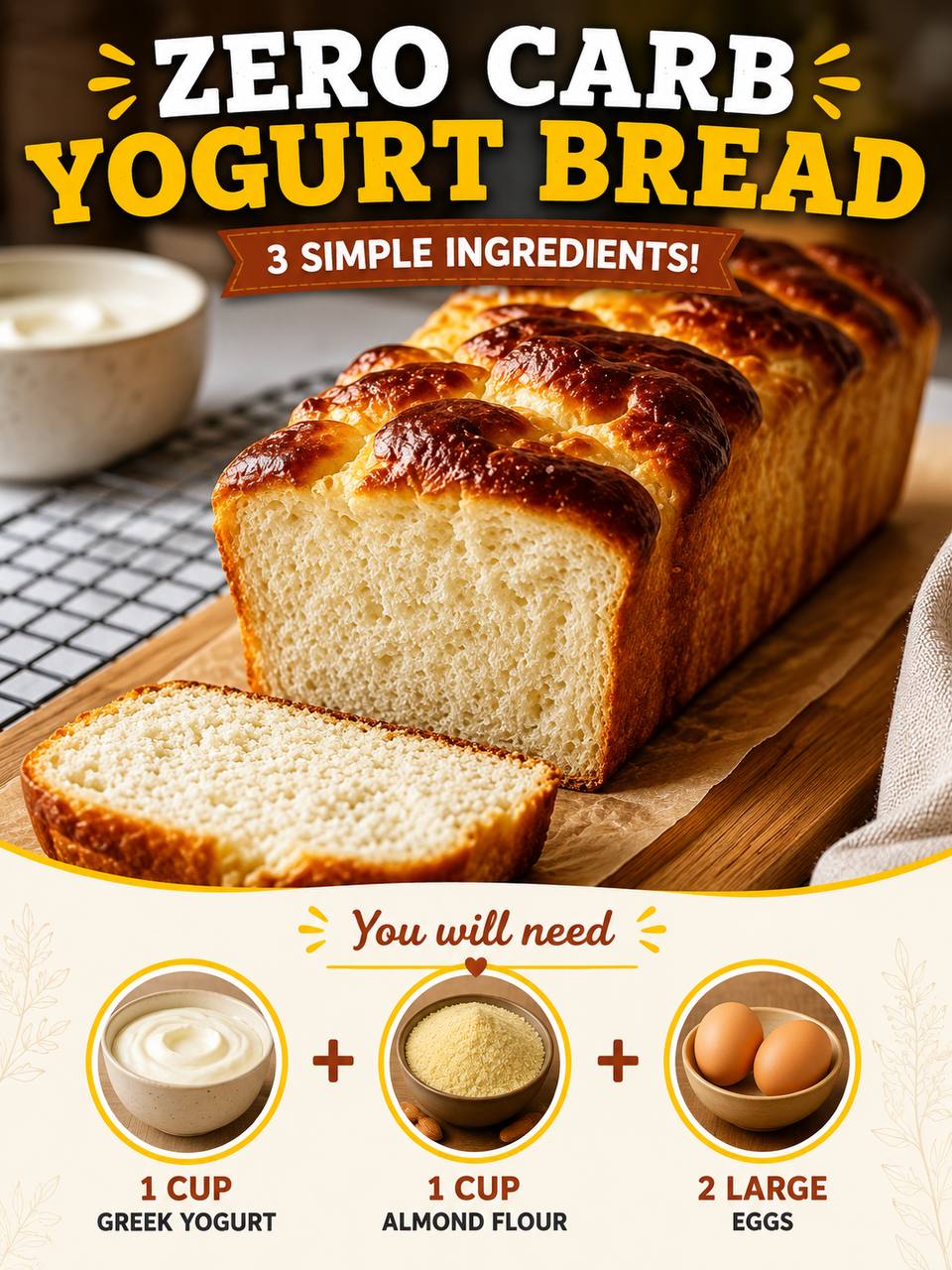
Instructions
- Preheat your oven to 350°F (175°C). Line a standard 8.5 x 4.5-inch loaf pan with parchment paper, leaving an overhang on the long sides to easily lift the bread out later. You can also lightly grease and flour (with almond flour) the pan if you prefer.
- In a large mixing bowl, combine the plain, full-fat Greek yogurt and the two large eggs. Whisk them together thoroughly until the mixture is smooth and well combined. The yogurt should be at room temperature or slightly warmed for easier mixing, but it’s not strictly necessary.
- Add the superfine blanched almond flour to the wet ingredients. If using, also add the optional baking powder and salt at this stage.
- Mix all the ingredients together using a spatula or a spoon until a thick, uniform batter forms. Be careful not to overmix; just mix until there are no dry streaks of almond flour remaining. The batter will be quite thick, similar to a very thick cake batter, but still pourable.
- Pour the batter into the prepared loaf pan. Use your spatula to spread the batter evenly and smooth out the top. You can gently tap the pan on the counter a few times to release any air bubbles and ensure an even surface.
- Place the loaf pan in the preheated oven. Bake for 35-45 minutes, or until the top is golden brown and a wooden skewer or toothpick inserted into the center comes out clean. The bread should feel firm to the touch when gently pressed.
- Once baked, remove the loaf pan from the oven. Let the bread cool in the pan for at least 10-15 minutes. This allows the bread to set and prevents it from crumbling when you try to remove it.
- After cooling in the pan, carefully lift the bread out using the parchment paper overhang and transfer it to a wire rack. Allow the bread to cool completely on the wire rack before slicing. Cooling completely is crucial for the best texture and to prevent a gummy interior.
- Once fully cooled, slice the Zero Carb Yogurt Bread into desired thickness. Enjoy it plain, toasted, or as a base for your favorite sandwiches and toppings.
Cooking Tips and Variations
Achieving the perfect Zero Carb Yogurt Bread is all about understanding a few key principles and having fun with variations. Firstly, the quality of your ingredients truly matters. Always opt for plain, full-fat Greek yogurt. The fat content contributes to the bread’s moisture and tender crumb, while plain ensures no added sugars or carbs. For almond flour, superfine blanched almond flour is highly recommended. Blanched means the skins have been removed, resulting in a lighter color and finer texture, which translates to a less grainy and more bread-like consistency in your final product. Almond meal, which includes the skins, can make the bread denser and coarser.
When mixing the batter, resist the urge to overmix. Almond flour, unlike wheat flour, doesn’t develop gluten, so excessive mixing won’t make it tough, but it can incorporate too much air, leading to a crumbly texture. Mix until just combined, ensuring no dry pockets of flour remain. The batter will be thick, almost like a cake batter, but don’t be alarmed; this is normal for low-carb breads. If you’re looking for a little extra lift, a half teaspoon of baking powder works wonders without significantly impacting the carb count. It helps create a slightly airier crumb, though the bread will still be denser than traditional yeast bread.
Cooling is a step many are tempted to rush, but it’s vital for this bread. Allowing it to cool completely on a wire rack allows the internal structure to set properly. Slicing warm low-carb bread can often result in a gummy texture or cause it to fall apart. Patience here will be rewarded with perfectly sliceable, delicious bread. If you find your bread is browning too quickly on top before it’s cooked through, you can loosely tent it with aluminum foil during the last 10-15 minutes of baking.
Now, for the fun part: variations! This Zero Carb Yogurt Bread is a fantastic blank canvas. For savory options, consider folding in a quarter cup of shredded cheese (like cheddar or mozzarella) and a teaspoon of dried herbs (such as Italian seasoning, rosemary, or thyme) into the batter. A pinch of garlic powder or onion powder can also add a wonderful savory depth. Imagine a cheese and herb bread perfect for dipping in soup or serving alongside a salad!
If you have a sweet tooth, you can create a delightful sweet version. Add a teaspoon of cinnamon and a few drops of a sugar-free sweetener (like stevia or erythritol) to the batter. You could even fold in a handful of sugar-free chocolate chips or a tablespoon of finely chopped nuts for added texture and flavor. This sweet bread is fantastic toasted with a dollop of sugar-free jam or a smear of almond butter for a guilt-free breakfast or snack.
For a richer flavor and slightly different texture, you can experiment with adding a tablespoon of melted unsalted butter or coconut oil to the wet ingredients. This can enhance the richness and moisture profile. Remember that while the recipe highlights “zero carb,” it’s crucial to understand that all ingredients contain trace carbohydrates. The term “zero carb” in this context refers to a very low net carb count, making it suitable for keto and low-carb diets. Always check the nutritional labels of your specific brands for the most accurate carb counts.
Finally, don’t be afraid to adjust the salt to your preference. A little salt really brings out the flavors, especially in savory variations. Experiment with these tips and variations to make this Zero Carb Yogurt Bread truly your own, fitting perfectly into your dietary needs and taste preferences.
Storage and Reheating
Properly storing your Zero Carb Yogurt Bread is key to maintaining its freshness and delicious texture. Once the bread has completely cooled, it should be stored in an airtight container or a resealable plastic bag. This will prevent it from drying out and absorbing odors from other foods in your refrigerator. Store it at room temperature for up to 2-3 days. However, given its moisture content from the Greek yogurt and the absence of traditional preservatives, it’s generally best to store it in the refrigerator if you plan to keep it for longer than a couple of days. In the refrigerator, it will stay fresh for up to 5-7 days.
If you’ve baked a larger batch or want to ensure you always have some on hand, this bread freezes exceptionally well. To freeze, first ensure the bread is completely cooled. You can freeze the entire loaf, or slice it first for convenience. Wrapping individual slices in plastic wrap before placing them in a freezer-safe bag or container is a great way to portion control and allows you to grab just what you need without thawing the whole loaf. Frozen, the Zero Carb Yogurt Bread will maintain its quality for up to 2-3 months. When ready to enjoy, simply transfer the slices or loaf from the freezer to the refrigerator overnight to thaw, or toast slices directly from frozen.
Reheating this bread is simple and can restore much of its original texture. For slices, the easiest and most effective method is to toast them. A toaster oven or a regular toaster works perfectly. Toasting brings back a slight crispness to the exterior while warming the interior, making it ideal for sandwiches or simply with butter. You can also warm slices in a dry skillet over medium-low heat for a few minutes per side until heated through and lightly crisped. If reheating a larger piece or the whole loaf, you can warm it in a preheated oven at 300°F (150°C) for about 5-10 minutes, or until warmed through. Be careful not to overcook, as this can dry out the bread. Avoid microwaving, as it can often make low-carb breads rubbery or tough in texture.
Frequently Asked Questions
Can I use low-fat or fat-free Greek yogurt for this recipe?
While you technically could, it is strongly recommended to use plain, full-fat Greek yogurt for the best results. The fat content contributes significantly to the bread’s moisture, tenderness, and overall texture. Low-fat or fat-free versions can result in a drier, tougher, and less flavorful bread, and may also increase the carbohydrate count due to fillers or added sugars often found in these varieties.
Why is my bread gummy or too dense?
Several factors can lead to a gummy or overly dense texture. The most common reasons include not allowing the bread to cool completely before slicing (which is crucial for low-carb breads to set), using too much liquid (perhaps from a thinner yogurt), using almond meal instead of superfine blanched almond flour (almond meal is coarser and absorbs less liquid), or underbaking the bread. Ensure your oven temperature is accurate and bake until a toothpick comes out clean. Also, avoid overmixing the batter, as this can sometimes lead to a tougher texture.
Is this bread truly “zero carb” as the title suggests?
It’s important to clarify that “zero carb” in this context refers to an extremely low net carbohydrate count, making it suitable for very strict low-carb and ketogenic diets. While individual ingredients like Greek yogurt and almond flour contain trace amounts of carbohydrates, when calculated per serving, the net carbs are often negligible or very close to zero. We encourage checking the specific nutritional labels of the brands you use for the most precise carb information, especially if you are adhering to a very strict dietary regimen. This recipe is considered “zero carb” in the spirit of being an excellent, carb-conscious alternative to traditional bread.
Can I make this bread in a different pan, like muffins or rolls?
Absolutely! The versatile batter for this Zero Carb Yogurt Bread can be adapted for various shapes. For muffins or rolls, simply divide the batter into a greased or lined muffin tin. The baking time will be significantly shorter, likely around 20-30 minutes, so keep a close eye on them and test for doneness with a toothpick. This is a great option for individual servings or for creating burger buns or sandwich rounds.