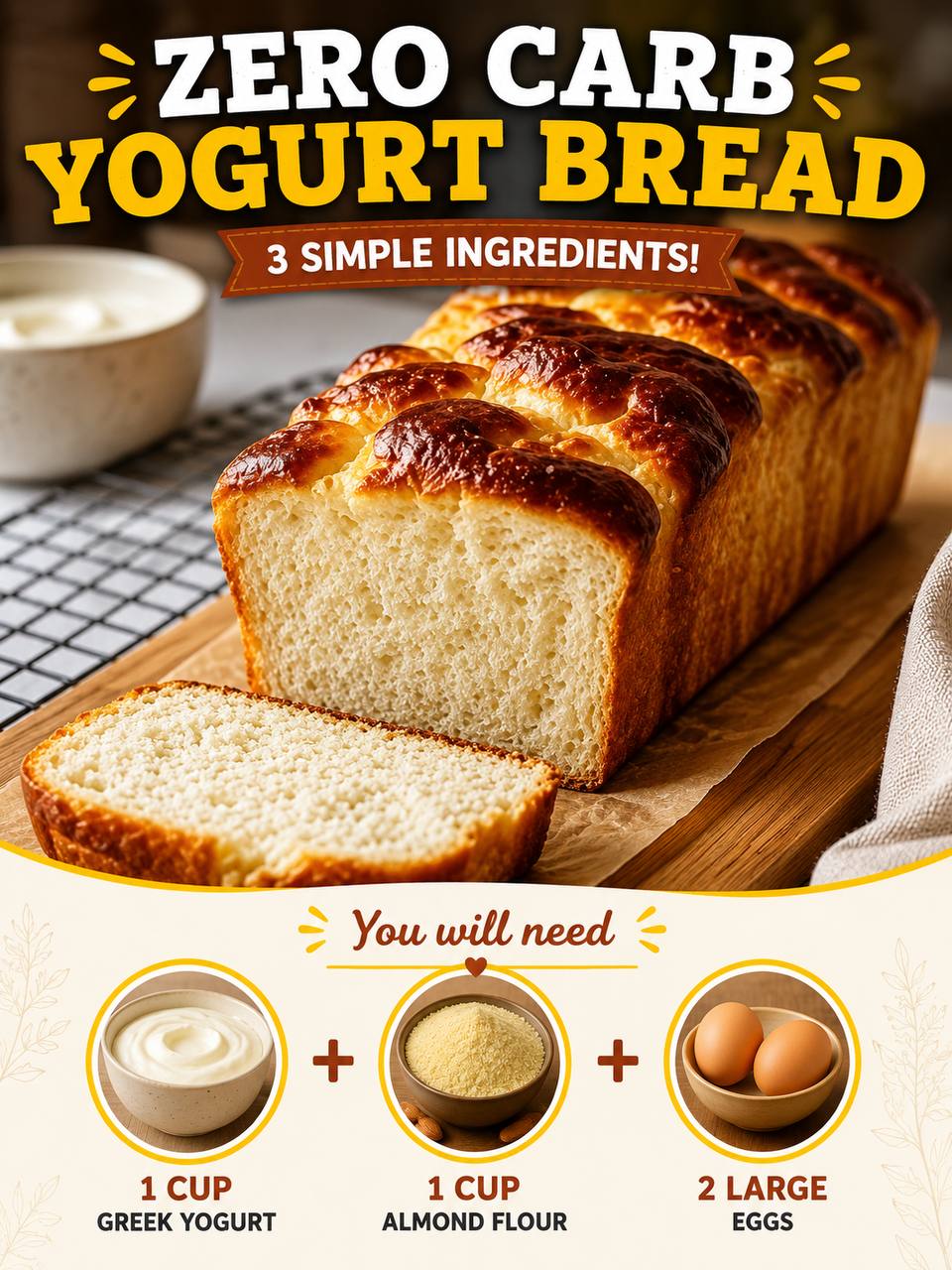
Instructions
- Preheat your oven to 350°F (175°C). Lightly grease and flour (with almond flour) a standard 8.5 x 4.5 inch loaf pan, or line it with parchment paper, leaving an overhang on the sides to easily lift the bread out later.
- In a large mixing bowl, whisk together the room temperature eggs until they are light and frothy, about 1-2 minutes. This incorporates air and helps with the bread’s texture.
- Add the full-fat Greek yogurt to the beaten eggs. Whisk them together until completely smooth and well combined. Ensure there are no lumps of yogurt remaining.
- In a separate small bowl, combine the almond flour, baking powder, and salt. Whisk these dry ingredients together thoroughly to ensure the baking powder and salt are evenly distributed. This is crucial for consistent rise and flavor.
- Gradually add the dry ingredient mixture to the wet ingredients. Start by adding about half of the dry mixture, stirring gently until just combined. Then add the remaining dry mixture and continue to stir until a thick, uniform batter forms. Be careful not to overmix; overmixing can lead to a dense, tough bread. Stir just until no pockets of dry flour remain.
- Pour the batter evenly into the prepared loaf pan. You can gently tap the pan on the counter a few times to help settle the batter and release any large air bubbles.
- Bake for 35-45 minutes, or until the top is golden brown and a toothpick inserted into the center of the loaf comes out clean. The internal temperature should reach 200-210°F (93-99°C) for optimal doneness.
- Once baked, remove the loaf pan from the oven and let it cool in the pan for about 10-15 minutes. This allows the bread to set and firm up before handling.
- After 10-15 minutes, carefully lift the bread out of the pan using the parchment paper overhang or by gently loosening the sides with a knife. Transfer the loaf to a wire rack to cool completely. This step is critical; slicing too early can result in a gummy texture or cause the bread to crumble. Allow at least 1-2 hours for complete cooling before slicing and serving.
Cooking Tips and Variations
Achieving the perfect loaf of Zero Carb Yogurt Bread is all about attention to detail. Firstly, always use room temperature eggs and Greek yogurt. This ensures better emulsification and a smoother batter, leading to a more consistent crumb. Don’t rush the process of mixing; combine ingredients thoroughly but avoid overmixing the batter once the dry ingredients are added. Overmixing develops gluten in traditional bread, but in gluten-free baking, it can lead to a tough or dense texture. Ensure your oven is accurately preheated; an oven thermometer can be a great tool for this. Finally, the cooling process is non-negotiable. Resist the urge to slice into that warm, tempting loaf immediately. Cooling completely on a wire rack allows the internal structure of the bread to set, preventing it from becoming gummy or falling apart when cut.
If your bread turns out too dense, it’s often due to overmixing or using the wrong type of almond flour. Always opt for super-fine blanched almond flour for the best results, as coarser grinds can absorb liquid differently and affect texture. If your bread isn’t rising, check the freshness of your baking powder; it loses its potency over time. Also, ensure your ingredients are at room temperature and that you’ve incorporated enough air into the eggs initially. For those who enjoy variety, this bread is incredibly adaptable! For a savory twist, consider adding 1 teaspoon of garlic powder, 1/2 teaspoon of onion powder, and 1 tablespoon of finely chopped fresh rosemary or dried Italian herbs to the dry ingredients. You can also fold in 1/4 cup of shredded sharp cheddar or Parmesan cheese. For a sweet bread, incorporate 1 teaspoon of vanilla extract, 1/4 cup of your favorite sugar-free sweetener (like erythritol or allulose), and 1 teaspoon of cinnamon into the batter. A handful of sugar-free chocolate chips or a few fresh berries (being mindful of their carb content) can also be a delightful addition.
This versatile bread can be enjoyed in countless ways. Toast slices until golden and crispy, then top with avocado and a sprinkle of everything bagel seasoning for a quick breakfast, or slather with sugar-free jam for a sweet treat. It makes an excellent base for open-faced sandwiches, piled high with deli meat, cheese, and fresh veggies. Thin slices can even be used as crackers alongside a cheese board or served with creamy dips. Don’t forget to pair it with a hearty bowl of soup or a fresh salad for a satisfying and carb-conscious meal. The possibilities are truly endless with this adaptable and delicious Zero Carb Yogurt Bread.
Storage and Reheating
Proper storage is key to maintaining the freshness and texture of your Zero Carb Yogurt Bread. Once completely cooled, the loaf can be stored at room temperature in an airtight container for up to 2-3 days. For longer storage, transfer the bread to the refrigerator, where it will stay fresh for up to one week. If you’ve baked a larger batch or want to enjoy fresh bread for weeks to come, this loaf freezes beautifully. Simply slice the cooled bread, then place the slices in a freezer-safe bag or airtight container, separated by parchment paper to prevent sticking. It can be stored in the freezer for up to 2-3 months.
When ready to enjoy, individual slices can be easily reheated. From the refrigerator, a quick toast in a toaster or toaster oven will bring it back to life, restoring its crisp exterior and soft interior. You can also warm slices in a microwave for 10-15 seconds for a softer texture, though a toaster is generally preferred for crispness. If reheating from frozen, there’s no need to thaw! Simply pop a frozen slice directly into the toaster or toaster oven for a few minutes until warmed through and lightly toasted. This method works wonderfully for maintaining the bread’s structure and flavor, making it a convenient option for quick breakfasts or snacks.
Frequently Asked Questions
What does “Zero Carb” actually mean in this recipe?
When we say “Zero Carb” in the context of this bread, we are primarily referring to its incredibly low *net carbohydrate* count per serving. While no food is truly “zero carb” unless it’s pure fat or protein with no plant matter, this recipe is designed to minimize digestible carbohydrates. Ingredients like almond flour and Greek yogurt do contain some carbohydrates, but a significant portion of almond flour’s carbs come from fiber, which doesn’t impact blood sugar. Always calculate the specific nutritional values based on the exact brands and quantities of ingredients you use, but rest assured, this bread is an excellent choice for very low-carb diets.
Can I use regular yogurt instead of Greek yogurt?
We strongly recommend using plain, full-fat Greek yogurt for this recipe. Greek yogurt is much thicker and has a lower water content than regular yogurt, which is crucial for the bread’s texture and consistency. Using regular yogurt will likely result in a much wetter batter and a denser, potentially gummy loaf. If you absolutely must substitute, strain regular plain yogurt through cheesecloth for several hours to remove excess whey, aiming for a consistency similar to Greek yogurt.
Why did my bread turn out dense or crumbly?
Several factors can contribute to a dense or crumbly texture. Overmixing the batter is a common culprit; stir just until the ingredients are combined. Ensure you’re using super-fine blanched almond flour, as coarser grinds can lead to a crumbly texture. Also, make sure your baking powder is fresh and active. Lastly, patience during the cooling process is key! Slicing the bread before it has completely cooled can disrupt its structure, making it appear dense or fall apart.