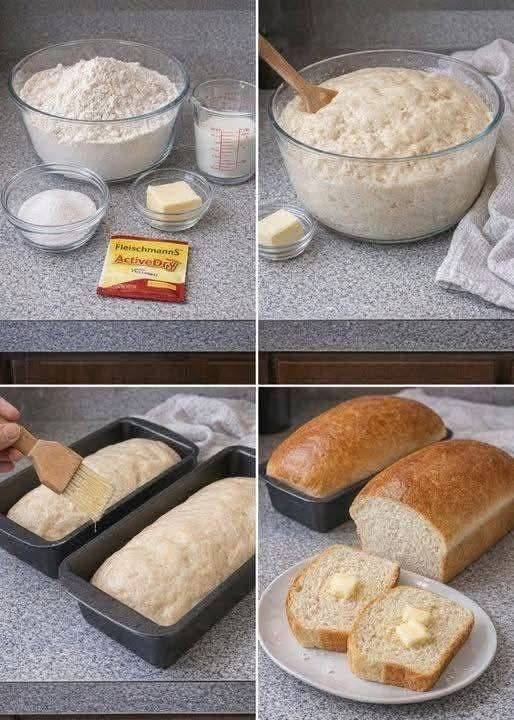
Introduction
There’s something undeniably magical about the aroma of freshly baked bread wafting through your home. It’s a scent that instantly conjures feelings of warmth, comfort, and nostalgia. Today, we’re diving into the heart of that magic with a recipe for traditional country white bread. This isn’t just any white bread; it’s a testament to simple, wholesome ingredients transformed by a little time and love into something truly extraordinary. Imagine a loaf with a perfectly golden, slightly crisp crust that gives way to an interior so soft, fluffy, and tender, it practically melts in your mouth. This bread isn’t just food; it’s a hug in edible form, a cornerstone of countless meals, and a delicious reminder of simpler times.
Our traditional country white bread recipe is designed to be approachable for bakers of all skill levels, from the absolute beginner taking their first foray into yeast baking to the seasoned pro looking for a reliable, classic loaf. We’ll guide you through every step, ensuring you achieve that coveted soft crumb and beautiful crust every single time. This isn’t a complicated, fussy recipe; it celebrates the fundamental joy of baking with basic pantry staples. The beauty of country white bread lies in its versatility. It’s perfect for slathering with butter right out of the oven, building the ultimate sandwich, making the best grilled cheese you’ve ever tasted, or simply tearing off a piece to accompany a hearty soup or stew. It’s the kind of bread that makes any meal feel a little more special, a little more homemade.
What makes this traditional country white bread so special? It’s the harmonious balance of flavor and texture. The subtle sweetness from a touch of sugar complements the rich, savory notes of the butter and salt, while the milk contributes to a wonderfully tender crumb. The process itself is incredibly rewarding, from watching the yeast bloom to seeing the dough double in size, and finally pulling those golden loaves from the oven. This recipe yields two generous loaves, meaning you can enjoy one immediately and share the other, or freeze it for another day. Get ready to fill your kitchen with an irresistible aroma and your table with the most comforting, delicious homemade bread you could ask for.
Nutritional Information
Per serving (approximate values, based on 24 slices per loaf):
- Calories: 130 kcal
- Protein: 4g
- Carbohydrates: 24g
- Fat: 2g
- Fiber: 1g
- Sodium: 200mg
Ingredients
- 4 cups (480g) all-purpose flour, plus more for dusting
- 1 cup (240ml) warm milk (105-115°F / 40-46°C)
- 1/2 cup (120ml) warm water (105-115°F / 40-46°C)
- 2 1/4 teaspoons (7g) active dry yeast (one standard packet)
- 1/4 cup (50g) granulated sugar
- 2 teaspoons (12g) salt
- 4 tablespoons (56g) unsalted butter, melted and divided (2 tbsp for dough, 2 tbsp for brushing)
Instructions
- In a large mixing bowl, combine the warm milk, warm water, granulated sugar, and active dry yeast. Stir gently and let it sit for 5-10 minutes, or until the mixture becomes foamy. This indicates that your yeast is active and ready to work its magic.
- Once the yeast mixture is foamy, add 2 tablespoons of melted butter and the salt to the bowl. Stir to combine these ingredients with the yeast mixture.
- Gradually add the all-purpose flour, one cup at a time, mixing with a wooden spoon or spatula until a shaggy dough forms. Once all the flour is incorporated, the dough will be sticky.
- Turn the dough out onto a lightly floured surface. Knead the dough for 8-10 minutes. If kneading by hand, push the dough away from you with the heels of your hands, fold it back, and rotate. Continue this motion until the dough is smooth, elastic, and springs back when gently poked. If using a stand mixer with a dough hook attachment, knead on medium-low speed for 6-8 minutes until the dough is smooth and pulls away from the sides of the bowl.
- Lightly grease a clean large bowl with a little oil or melted butter. Place the kneaded dough into the greased bowl, turning it once to coat the entire surface. Cover the bowl tightly with plastic wrap or a clean kitchen towel.
- Allow the dough to rise in a warm, draft-free place for 1 to 1.5 hours, or until it has doubled in size. A good warm spot can be a turned-off oven with the light on, or near a sunny window.
- Once the dough has doubled, gently punch it down to release the air. Turn the dough out onto a lightly floured surface and divide it into two equal pieces.
- To shape each loaf: Flatten one piece of dough into a rectangle. Fold the top third of the dough down to the center, then fold the bottom third up over the top. Pinch the seam closed. Then, starting from one end, roll the dough tightly into a log. Pinch the ends and the bottom seam securely closed to create a smooth loaf shape. Repeat with the second piece of dough.
- Grease two standard 9×5-inch loaf pans. Place one shaped loaf into each prepared pan, seam-side down.
- Cover the loaf pans loosely with plastic wrap or a clean kitchen towel. Allow the loaves to rise in a warm, draft-free place for another 30-45 minutes, or until they have nearly doubled in size and are puffy.
- While the loaves are proofing for their second rise, preheat your oven to 375°F (190°C).
- Just before baking, melt the remaining 2 tablespoons of butter. Gently brush the tops of the risen loaves with the melted butter. This will help create a beautiful golden crust.
- Bake the loaves in the preheated oven for 25-35 minutes, or until the tops are golden brown and the internal temperature reaches 200-210°F (93-99°C) when measured with an instant-read thermometer. If the tops start to brown too quickly, you can loosely tent them with aluminum foil.
- Once baked, carefully remove the loaves from the oven. Immediately turn them out onto a wire rack to cool completely. Allowing the bread to cool on a rack prevents the bottom from becoming soggy.
- Wait until the bread is completely cool before slicing for the best texture. Enjoy your homemade traditional country white bread!
Cooking Tips and Variations
Achieving the perfect loaf of bread is incredibly satisfying, and a few key tips can make all the difference. First and foremost, pay close attention to the temperature of your liquids for activating the yeast. Water or milk that is too cold won’t activate the yeast, leading to a flat, dense loaf, while liquid that is too hot will kill the yeast, with the same disappointing result. Aim for a temperature between 105-115°F (40-46°C), which feels comfortably warm to the touch, like a baby’s bathwater. A kitchen thermometer is your best friend here, especially when you’re starting out.
Kneading is another crucial step. Proper kneading develops the gluten in the flour, which is what gives bread its structure, elasticity, and chewy texture. You’ll know your dough is properly kneaded when it’s smooth, elastic, and springs back slowly when you gently poke it with a finger. If you’re hand-kneading, this can take a good 8-10 minutes of consistent effort. Don’t be tempted to add too much extra flour during kneading, as this can make your bread dry and tough. A lightly floured surface is all you need to prevent sticking.
For the rising steps, a warm, draft-free environment is ideal. If your kitchen is cool, you can create a warm spot by turning your oven on for a minute, then turning it off and placing the covered dough inside (with the light on for extra warmth). Just be sure the oven isn’t hot! Another trick is to place the bowl of dough in a larger bowl of warm water. Don’t rush the rise; allowing the dough to fully double in size contributes to a light and airy texture.
To ensure your bread is perfectly baked, don’t just rely on visual cues. While a golden-brown crust is a good indicator, using an instant-read thermometer to check the internal temperature is the most reliable method. For white bread, it should register between 200-210°F (93-99°C). If you don’t have a thermometer, tapping the bottom of the loaf should produce a hollow sound. And perhaps the hardest tip of all: let the bread cool completely on a wire rack before slicing. Slicing hot bread can lead to a gummy texture because the starches are still setting.
Variations for this traditional country white bread are endless. For a richer flavor and even softer crumb, you can substitute some or all of the water with additional milk. If you prefer a slightly denser, chewier bread with more nutritional value, replace 1 cup of all-purpose flour with whole wheat flour. For a touch of sweetness and a beautiful golden crust, you can add a tablespoon or two of honey or maple syrup to the liquid mixture along with the sugar. To add a herbaceous note, consider kneading in a tablespoon of dried herbs like rosemary or thyme during the final stages of kneading. For a rustic, artisan-style loaf, you can bake this dough freeform on a baking sheet instead of in loaf pans, shaping it into a round or oval and scoring the top before baking. Just remember to adjust baking time as needed for freeform loaves, which may bake faster.
Storage and Reheating
Proper storage is key to keeping your homemade traditional country white bread fresh and delicious. Once your loaves have completely cooled, storing them correctly will maximize their shelf life. For short-term storage (1-2 days), simply place the whole or sliced loaf in a bread box at room temperature. A bread box helps to maintain a consistent humidity level, preventing the bread from drying out too quickly or becoming too moist and developing mold. Alternatively, you can store the bread in a clean plastic bag, ensuring it’s sealed tightly to prevent air exposure.
Avoid refrigerating homemade bread, as this can actually accelerate staling, making it dry and crumbly much faster than if stored at room temperature. The starches in bread recrystallize faster at cool temperatures, leading to a loss of moisture and softness. If you won’t be finishing your loaves within a couple of days, freezing is an excellent option to preserve their freshness for much longer.
To freeze your country white bread, ensure it’s completely cooled. You can freeze it whole, in halves, or pre-sliced. For whole or half loaves, wrap them tightly in plastic wrap, then an additional layer of aluminum foil, or place them in a freezer-safe bag, removing as much air as possible. For pre-sliced bread, it’s helpful to place parchment paper between slices before wrapping and freezing. This makes it easy to grab just a few slices at a time. Frozen bread can be stored for up to 3 months.
When you’re ready to enjoy your frozen bread, there are a few reheating methods depending on how you plan to use it. Whole or half loaves can be thawed at room temperature for several hours or overnight. For a warm, crusty loaf reminiscent of fresh-baked, you can place the thawed loaf directly into a preheated oven at 350°F (175°C) for 10-15 minutes, or until warmed through. If you froze it sliced, you can pop individual slices directly into a toaster from frozen, or warm them quickly in a microwave or oven. Microwaving is quick but can sometimes make bread a bit chewy if overdone, so use short bursts. For best results with toast or sandwiches, simply thaw and then toast or use as desired. The beauty of homemade bread is that even after freezing and thawing, its flavor and texture remain far superior to most store-bought options.
Frequently Asked Questions
Why did my bread not rise?
There are a few common culprits when bread fails to rise. The most frequent reason is inactive or dead yeast. This can happen if your yeast is old and expired, or if the liquid you used to activate it was either too cold (preventing activation) or too hot (killing the yeast). Always check the expiration date on your yeast and ensure your liquids are between 105-115°F (40-46°C). Another factor could be a cold environment; yeast needs warmth to thrive, so ensure your dough is rising in a warm, draft-free spot. Lastly, too much salt can inhibit yeast activity, so be precise with your measurements.
Can I use bread flour instead of all-purpose flour?
Yes, absolutely! While all-purpose flour works wonderfully for this traditional country white bread, using bread flour will result in a slightly chewier crumb and potentially a higher rise. Bread flour has a higher protein content than all-purpose flour, which means it develops more gluten during kneading. This extra gluten provides more structure and elasticity to the dough, leading to a bread with a bit more chew and a robust texture. Feel free to substitute bread flour cup for cup if that’s what you have on hand or if you prefer a chewier loaf.
How do I know when the bread is fully baked?
The best way to tell if your traditional country white bread is fully baked is by checking its internal temperature with an instant-read thermometer. Insert the thermometer into the center of the loaf; it should read between 200-210°F (93-99°C). Visually, a well-baked loaf will have a deep golden-brown crust. If you don’t have a thermometer, you can tap the bottom of the loaf – a hollow sound indicates it’s likely done. If the crust is browning too quickly but the inside isn’t cooked, loosely tent the loaf with aluminum foil for the remainder of the baking time.
Why is my homemade bread dense?
A dense loaf can be disappointing, but it’s often due to a few common issues. One reason is insufficient kneading; if the gluten isn’t properly developed, the dough won’t be able to trap the gases produced by the yeast, leading to a tight, dense crumb. Another cause is not allowing the dough enough time to rise adequately during both the first and second proofing stages. Rushing the rise means the yeast hasn’t had enough time to produce enough gas, resulting in a heavier loaf. Over-handling the dough after the first rise, especially during shaping, can also knock out too much air, leading to density. Finally, too much flour can make the dough stiff and dense, so always measure carefully and avoid adding excessive flour during kneading.